
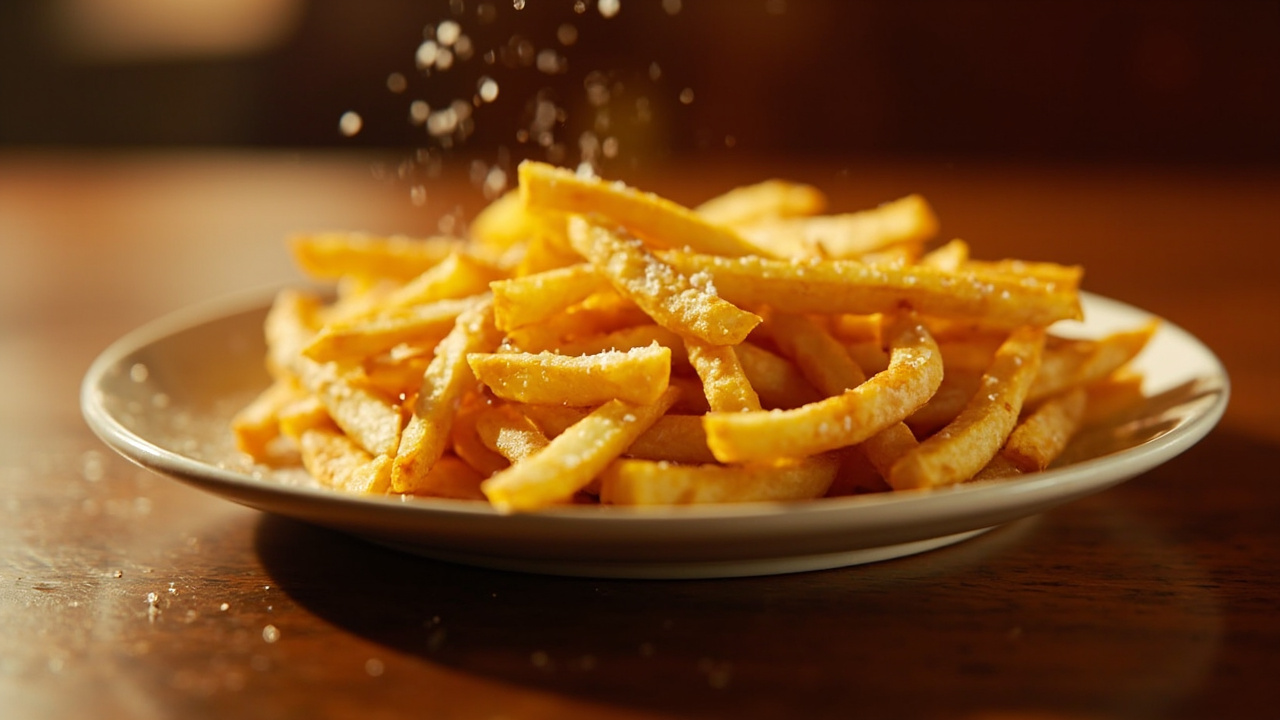
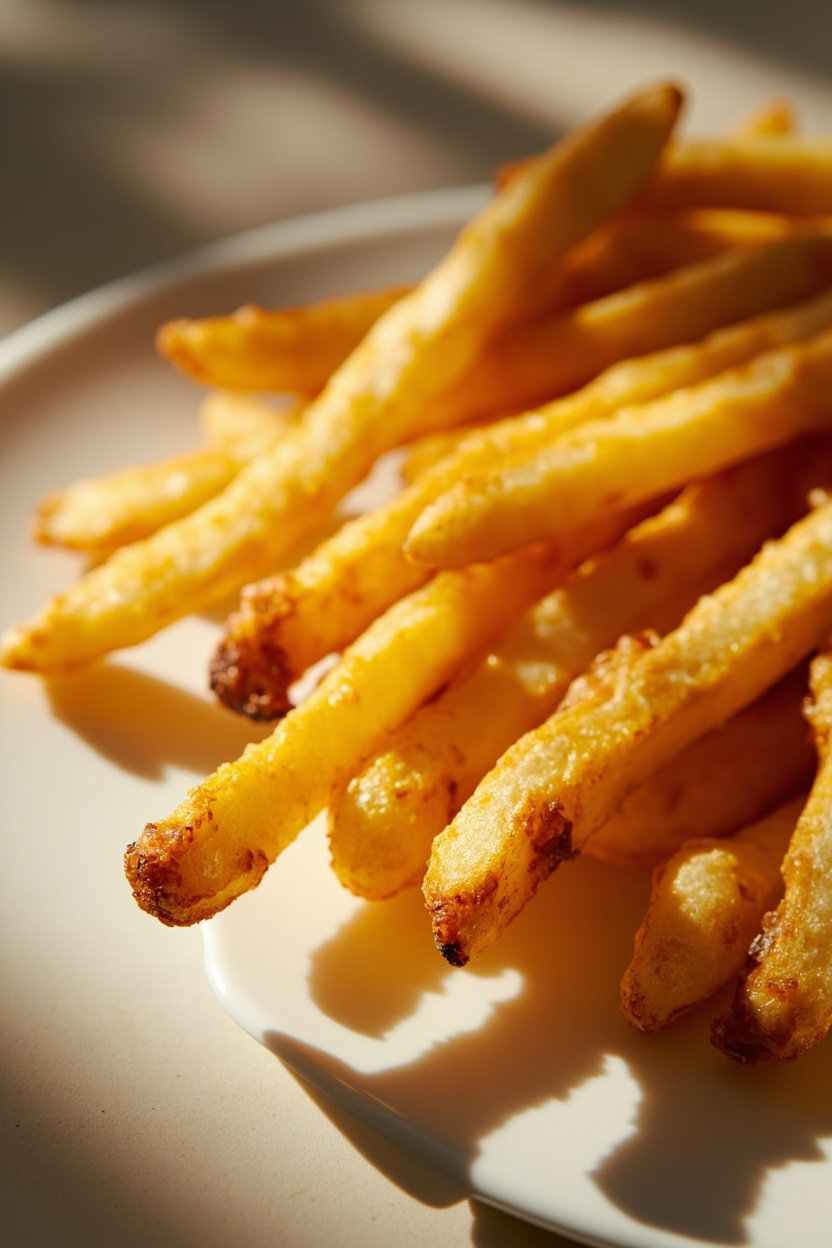
There’s something undeniably seductive about Burger King fries: a thin, golden ribbon of potato that crackles at the first bite and gives way to a pillowy interior.
The flavor is simple but precise, a balance of clean potato, a hint of oil, and a finishing salt that feels intentional.
If you want fries that mimic that familiar fast-food perfection at home, you’ll learn the right potato, the correct soak, the double-fry method, and a couple of pro tricks that separate okay fries from the best Burger King fries you’ve ever made.
Burger King Fries
Ingredients
- 900 g Russet potatoes
- 1.5 L Neutral oil vegetable or canola
- 20 g Kosher salt
- 15 g Cornstarch
- 5 g Sugar
Instructions
- Cut potatoes into 8 mm matchsticks and rinse to remove surface starch.
- Soak in cold water for 1 hour, then dry thoroughly to prevent oil splatter.
- Toss with cornstarch and sugar for a thin coating that crisps in oil.
- Blanch at 140°C for 6 minutes until pale and tender, then drain and cool.
- Final fry at 190°C until golden, about 3-4 minutes, smelling nutty and sweet.
- Season immediately with kosher salt and serve hot for maximum crispness.
The Secret to the Best Burger King Fries
The crisp shell comes from removing surface moisture and adding a light starch coating, which creates a micro-crust as it fries.
That contrast between crunch and soft interior is the hallmark of Burger King fries recipe success.
Temperature control is critical. A lower blanch temperature cooks the potato without browning, setting the interior structure, while a high finishing temperature produces rapid browning and crunch.
The double-fry technique uses heat and time to optimize texture and mouthfeel.
Salt timing matters. Salting immediately after frying allows crystals to adhere, giving the first hit of seasoning on the tongue.
Potato type and cut size influence starch-to-surface ratio, so matching Russets to an 8 mm cut replicates that iconic fast-food bite.
Pantry & Picks That Make Burger King Fries Sing
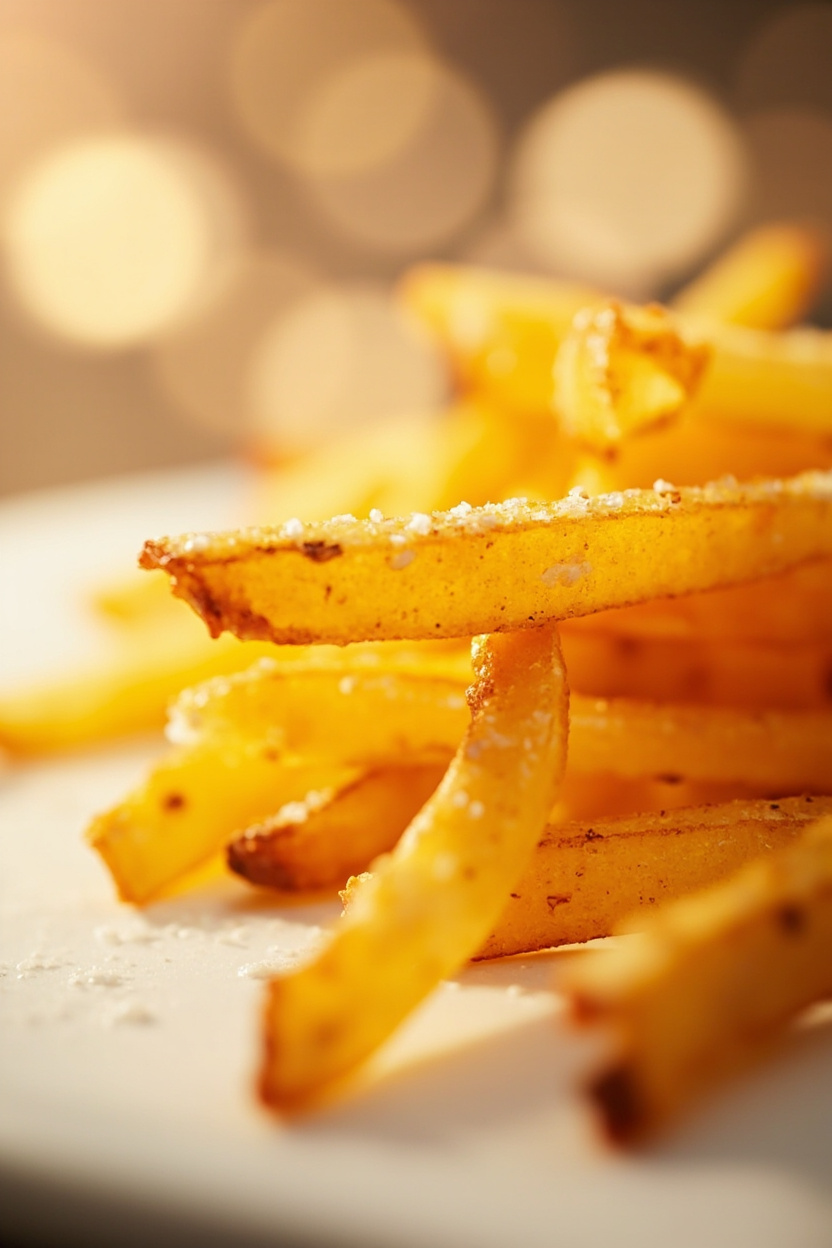
- 900g Russet potatoes: high starch and low moisture, producing a fluffy interior and crisp exterior.
- 1.5 L Neutral oil (vegetable or canola): high smoke point prevents off-flavors and supports high-temperature frying.
- 20g Kosher salt: coarse grains adhere to hot fries, delivering a clean salty hit.
- 15g Cornstarch: forms a thin film that crisps via starch gelatinization and evaporation.
- 5g Sugar: a small amount promotes Maillard browning for color and sweet-umami depth.
Kitchen Tools You’ll Need
- Sharp chef’s knife or mandoline for uniform cuts.
- Deep fryer or heavy-bottomed pot with thermometer.
- Wire rack and baking sheet for draining and cooling.
- Large bowl for soaking and a clean kitchen towel for drying.
How to Build Burger King Fries That Crackle and Crisp?
- Prep and cut: Peel if you like, then slice potatoes into 8 mm matchsticks. Uniformity is the secret to even cooking. You’ll notice a clean potato aroma and pale, sturdy sticks.
- Rinse and soak: Rinse under cold water until runoff is clear, then soak in cold water for 60 minutes. The water draws out surface starch, reducing gummy texture and improving crispness.
- Dry thoroughly: Lay on a towel and pat until completely dry. Any lingering moisture will cause oil spatter and soggy fries, so take your time and feel them; they should be matte, not damp.
- Coat lightly: Toss dried fries with cornstarch and sugar until evenly dusted. The cornstarch grants a whisper-thin crust, while the sugar nudges browning and aroma during frying.
- First fry: blanch. Heat oil to 140°C and fry in small batches for 5-6 minutes. The fries should be pale, slightly tender, and release a faint starchy smell. Drain and rest on a rack to cool.
- Rest between fries: Let blanched fries sit for at least 10 minutes to allow steam to escape and structure to firm up. This rest deepens the texture contrast in the final fry.
- Final fry: Increase the oil to 190°C and fry batches briefly for 3-4 minutes. You’ll hear a brisk sizzle and see golden edges forming. The aroma turns nutty and toasty.
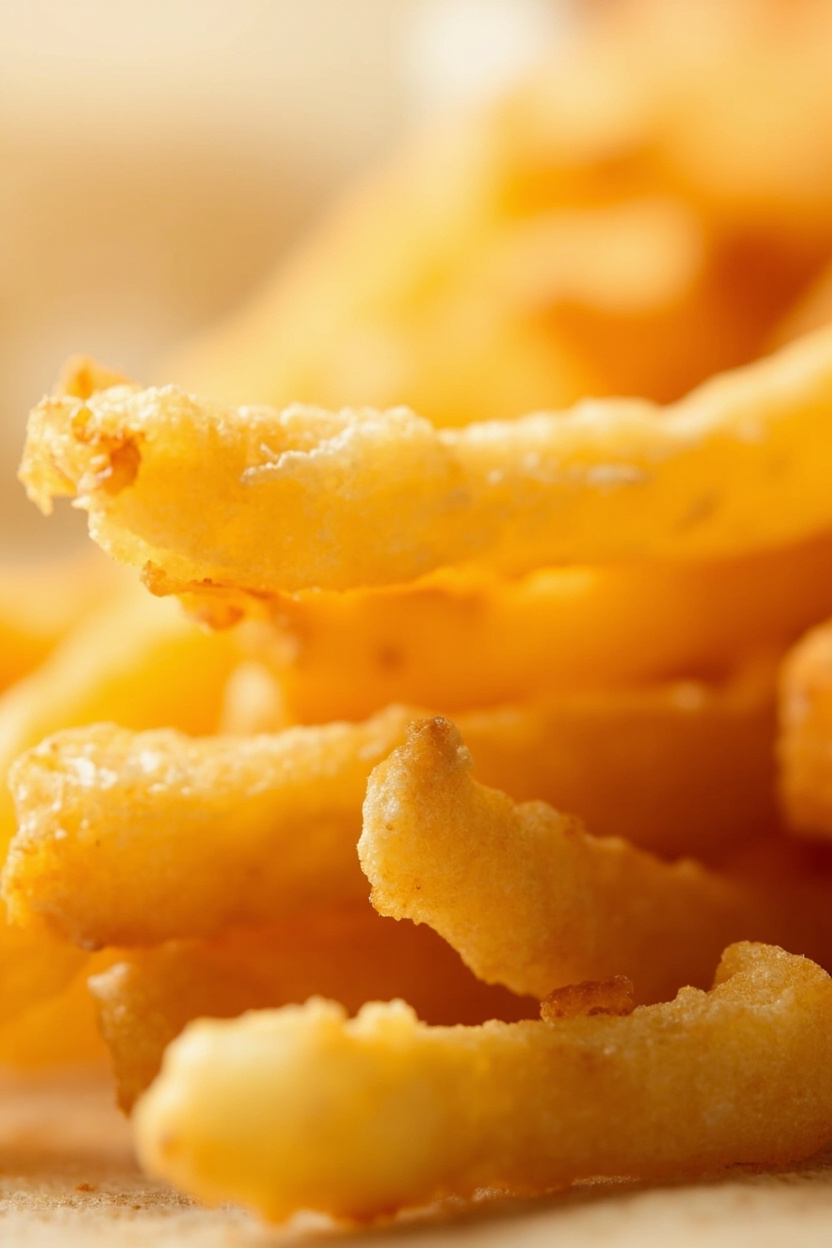
- Season and serve: Drain on a rack, sprinkle with kosher salt right away, and serve hot. The first bite should be a crisp crackle that gives way to a cottony interior and a clean salted finish.
Chef-Approved Hacks for Perfectly Golden Burger King Fries
Salt at the right moment
Salt clings best when applied immediately after frying, while the surface is still slightly oily. This creates a uniform seasoning layer that hits your tongue first, mimicking the instant gratification of fast-food fries.
Don’t overcrowd the oil
If you crowd the fryer, oil temperature plummets, and fries soak instead of crisping. Cook in small batches so the oil temperature remains steady and each stick gets even browning and crunch.
Use a light starch coating
A dusting of cornstarch is a small trick with a big payoff. It helps form a thin, brittle crust without masking the potato flavor. Too much starch yields gummy or pasty results, so keep it minimal.
Finish with a flavor boost
Right before serving, toss fries with a pinch of garlic powder or smoked paprika for a subtle layer of complexity. These finishing touches mimic seasonal menu variations and make your fries feel special.
How to Store Burger King Fries?
- Room temperature: best eaten immediately; crispness fades within 30 minutes.
- Refrigerator: store cooled fries in an airtight container for up to 2 days; reheat in a 200°C oven on a wire rack to crisp.
- Freezer: flash-freeze blanched fries on a tray, then bag for up to 3 months; fry from frozen at 190°C until golden.
Variations and Substitutions
- Sweet potato fries: swap Russets for sweet potatoes, increase blanch time, and expect a softer interior with caramel notes.
- Wedge cut: cut thicker for a fluffy center; adjust blanch and fry times accordingly.
- Seasoned salt: Mix smoked paprika, garlic powder, and salt for a house blend.
- Air-fryer method: par-cook at 160°C, then finish at 200°C with a light spray of oil for a less-oily option.
Nutrition Information
A serving provides carbohydrates and some B vitamins from potatoes, with modest protein. Frying adds fat and calories.
Not gluten-free by default if cross-contaminated; naturally dairy-free. Not keto-friendly due to high carbs.
Frequently Asked Questions
Use a heavy-bottomed pot with a candy thermometer for accurate temperatures, fry in small batches, and follow the double-fry method to mimic commercial texture.
Yes, par-cook the fries at a lower temp then finish at a high temp with a light oil spray. Results are slightly different but still satisfyingly crisp.
High-starch Russet or Idaho potatoes are ideal because they create a fluffy interior and crisp exterior when double-fried.
Drain on a rack, avoid stacking, salt right after frying, and serve immediately or reheat on a wire rack in a hot oven to refresh the crust.
