
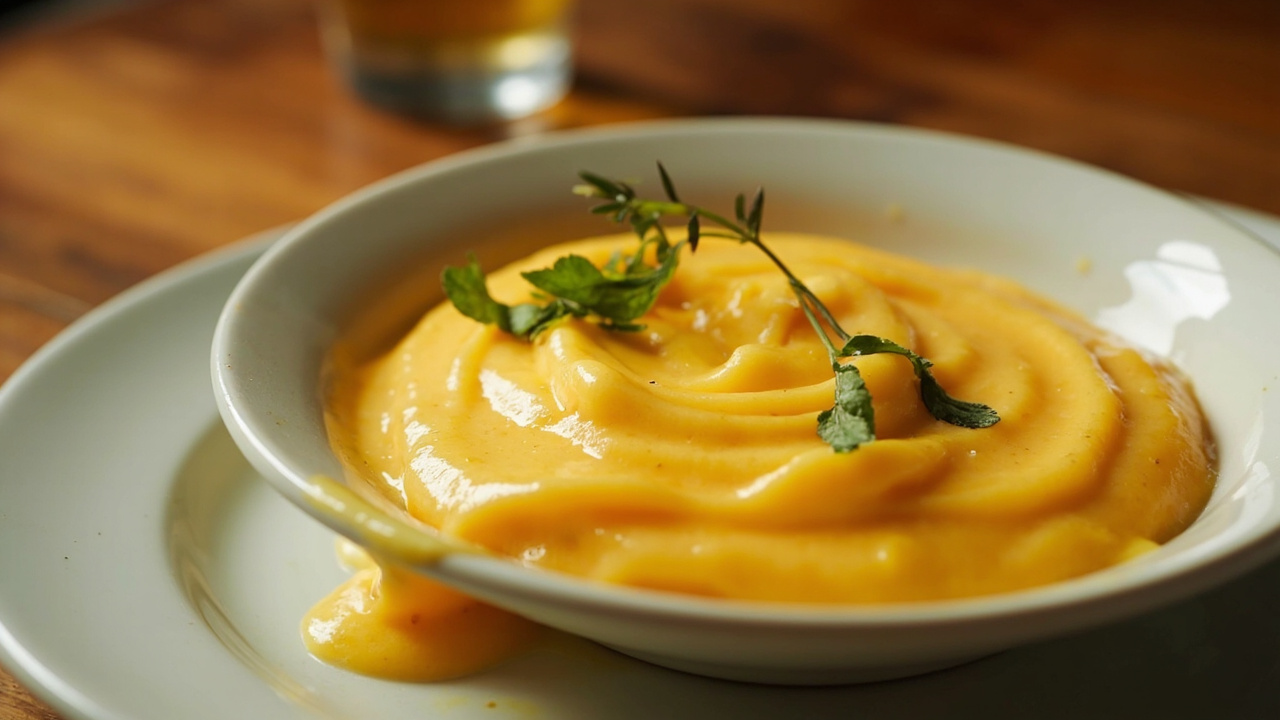
There is a small, glorious truth about a warm pot of cheddar cheese sauce – it clings, it glosses, and it makes whatever it touches taste like a celebration.
From the silkiness as it coats roasted cauliflower to the tangy snap on a plain baked potato, the texture is velvety, and the flavor is sharp yet rounded. Make this once, and you’ll see why it’s a must-make for weeknights and dinner parties alike.
I’ll share technique, tiny chef secrets, and a reliable cheddar cheese sauce that never breaks or grainifies.

Cheddar Cheese Sauce
Ingredients
- 40 g unsalted butter
- 30 g plain flour
- 480 ml whole milk
- 200 g mature cheddar grated
- 1 tsp Dijon mustard
- 1/4 tsp cayenne or white pepper
- Salt to taste
Instructions
- Melt butter over medium heat, whisk in flour and cook 1 minute.
- Slowly add warm milk while whisking, bring to simmer until thickened.
- Remove from heat, stir in grated cheddar gradually until smooth.
- Stir in mustard and seasoning, rewarm gently and serve.
Why We Love This Cheddar Cheese Sauce Recipe?
The roux-first method creates a stable starch network, so the sauce thickens predictably and resists separation when reheated. You get a silky mouthfeel without gummy starchiness.
Using warm milk helps the cheese melt smoothly, preventing sudden temperature shocks that cause proteins to seize and the sauce to become grainy.
Adding cheese off the heat and in small batches avoids overheating the proteins, keeping the texture glossy and elastic for a sauce that stretches but doesn’t break.
A touch of mustard and a tiny bit of acid or spice brightens the rich dairy, balancing fat and sharpening the cheddar’s flavor without masking it.
Pantry Stars That Make This Cheddar Sauce Sing
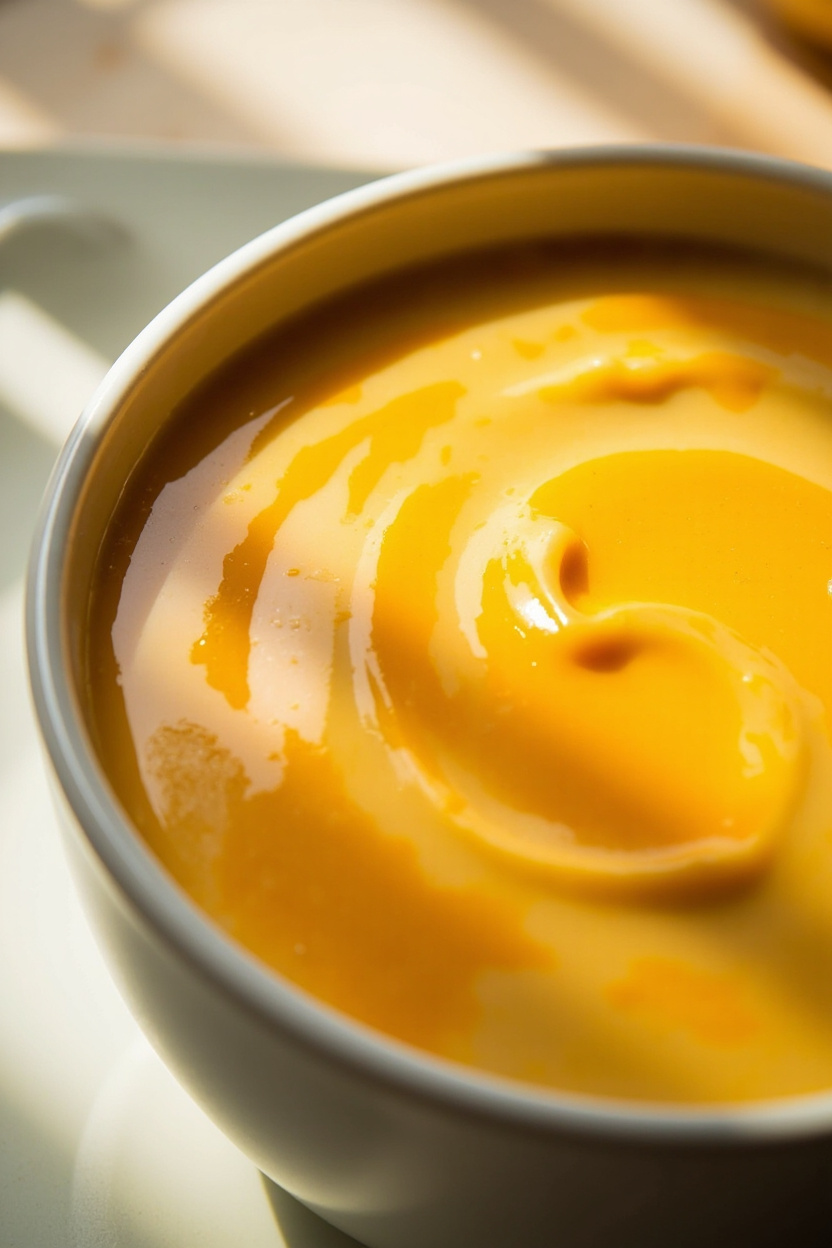
- 40g unsalted butter – 3 tbsp, provides fat to cook the flour and coat starch molecules for smoothness – interacts with starch at a molecular level to prevent clumping.
- 30g plain flour – 3 tbsp, supplies starch polymers that swell with liquid to thicken – creates the roux matrix that stabilizes the emulsion.
- 480ml whole milk – 2 cups, adds both water and fat for body and creaminess – milk proteins and fat support a silky mouthfeel.
- 200g mature cheddar, grated – 7 oz, gives a sharp, savory flavor and optimal melting due to its moisture and fat content – aged cheddar adds complexity.
- 1 tsp Dijon mustard, emulsifying agent, and flavor lift – mustard contains mucilage that helps bind fat and water.
- 1/4 tsp cayenne or white pepper, seasoning – introduces heat to balance richness and suppress metallic cheese notes.
- Salt to taste, enhances flavors – sodium amplifies savory compounds in the cheese and milk.
Kitchen Tools You’ll Need
- Medium heavy-bottomed saucepan.
- Whisk (balloon or flat) for smooth roux integration.
- Box grater for freshly grated cheddar.
- Heatproof spatula for finishing and scraping.
Velveting the Cheese: Technique Tricks to Nail the Texture
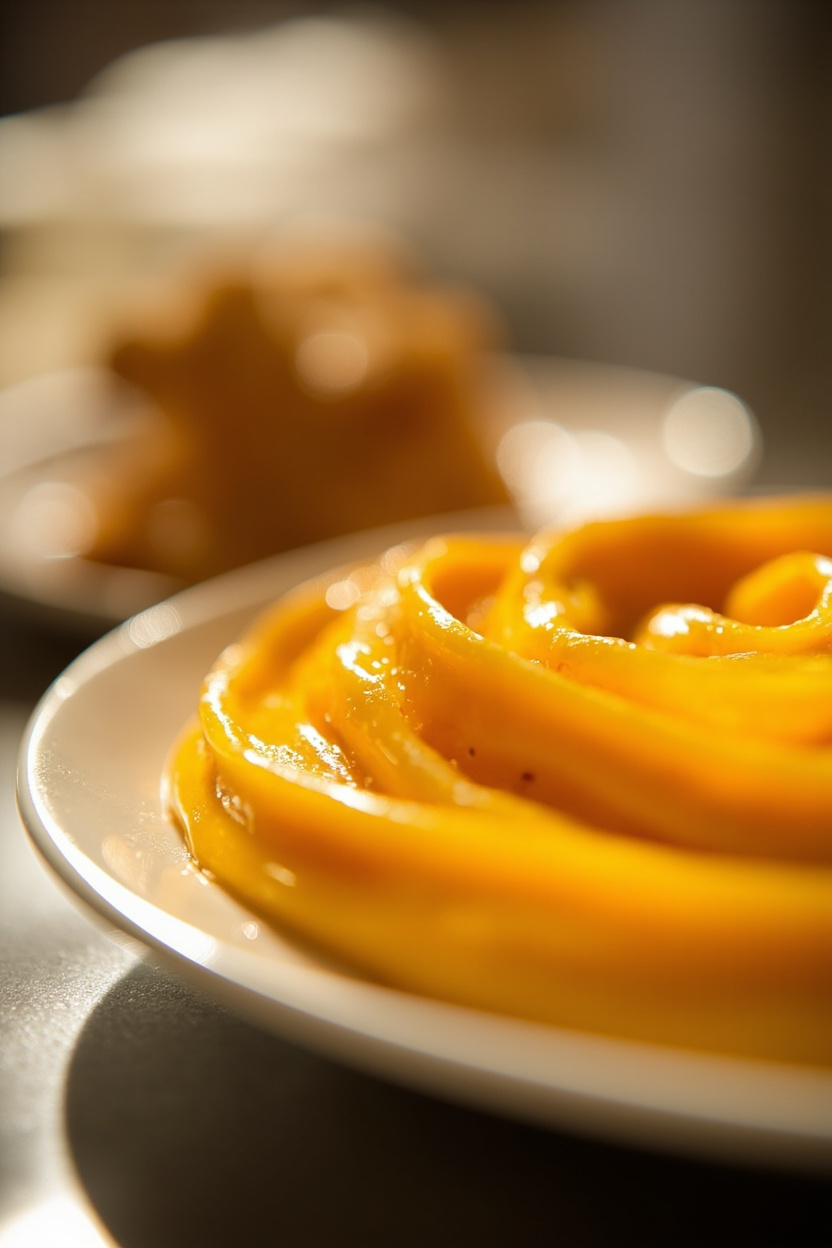
- Warm the milk in a small saucepan or microwave until just below simmering, about warm to the touch. Warm milk reduces shock when added to the roux and promotes even melting, giving a soft, creamy aroma.
- Melt the butter in a medium heavy-bottomed saucepan over medium heat. When it foams, add the flour and whisk constantly for about 60 seconds. You’ll smell a toasty, biscuity note; that’s the raw flour aroma cooking away.
- Slowly stream the warm milk into the roux while whisking vigorously. Start with a few tablespoons then continue in a thin steady stream to avoid lumps. The sauce will go from viscous to silkier as starch granules swell and release a glossy sheen.
- Bring to a gentle simmer and cook for 2-3 minutes until the sauce coats the back of a spoon. It should be thick enough to leave a clean line when you run your finger across the spoon. The texture should feel satiny, not gluey.
- Remove the saucepan from the heat. Add grated cheddar in small handfuls, stirring each addition until melted and fully incorporated. Off-heat melting protects the protein structure so the sauce remains smooth and elastic, offering a pleasant stretch without graininess.
- Whisk in Dijon mustard and a pinch of cayenne or white pepper, then taste and season with salt. If the sauce becomes too firm, stir in a tablespoon of warm milk to loosen it; if too thin, simmer briefly while whisking to reduce and concentrate flavors.
- Serve immediately for the best texture. If holding, keep warm over a bain-marie or very low heat and whisk occasionally, or rewarm gently while stirring to avoid overheating, which causes breaking.
Chef-Only Tweaks for Shine, Stretch, and No Graininess
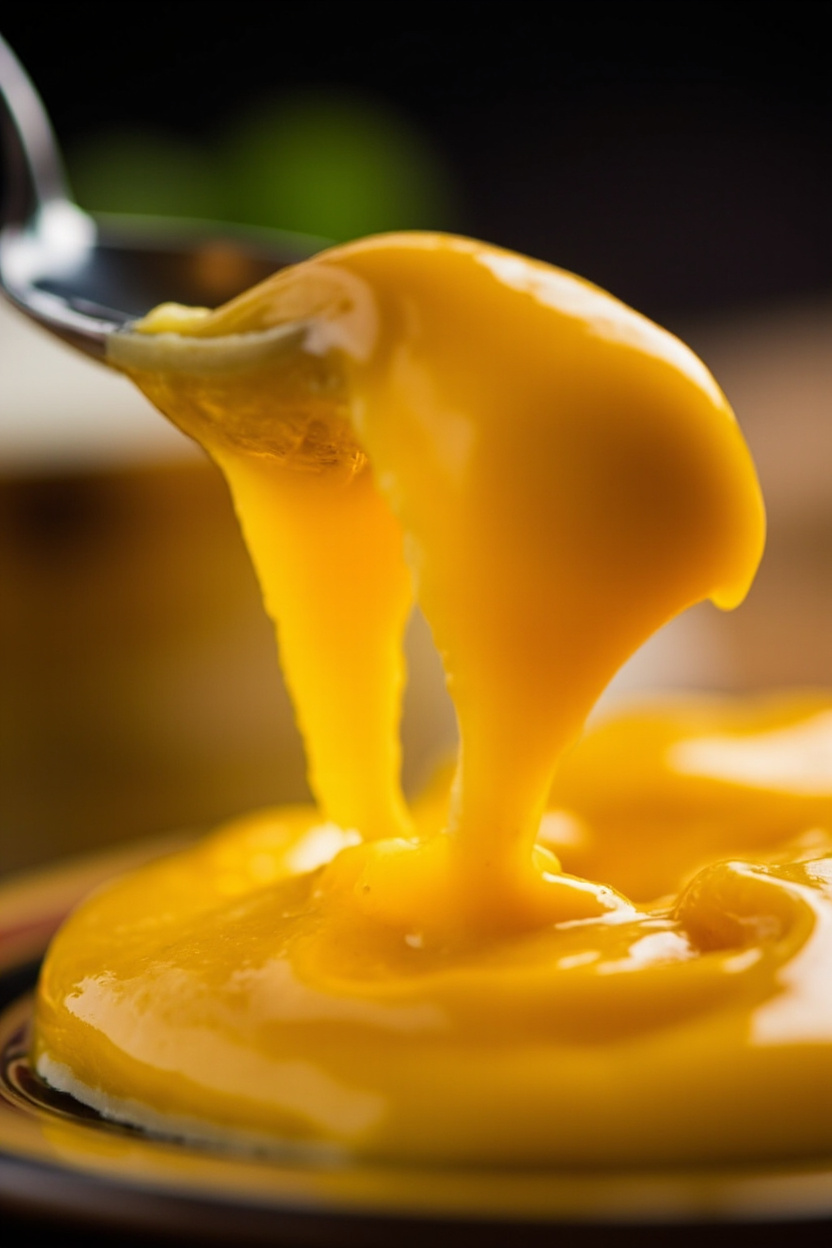
Cheese temperature matters
Use grated cheddar straight from the fridge, but let it sit for a few minutes while you finish the sauce.
Cold cheese melts more slowly and prevents the sauce from overheating when added, giving you time to incorporate it gradually for a glossy result.
Freshly grate the cheese
Pre-shredded cheese contains anti-caking agents that can inhibit smooth melting. Grating your own gives you clean, tender shreds that melt into a unified, creamy texture.
Mind the heat
Never boil the sauce after adding cheese. High heat tightens milk proteins and separates fat, creating grainy curds. Aim for gentle warmth and patience – the difference between grainy and silky is often just a few degrees.
Add acid with restraint
A tiny splash of white wine or lemon juice can brighten the sauce, but add it sparingly and off the heat. Acid shifts protein behavior, so too much can thin or curdle the sauce.
How to Store Cheddar Cheese Sauce?
- Room temperature: Do not leave out for more than 2 hours because of dairy safety.
- Fridge: Cool to room temp, transfer to an airtight container, keep up to 4 days; rewarm gently while whisking.
- Freezer: Freeze in portions up to 2 months, thaw overnight in the fridge, and reblend with a splash of milk to restore texture.
Variations and Substitutions
- White cheddar and a pinch of nutmeg for a subtle, creamy bechamel-style sauce.
- Add smoked paprika and chipotle for a smoky, spicy cheddar cheese sauce perfect for fries.
- Swap half the milk for beer or ale for a robust, pub-style cheese sauce – the malt adds depth.
- Use a mix of cheddar and Gruyere for a nuttier, more complex melting profile.
Nutrition Information
This cheddar cheese sauce is high in protein and calcium, provides substantial fat for energy, and is relatively low in carbs.
It is not dairy-free or keto-friendly by default if you use whole milk, but you can adapt with low-carb milk alternatives for a lower-carb option.
It is gluten-containing due to the roux unless flour is substituted with a gluten-free thickener.
Frequently Asked Questions
Stored in an airtight container in the fridge, it keeps for up to 4 days. Rewarm gently and whisk in a splash of milk to restore silkiness.
Yes, make it a day ahead, cool quickly, refrigerate, then reheat slowly in a saucepan or bain-marie while whisking. Add a little warm milk to revive texture.
Remove from heat, whisk in a spoonful of warm milk or cream to smooth. If still grainy, blend briefly with an immersion blender to re-emulsify.
Not as written because of the flour roux, but you can use a gluten-free flour blend or cornstarch slurry to thicken and make it gluten-free.
