
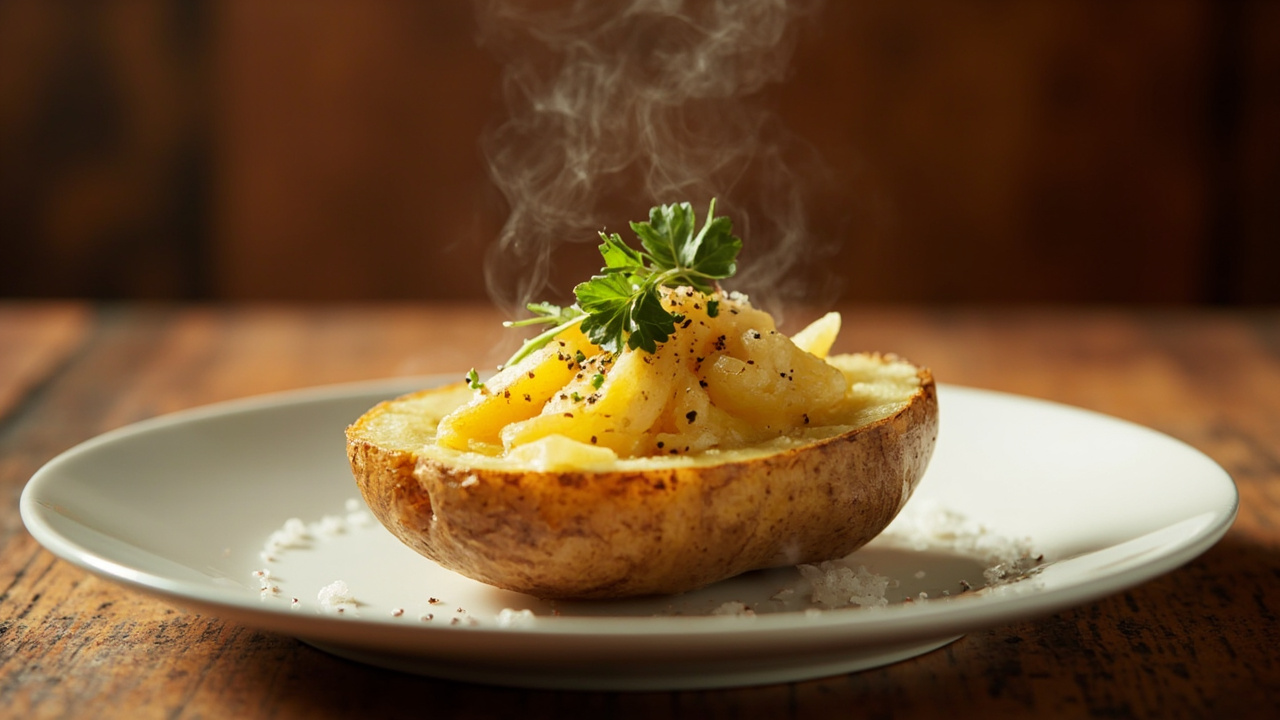
There is nothing quite like the perfect baked potato – that pillowy, cloud-like interior giving way to a rustic, crisp, seasoned skin.
The contrast of textures, the warm, earthy aroma of roasting starchy flesh, and the way a melting pat of butter pools into crevices make it a must-make side and a simple, elegant main.
With a few precise techniques and humble ingredients, you’ll get consistent results every time: crackling skin, tender crumb, and pure, comforting flavor.

Perfect Baked Potato
Ingredients
- 4 large Russet potatoes
- 2 tbsp olive oil
- 1 tsp fine sea salt
- Freshly ground black pepper
- Butter or olive oil for serving
Instructions
- Scrub potatoes and dry.
- Prick skin with a fork.
- Coat with olive oil and salt.
- Bake at 220C/425F on a rack until tender.
- Rest, split open, and fluff with a fork.
Why You’ll Love This Perfect Baked Potato?
High-starch varieties like Russets produce that light, fluffy interior because their cell walls break down during baking, which gives the crumb a tender, airy texture.
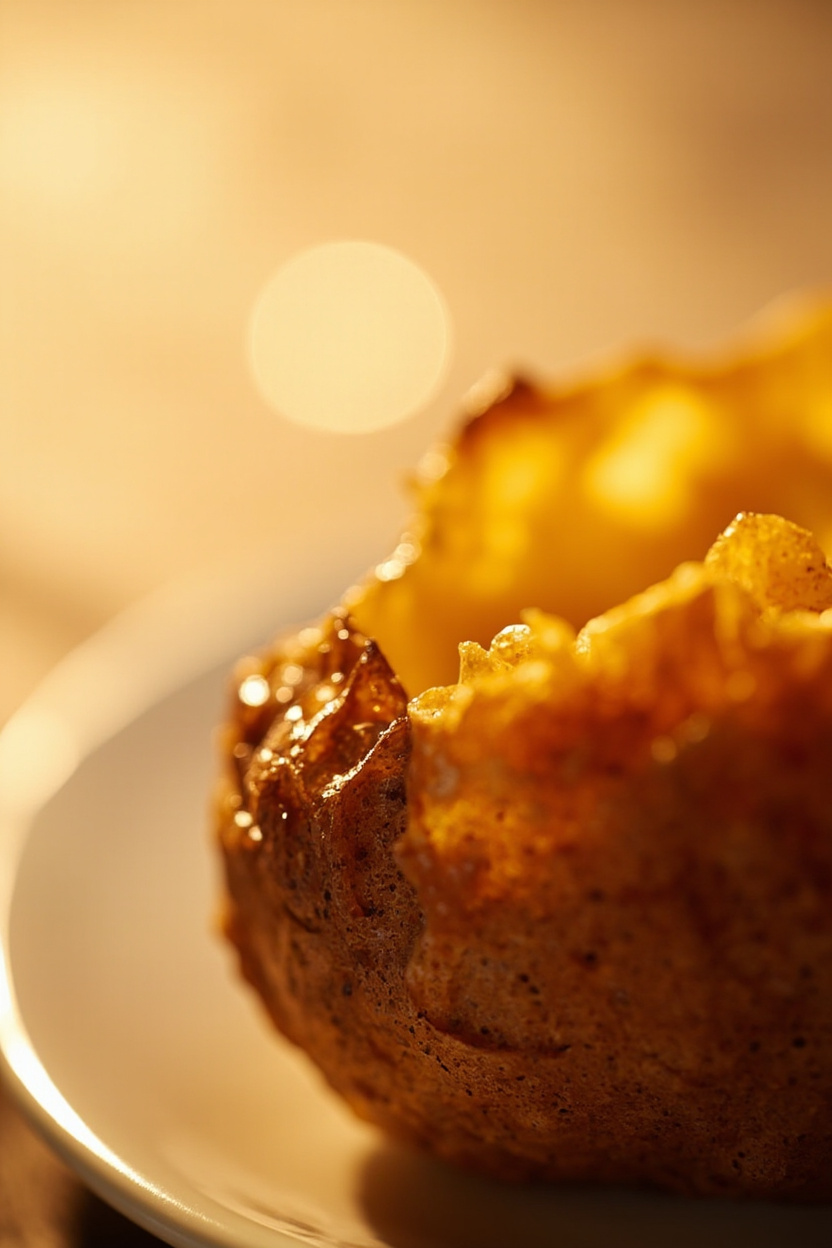
Dry, high-heat roasting promotes the Maillard reaction on the skin, creating deep, savory browning and a satisfying crackle that contrasts the softness inside.
A thin coating of oil concentrates salt on the surface and speeds up heat transfer, so you get even cooking without a chewy or soggy skin.
Resting the potato briefly after baking lets steam redistribute, preventing a gummy center and ensuring each forkful is pillowy and moist.
The Flavor Cast for Your Baked Potato
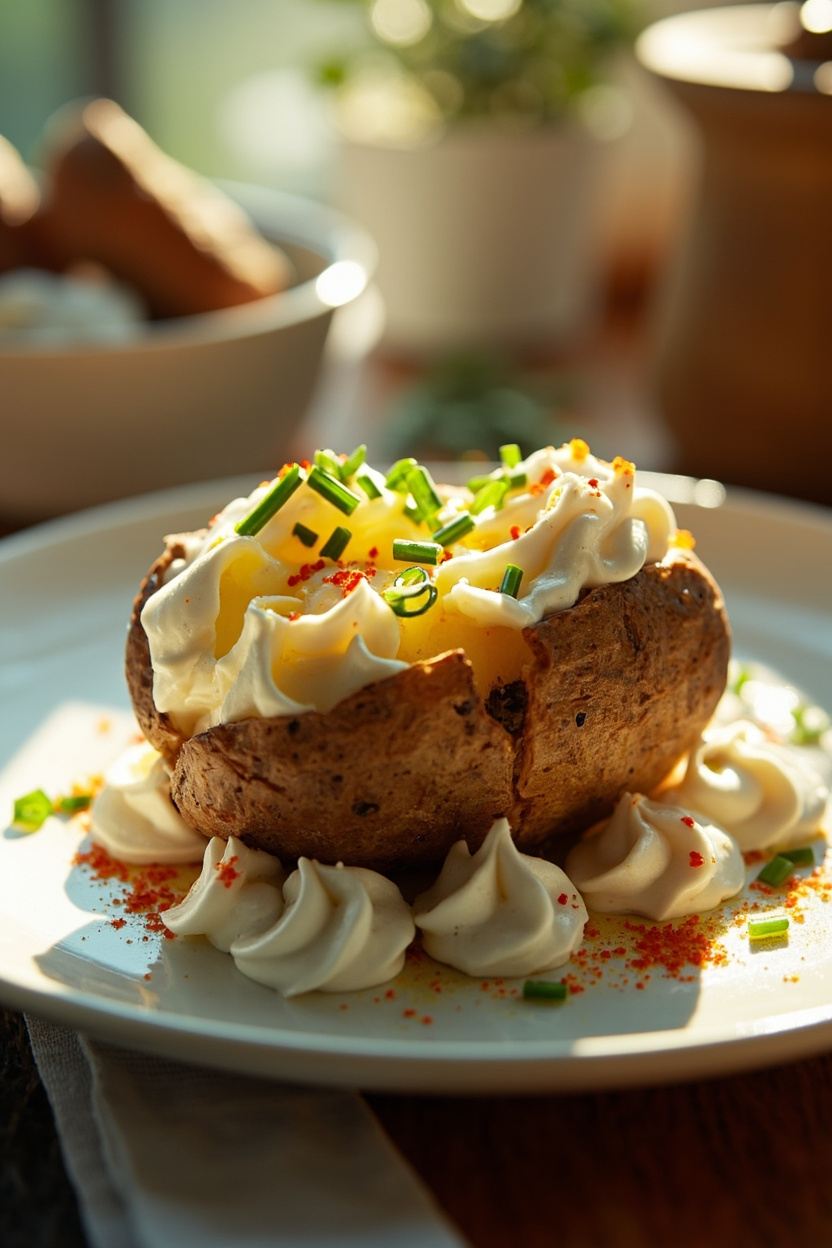
- 4 large Russet potatoes – 900 g / 2 lb: high starch for fluffy interior and ideal dry matter content.
- 2 tbsp olive oil – 30 ml / 1 fl oz: monounsaturated fat promotes surface browning via Maillard chemistry.
- 1 tsp fine sea salt – 6 g / 0.2 oz: salt draws surface moisture, concentrates flavor, and enhances crust formation.
- Freshly ground black pepper – 1/4 tsp / to taste: piperine adds aromatic heat and brightens savory notes.
- Butter or extra olive oil for serving – 20 g / 0.7 oz: fat improves mouthfeel and dissolves fat-soluble flavors like butter-soluble aromatics.
Kitchen Tools You’ll Need
- Baking sheet or rimmed tray.
- Wire rack (oven-safe).
- Fork or skewer for pricking.
- Pastry brush or hands for oiling.
Turning Spuds into Fluffy, Crispy Perfection
- Preheat the oven to 220C / 425F. Place a wire rack on a rimmed baking sheet so hot air circulates beneath the potatoes, helping the skin crisp evenly.
- Scrub each potato under running water, removing dirt but keeping the skin intact. Pat dry thoroughly with a towel so the oil will adhere and the skin will brown rather than steam.
- Use a fork to prick each potato 6 to 8 times. You should hear faint steam escape as they roast and not have any dramatic bursts that split the skin.
- Rub each potato with olive oil, coating the skin evenly. Sprinkle with fine sea salt and a little black pepper. The oil and salt work together to create a seasoned, crisp exterior.
- Arrange the potatoes on the prepared rack with spacing between them so heat can circulate. Slide them into the center of the hot oven and bake for about 45 to 60 minutes, depending on size.
- Check doneness by inserting a skewer or knife into the thickest part; it should glide in with little resistance. The skin will be deeply browned and have a slight sheen.
- Remove the potatoes and let them rest for 5 minutes. The aroma will be warm and earthy, and the steam inside will settle so the texture becomes pillow-y, not gummy.
- Split each potato open lengthwise. Use a fork to fluff the interior, pulling the flesh slightly apart to create air pockets. Add butter or a drizzle of olive oil and a final sprinkle of salt for contrast.
Chef’s Hidden Tricks for That Irresistible Crackling Skin
Choose the Right Potato
Pick high-starch varieties like Russets or Idaho potatoes. Their lower moisture and higher dry matter lead to the ideal fluffy interior and dry skin that crisps beautifully when roasted.
Skip the Foil
Wrapping in foil steams the skin and prevents proper browning. For crisp skin and concentrated flavor, bake directly on a rack or tray so moisture can escape, and the Maillard reaction can take place.
Salt Early, Finish Smart
Salt the skin before roasting to pull moisture and season the surface. After baking, taste and add a touch more if needed; finishing salt like flaky sea salt adds a bright textural pop.
Use Heat to Your Advantage
A hotter oven accelerates crust formation. If the skin isn’t crisping enough toward the end, move the potatoes closer to the oven’s heat source for a few minutes, watching carefully to avoid burning.
How to Store a Perfectly Baked Potato?
- Room temperature: Keep wrapped in foil for up to 4 hours for immediate serving.
- Fridge: Store cooled potatoes in an airtight container up to 3 days.
- Freezing: Scoop flesh into airtight containers or mash with a little butter and freeze up to 3 months; texture may change on thawing.
Variations and Substitutions
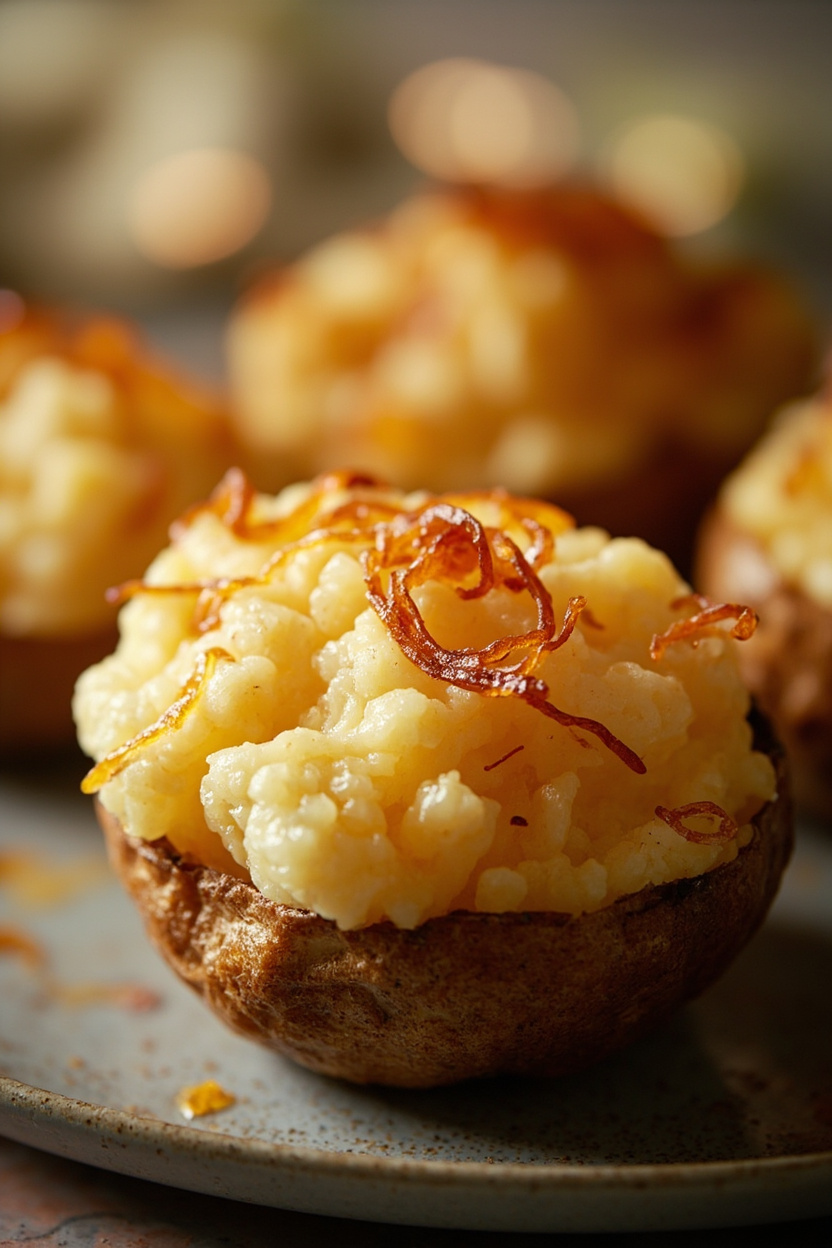
- Twice-baked: Scoop, mix with cheese and herbs, refill skins, and bake until golden.
- Herb oil rub: Use rosemary and garlic-infused oil for aromatic skin.
- Sweet potato swap: Roast yams at 200C/400F for a caramelized exterior and creamy interior.
- Skillet finish: After baking, sear halved potatoes cut-side down in butter for an extra-crisp base.
Nutrition Information
A baked potato is a good source of potassium, vitamin C, and fiber when eaten with the skin. Typical serving provides moderate calories and complex carbohydrates.
Naturally gluten-free and suitable for vegetarian diets; dairy-free if you skip butter. Not keto-friendly due to carbohydrate content.
Frequently Asked Questions
At 220C/425°F a large Russet usually needs 45 to 60 minutes. Test with a skewer for a smooth glide to confirm doneness.
You can start in the microwave to shorten oven time, but finish in a hot oven to crisp the skin; microwaving alone yields a steamed, soft skin.
Dry the skin well, rub with oil and salt, and bake on a rack in a hot oven. A few minutes under direct heat will boost crispness further.
Potatoes are nutritious and can fit into a balanced diet, but watch portion sizes and toppings to manage calories and sodium if eaten daily.
