
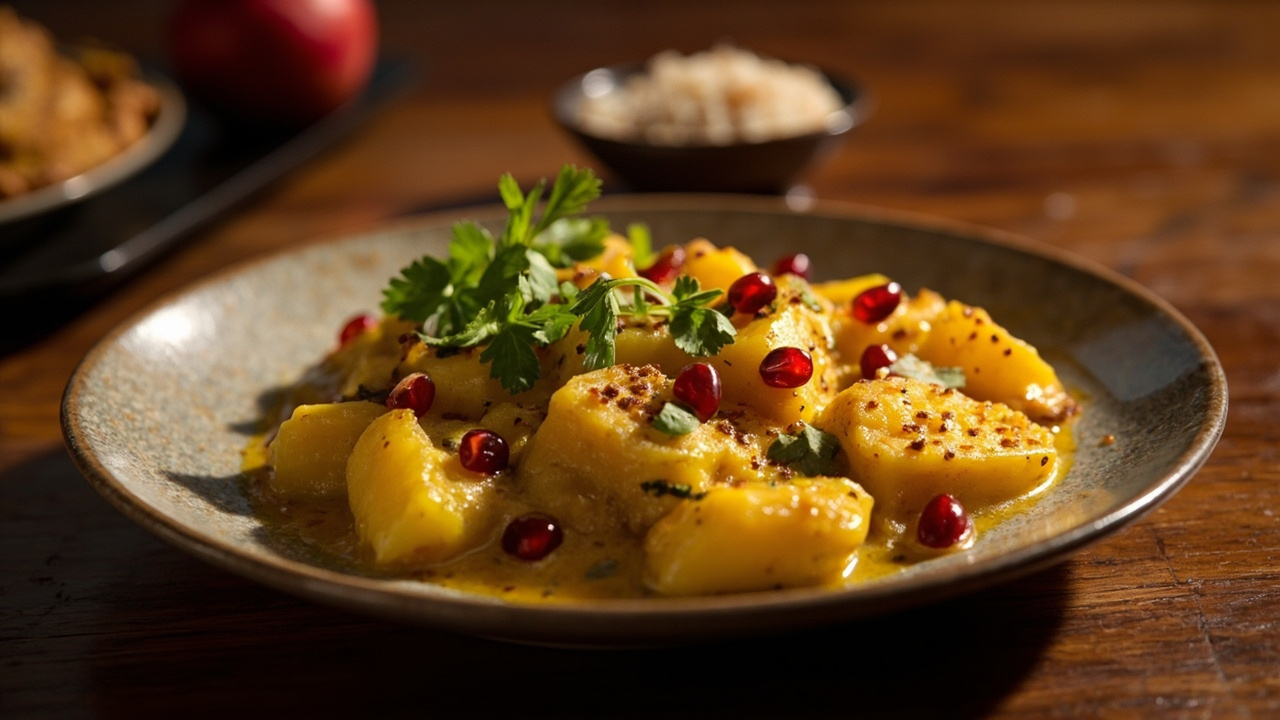
There is something impossibly comforting about a simmering pot of vegetarian potato curry – tender potato chunks bathed in a silky, spiced tomato-coconut sauce, flecked with fresh cilantro and tempered with warming cumin and mustard seeds.
The texture is a playful contrast: soft, yielding potatoes against a glossy, slightly thickened gravy that clings to each bite.
The flavor hits salty, tangy, and mildly sweet, with a gentle background heat that makes it a must-make for cozy nights or elegant weeknight dinners.
This is a vegetarian potato curry guide you can trust, with tips that make the flavors sing and the texture perfectly comforting.

Vegetarian Potato Curry
Ingredients
- 700 g potatoes about 4 medium
- 2 tbsp vegetable oil
- 1 tsp mustard seeds
- 1 large onion 150g
- 3 garlic cloves 10g
- 1 tbsp grated ginger 15g
- 2 tsp ground cumin
- 1 tsp ground coriander
- 1 tsp turmeric
- 1 tsp garam masala
- 400 g canned tomatoes
- 200 ml coconut milk
- 1-1.5 tsp salt
- Fresh cilantro 10g
Instructions
- Parboil potatoes until just tender, drain, and set aside to retain shape.
- Bloom mustard seeds and cumin in hot oil until fragrant and popping.
- Sauté onions to deep golden, add garlic and ginger until aromatic.
- Add ground spices and cook briefly to remove raw edge and build aroma.
- Stir in tomatoes and simmer until oil separates and sauce thickens slightly.
- Add potatoes and coconut milk, simmer gently so potatoes soak up the sauce.
- Finish with garam masala and cilantro, adjust salt, then serve hot.
Why You Need to Try This Vegetarian Potato Curry?
The starch in the potatoes naturally thickens the sauce as it simmers, creating a rich mouthfeel without heavy cream. That starch acts like a gentle binder, making each spoonful glossy and satisfying.
Layering techniques blooming whole seeds, then frying aromatics, then toasting ground spices extract and multiply volatile oils, so the final sauce has a rounded, complex aroma. Each step adds a different flavor note.
Using acidic tomatoes balanced with coconut milk creates tension and harmony. The tomatoes provide bright acidity and umami, while the coconut softens edges and adds a silky finish.
Finishing with garam masala and fresh cilantro preserves fragile aromatic compounds, delivering a fresh, late hit of fragrance that makes the dish sing.
The Flavor Cast for Your Veggie Potato Curry
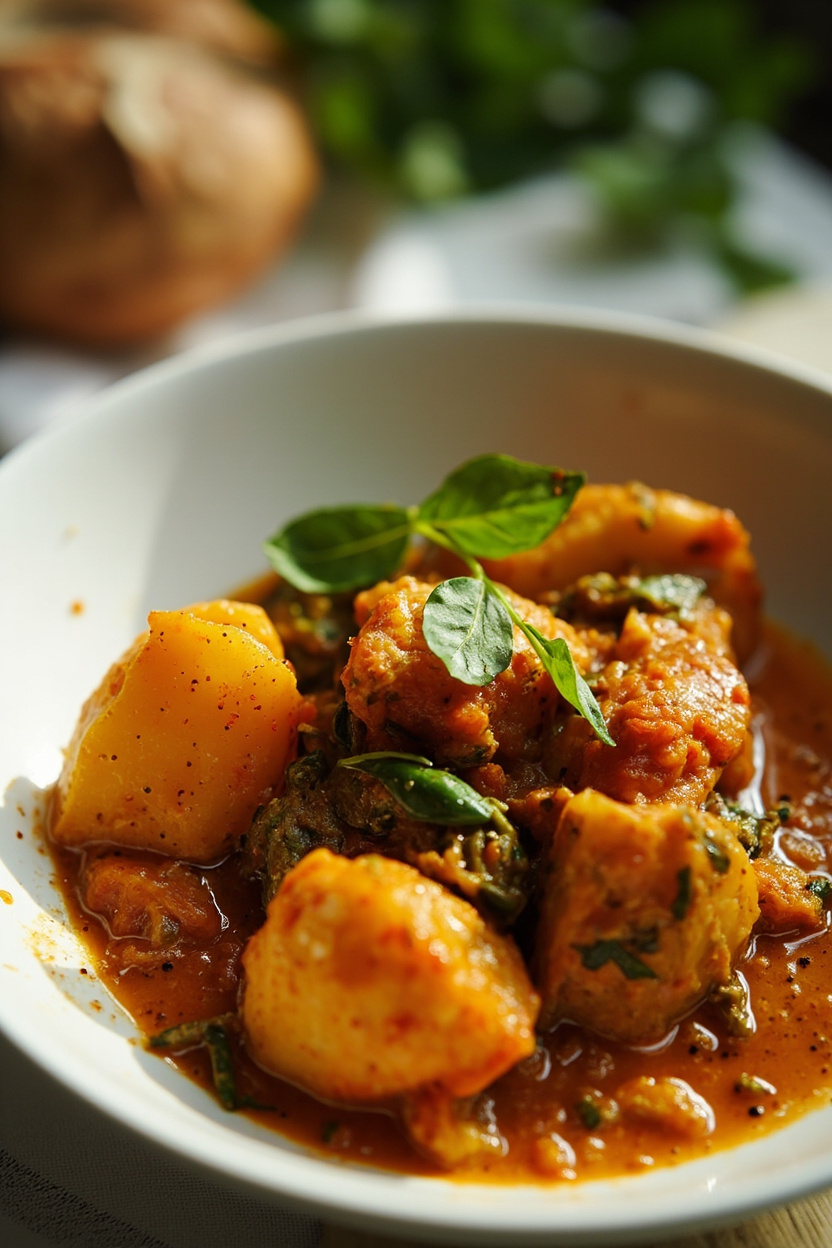
- 700g potatoes (about 4 medium): starchy potatoes release amylose for a creamier sauce and tender texture
- 2 tbsp vegetable oil: neutral fat that conducts heat and solubilizes spice oils for flavor release
- 1 tsp mustard seeds: contains glucosinolates that pop and add a pungent aroma when heated
- 1 large onion, 150g: onions provide reducing sugars for caramelization and depth via the Maillard reaction
- 3 garlic cloves, 10g: garlic’s sulfur compounds give a savory backbone when lightly cooked
- 1 tbsp grated ginger, 15g: fresh ginger adds zing from gingerol and balances richness
- 2 tsp ground cumin: warms the palate with earthy, aromatic terpenes
- 1 tsp ground coriander: citrusy essential oils lift and brighten heavier spices
- 1 tsp turmeric: curcumin gives color and subtle bitterness with anti-inflammatory notes
- 1 tsp garam masala: final aromatic blend of toasted spices for fragrance
- 400g canned tomatoes: provide acidity, pectin for body, and umami depth
- 200ml coconut milk: fats create creamy emulsification and round the sauce
- 1-1.5 tsp salt: enhances and balances all flavor compounds
- Fresh cilantro, 10g: herbaceous esters for a finishing lift
Kitchen Tools You’ll Need
- Heavy-bottomed sauté pan or Dutch oven – for even heat and controlled simmering.
- Sharp chef’s knife and cutting board – for precise chopping of aromatics.
- Colander and pot for parboiling potatoes – to control doneness.
- Wooden spoon or spatula – for gentle stirring without damaging potatoes.
Sizzle & Simmer: Building the Curry That Tastes Like Home
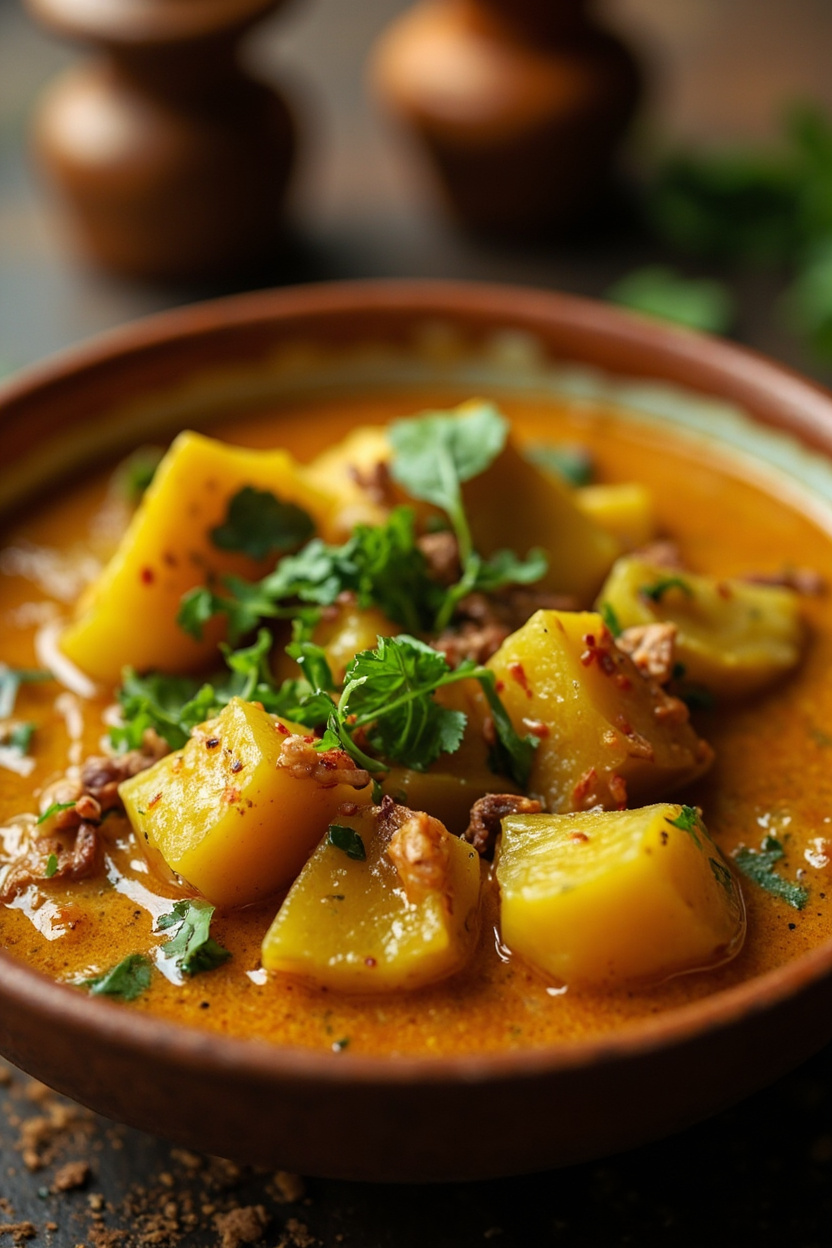
- Prepare potatoes: Peel and cut potatoes into 3cm chunks. Place in salted boiling water and parboil 6-8 minutes until the edges are tender but the center still holds shape. Drain and let steam-dry; this keeps them fluffy inside and prevents falling apart while simmering.
- Heat oil and bloom seeds: Warm oil in a heavy pan over medium heat. Add mustard seeds and cumin seeds; wait as they begin to pop and release a nutty aroma. The kitchen will smell faintly toasted and warm.
- Sauté aromatics: Add sliced onions and cook until deep golden, stirring regularly. You’ll notice the sugars caramelize and the pan yields a rich, almost sweet scent. Add garlic and ginger and cook a minute until fragrant, not brown.
- Add ground spices: Sprinkle in ground cumin, coriander, and turmeric. Stir constantly for 30-60 seconds so the spices toast just enough to lose any raw edge. The aroma will deepen and become slightly smoky.
- Introduce tomatoes: Pour in canned tomatoes, breaking them down with your spoon. Simmer gently until the sauce reduces and a thin layer of oil rises to the surface, signaling concentrated flavor. The sauce should smell bright and tangy with a warm spice background.
- Combine potatoes and coconut milk: Gently fold in parboiled potatoes, then pour coconut milk. Bring to a gentle simmer; you want the sauce to thicken slowly and coat the potatoes. Taste and season with salt. The texture should be glossy and velvety.
- Final simmer and finish: Simmer low for 8-10 minutes so potatoes absorb the sauce. Stir carefully so pieces remain intact. Off the heat, sprinkle garam masala and chopped cilantro. The finishing aromatics will pop, producing a fresh, fragrant top note.
- Serve: Spoon into bowls while hot. The first spoonful should offer creamy sauce, tender potato, and a bright herbal lift. Pair with steamed rice, flatbreads, or a crisp salad for contrast.
Tricks Chefs Use for Perfect Texture and Balance
Parboil for structure
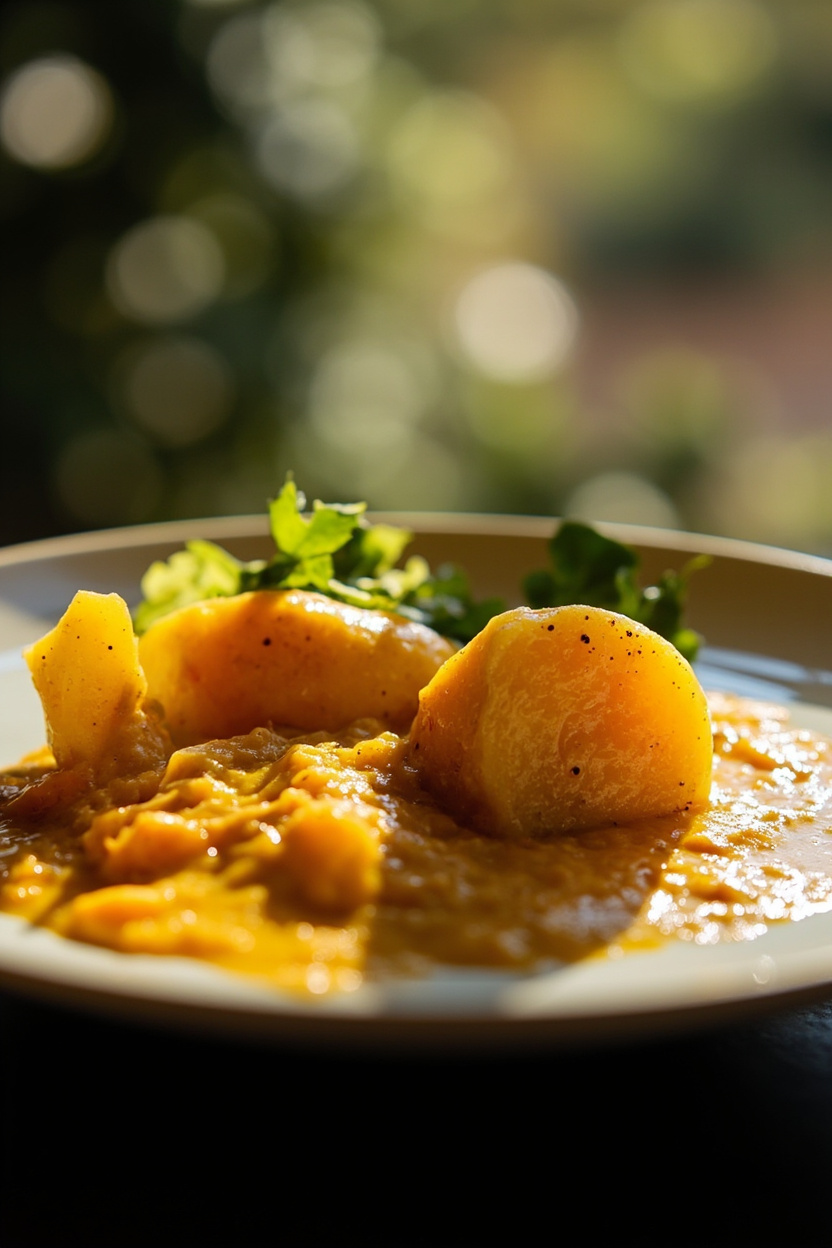
Parboiling potatoes keeps them tender inside without disintegrating during simmering. It also allows the edges to soak up sauce without turning mushy. Choose starchy or all-purpose potatoes and test doneness with a fork.
Toast spices in stages
Bloom whole seeds first, then add ground spices later. Toasting whole seeds in oil releases essential oils; toasting ground spices briefly removes rawness and deepens flavor.
This layering technique is central to a complex, balanced vegetarian potato curry.
Balance acidity and creaminess
If the sauce tastes too sharp after tomatoes, stir in a splash more coconut milk or a pinch of sugar to round acidity. If it feels flat, a squeeze of lemon or a pinch of salt brightens the overall profile without changing texture.
How to Store Vegetarian Potato Curry?
- Room temperature: Keep covered only for up to 2 hours to avoid bacterial growth.
- Fridge: Store in an airtight container for up to 4 days; reheat gently to avoid breaking the potatoes.
- Freezer: Freeze in portions for up to 3 months; thaw overnight in the fridge and reheat on low, adding a splash of water if the sauce tightens.
Variations and Substitutions
- Add chickpeas for extra protein and a chewy contrast.
- Swap coconut milk for plain yogurt at the end for tangy creaminess, tempering it to prevent curdling.
- Introduce spinach or peas in the last 5 minutes for added color and nutrition.
- Use sweet potatoes for a sweeter, vitamin-rich alternative with a similar texture.
Nutrition Information
This vegetarian potato curry provides complex carbs, fiber, and vitamin C from potatoes, healthy fats from coconut milk, and antioxidants from spices.
It is gluten-free and dairy-free as written, but not keto-friendly due to potato carbohydrates.
Frequently Asked Questions
From prep to plate, this recipe takes about 50 minutes, including parboiling and a gentle simmer.
Yes, flavors deepen after a day in the fridge. Reheat gently on the stove and add a bit of water or coconut milk if the sauce thickens.
It’s mildly spiced by default. Increase chili or add cayenne to your heat preference while cooking the ground spices.
Yes, waxy potatoes hold shape better, while starchy ones yield a creamier interior; choose based on your texture preference.
