
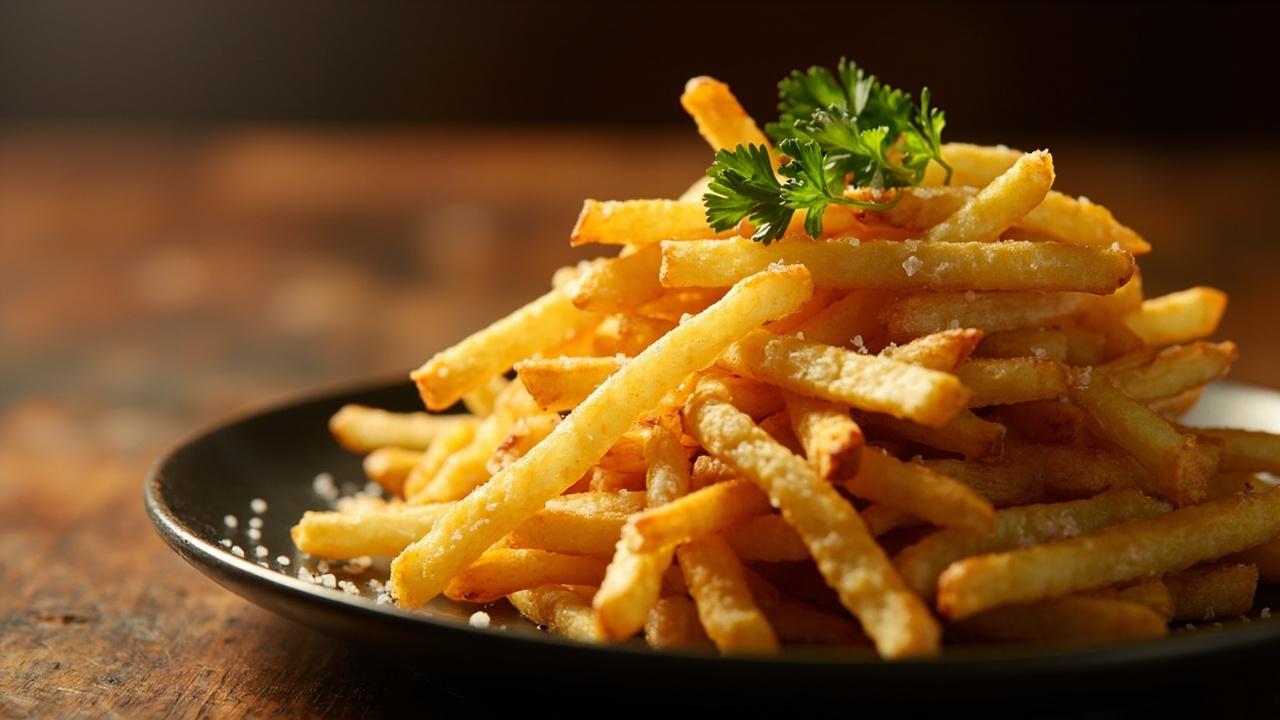
There’s something almost indecent about a bowl of shoestring fries, paper-thin ribbons of potato that shatter into a chorus of crisp, then melt into a tender, pillow-soft heart.
Shoestring fries deliver that very particular texture contrast everyone secretly craves: whisper-thin crunch with a warm, earthy potato finish and a delicate salty sheen.
Make them once, and you’ll know why they become a must-make for parties, weeknight treats, or when you want an elegant, nostalgic side that feels both refined and comforting.
Shoestring Fries
Ingredients
- 1 kg Yukon Gold or Russet potatoes
- 500 ml cold water
- 1 tbsp white vinegar
- 4 cups neutral oil
- 10 g fine sea salt
- Optional smoked paprika or grated Parmesan
Instructions
- Peel and cut potatoes into 2 mm matchsticks; rinse until water runs clear.
- Soak in cold water with vinegar 10 minutes, then chill 30 minutes in fresh water.
- Dry thoroughly on towels until almost dry to the touch.
- Blanch in 160°C oil for 3 minutes until pale and supple.
- Drain, increase oil to 190°C, fry 90-120 seconds until golden and crisp.
- Toss with salt and serve immediately.
Why This Shoestring Fries Recipe Works?
Cutting the potatoes into ultra-thin matchsticks increases surface area, so the oil can create a paper-thin crust while leaving the core tender. That textural contrast is the signature of great shoestring fries.
Soaking and blanching pull excess surface starch and set the starch structure, preventing the strands from sticking together and producing that lacy quality many recipes miss.
A two-stage fry – a low-temperature blanch followed by a high-temperature flash – ensures the fries cook through without excessive color, then crisp rapidly to a fragile, audible crunch.
Using a neutral oil with a high smoke point keeps flavors clean, while immediate salting after frying promotes better seasoning adherence and moisture draw for enhanced crispness.
Pinch-Perfect Pantry: What Fuels These Shoestring Fries?
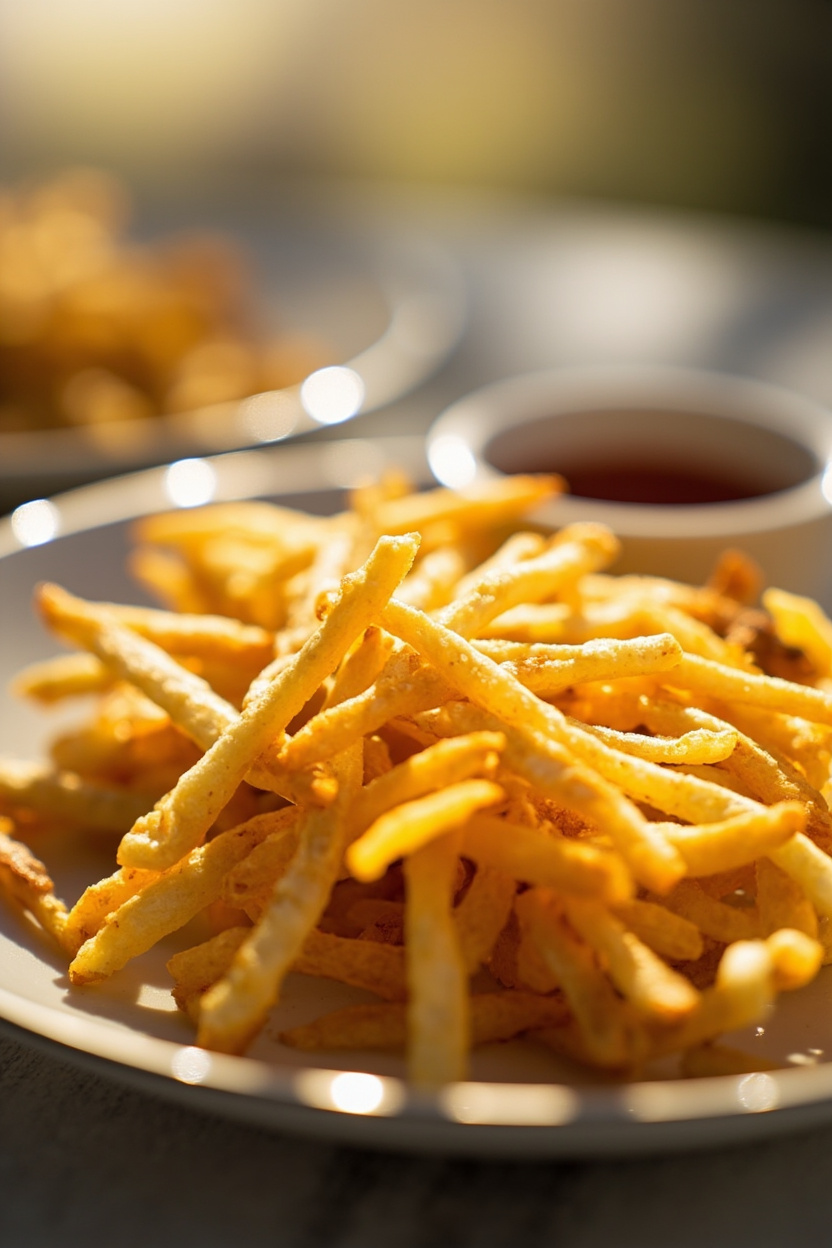
- 1 kg Yukon Gold or Russet potatoes: starch composition affects crisp formation; Russets are higher in starch for drier interiors
- 500 ml cold water: hydrates and removes soluble starch; clear rinse shows starch reduction
- 1 tbsp white vinegar: low pH helps strengthen cell walls, maintaining shape during frying
- 4 cups neutral oil (sunflower or canola): high smoke point prevents lipid oxidation and off-notes
- 10 g (2 tsp) fine sea salt, plus extra ionic salt enhances flavor and draws surface moisture, aiding crispness
- Optional: smoked paprika or grated Parmesan: adds umami and smoky aromatic compounds for depth
Kitchen Tools You’ll Need
- Mandoline or very sharp chef’s knife.
- Deep pot or heavy-bottomed fryer with thermometer.
- Wire rack and baking sheet for draining.
- Clean kitchen towels or paper towels.
Whisper-Thin Frycraft: How to Turn Potatoes Into Golden Lace?
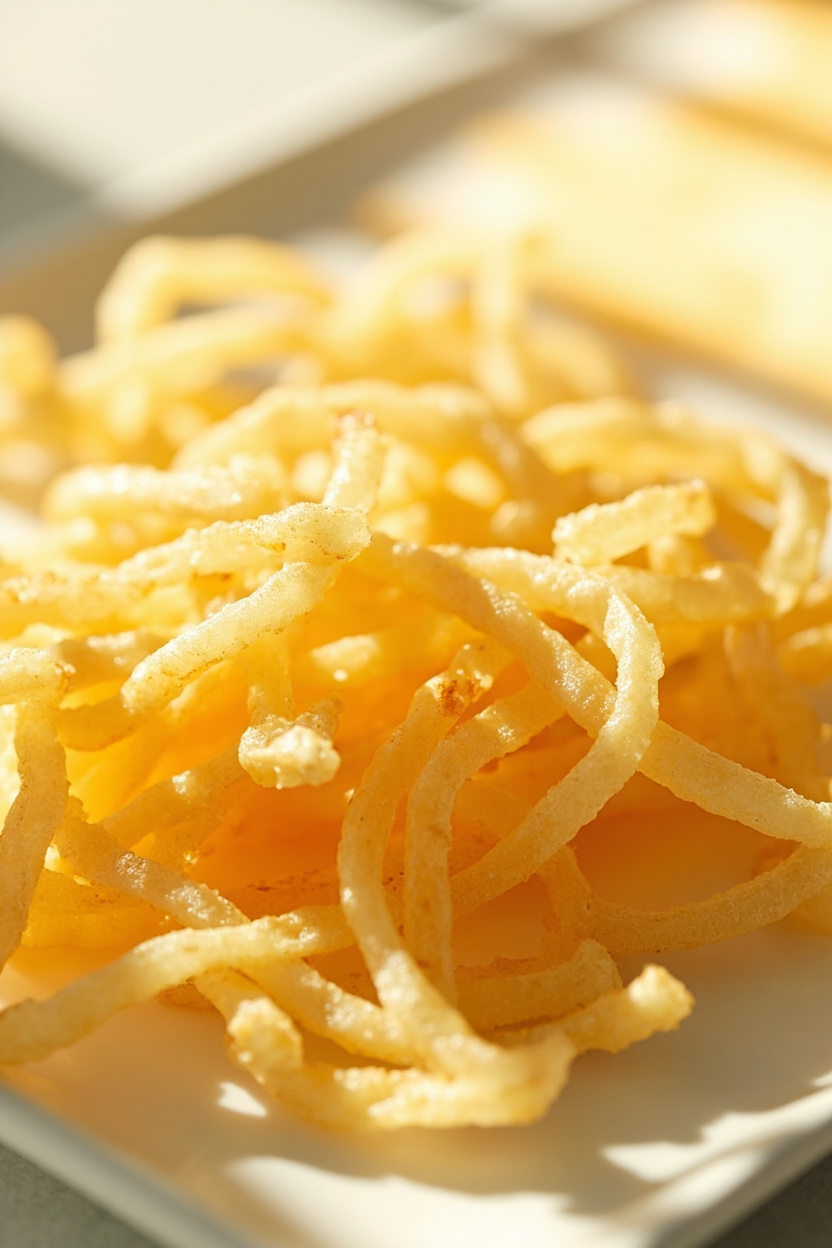
- Peel and slice the potatoes into ultra-thin matchsticks using a mandoline set to about 2 mm. As you slice, you should hear a faint whisper of the blade through the potato. That sound means a clean cut, which fries into crisp edges.
- Place the matchsticks in a bowl of cold water and swirl until the water runs nearly clear. Add a tablespoon of vinegar and let sit for 10 minutes. The water will smell faintly like raw potato, a natural starchy aroma; it will dissipate after rinsing.
- Drain and refill with fresh cold water, chill in the fridge for at least 30 minutes. Cold soaking firms the flesh so the strands hold their shape during frying and produce a more brittle, audible crisp.
- Remove from the water and dry meticulously on clean towels. Pat and press gently until the strands are almost dry. If they squeak a bit when rubbed, they are ready. Any residual moisture will steam and collapse the delicate crust.
- Heat oil to 160°C (320°F). Fry small batches for about 3 minutes until the fries are pale and soft to the bite. They will bubble gently and release a mild potato aroma, not deep-fried perfume yet.
- Drain on a wire rack. Bring oil to 190°C (375°F) and return fries in batches, frying 90 to 120 seconds until a uniform golden color and a lace-like crackle develop. The sound is immediate – a bright, high-pitched snap when you bite.
- Lift to a rack, immediately sprinkle with fine sea salt and any optional seasoning while still hot. Serve without delay so the first forkful gives you that tender interior beneath a wafer-thin, sugary-crisp surface.
Locked-In Crunch: Pro Secrets for Irresistible Crispness
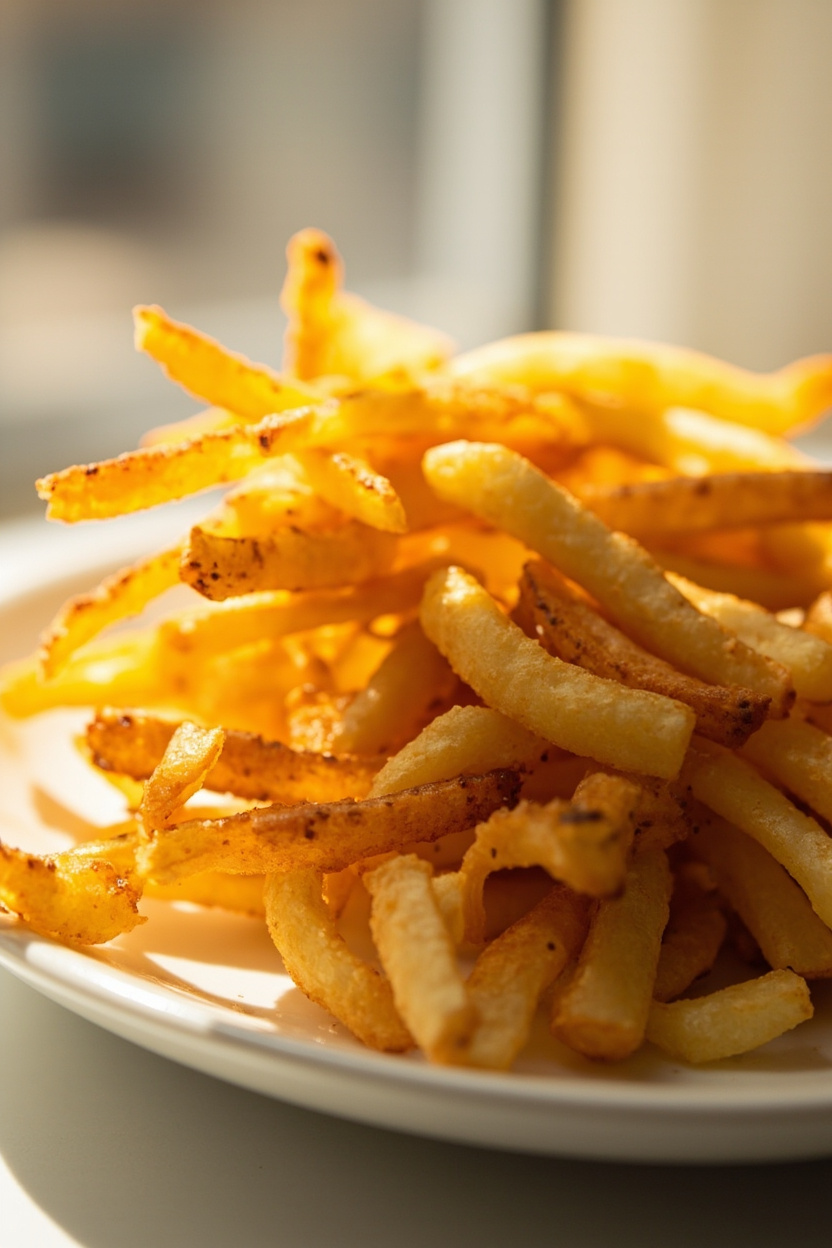
Tip 1: Cut Consistently
Use a mandoline for uniform thickness. Consistent strand width means each fry cooks in the same time frame, preventing some from burning while others remain soft.
If you don’t have a mandoline, stack thin slices and slice with a sharp knife for the same effect.
Tip 2: Double-Fry for Texture
The two-stage frying method is non-negotiable for true shoestring fries. The low-temperature blanch sets the internal structure while the high-temperature flash creates the brittle, paper-thin crust. Skipping the blanch yields greasy, dense results.
Tip 3: Dry Completely and Fry in Small Batches
Any extra moisture will cause the oil temperature to plunge, creating soggy fries.
Frying small batches keeps the oil temperature stable and helps each strand crisp evenly. Use a thermometer to monitor temperatures rather than guessing.
Tip 4: Season Right After Frying
Salt melts into the hot surface and bonds with residual oil, ensuring the seasoning clings. For extra depth, finish with a whisper of smoked paprika or finely grated hard cheese to add aromatic complexity.
How to Store and Freeze?
- Room temperature: Serve immediately for best texture; shoestring fries lose crispness within 10-15 minutes at room temperature.
- Refrigerator: Store cooled fries in an airtight container up to 24 hours, then re-crisp in a hot oven or air fryer at 200°C (400°F) for 3-5 minutes.
- Freezing: Freeze single-layer on a tray until solid, then bag. Reheat from frozen in a 200°C oven or air fryer, checking frequently to avoid burning.
Seasonal Variations & Pro Swaps
The Seasonal Edge
hoestring fries really shine in late autumn and winter when potatoes are at their starchy prime after harvest.
Cooler weather means potatoes store better, concentrating sugars and starches that yield superior crispness and flavor when fried.
Variations
- Try sweet potatoes for an autumnal twist, but reduce frying time as they brown more quickly.
- Add finely chopped fresh rosemary and lemon zest after frying for a bright, herbaceous note in spring.
- Dust with smoked paprika and a pinch of cayenne for a wintery, warming edge.
- For a festive holiday twist, toss hot shoestring fries with finely grated truffle pecorino and a drizzle of truffle oil just before serving.
Frequently Asked Questions
You can oven-roast thin fries at high heat for a crisper edge, but achieving the ultra-light, lacy texture of deep-fried shoestrings is difficult without oil’s rapid heat transfer.
Russets and Yukon Golds work best; Russets for high starch and crispiness, Yukon Gold for a slightly creamier interior and buttery flavor.
Dry thoroughly, fry in small batches, and avoid overcrowding. A brief blanch and chilling keeps strands separate and firm.
Reheat in a hot oven or air fryer at 200°C (400°F) for a few minutes. Avoid microwaving, which softens them.
