

Queso for potatoes is pure comfort with a clever, bright twist – molten cheese that clings to every nook of a fork-tender potato.
Think silky, slightly tangy cheese sauce with a whisper of toasted spice and an unctuous texture that coats roasted wedges, smashed baby potatoes, or a heap of crispy fries.
It’s a must-make because the contrast of creamy queso and starchy potato creates a craveable mouthfeel that’s both rustic and refined.
I’ll share technique, timing, and tiny chef tricks so your queso melts perfectly, stays pourable, and tastes layered, not greasy.
What Sets This Queso For Potatoes Apart?
- Controlled emulsion: Building a light roux then whisking in warm milk creates a stable matrix where fat and protein bind, producing a smooth, glossy queso for potatoes that clings without separating.
- Cheese layering: Combining a sharp cheddar for flavor and a higher-moisture melting cheese like Monterey Jack prevents grit while delivering depth, so the sauce is flavorful and silky.
- Temperature vigilance: Low, patient heat prevents the casein proteins from tightening and releasing water, which keeps the texture velvety rather than grainy or oily.
- Flavor architecture: Roasted poblano and a hint of acid from lime brighten the richness, balancing fat and starch and making the potato-queso pairing feel refined rather than heavy.
Pantry Stardust: The Flavor Players Behind Your Potato Queso
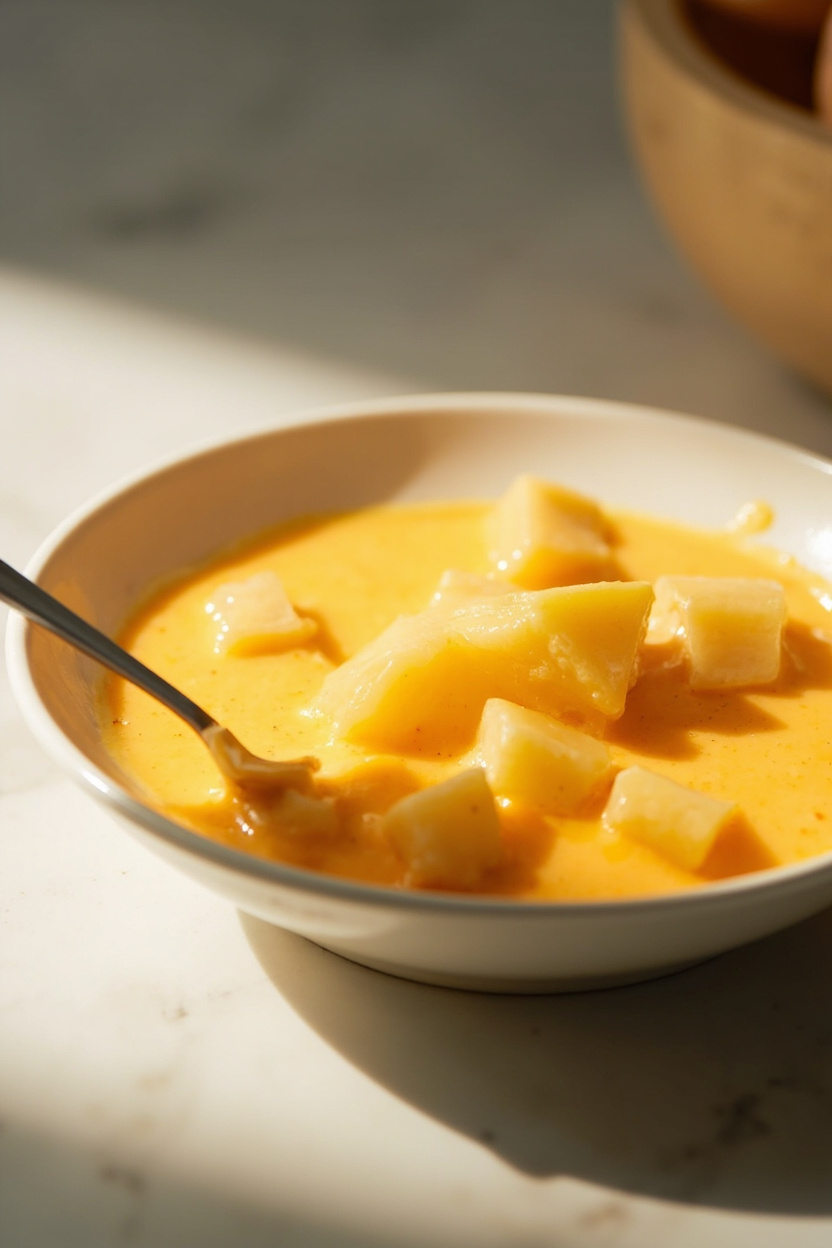
- 450g (1 lb) Yukon Gold or Russet potatoes: starchy structure, gelatinized starch gives creamy mouthfeel.
- 60g (4 tbsp) unsalted butter: saturated fats help emulsify and carry flavor compounds.
- 30g (3 tbsp) all-purpose flour: starch gelatinization thickens the sauce through heat-activated swelling.
- 300ml (1 1/4 cups) whole milk: fat and lactose enhance mouthfeel and support smooth melting.
- 180g (6 oz) sharp cheddar, grated: aged proteins and fat provide pronounced umami and color.
- 90g (3 oz) Monterey Jack or queso blanco, grated: higher moisture, melting behavior prevents graininess.
- 1 small roasted poblano, diced: Maillard sugars and smoke add aromatic complexity.
- 1 tsp finely chopped jalapeño or 1/2 tsp chili flakes: capsaicin offers controlled heat to lift flavor.
- 1 tsp kosher salt and 1/4 tsp white pepper: ionic seasoning enhances the perception of all ingredients without dark specks.
- 1 tbsp fresh lime juice: citric acid brightens and stabilizes richness on the palate.
Kitchen Tools You’ll Need
- Heavy-bottomed saucepan or small saucepan.
- Fine-mesh whisk.
- Microplane or box grater for cheese.
- Immersion blender or blender (optional for ultra-smooth).
Velvet Melt Method: How to Make Lusciously Pourable Queso?
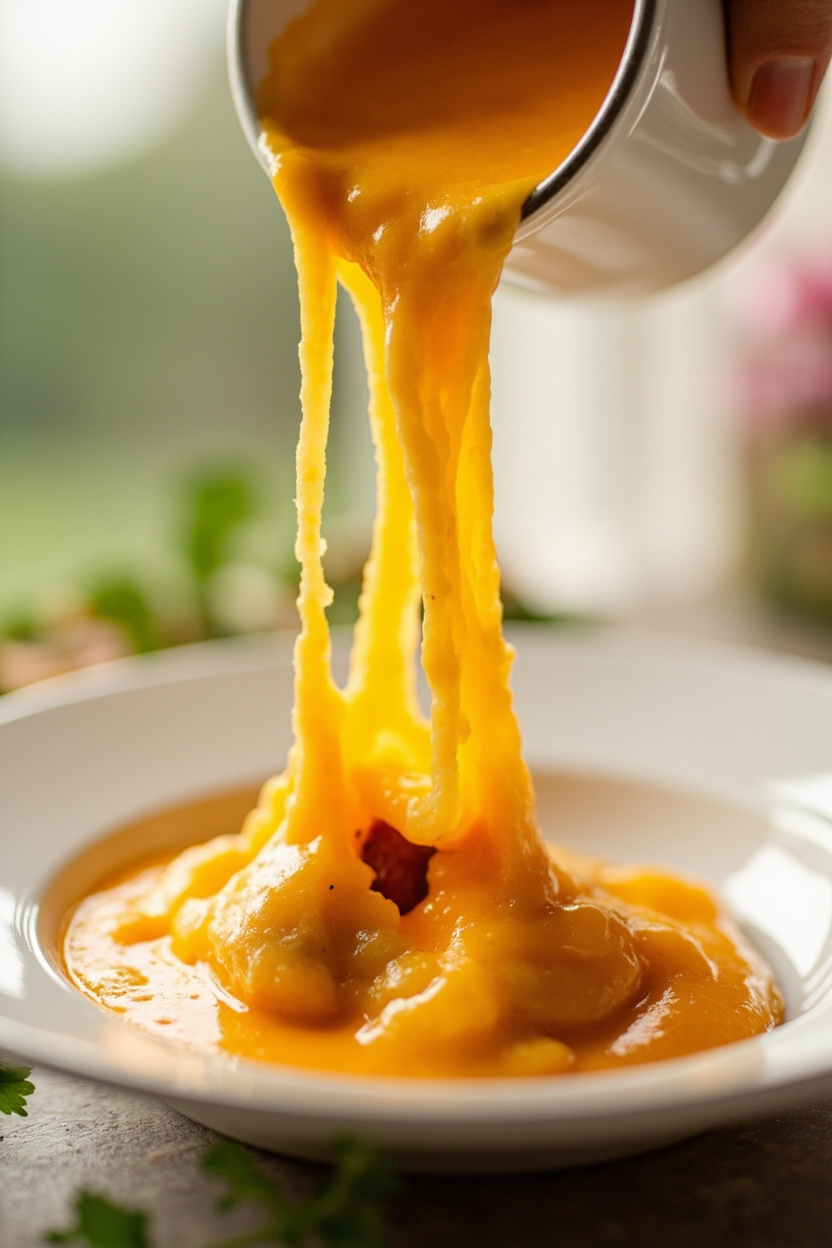
- Prepare potatoes: Parboil diced potatoes until just tender, about 8-10 minutes, then drain and dry in the pot. For roasted texture, toss with oil and roast at 220°C/425°F until golden and crisp. You should smell a nutty roasted aroma as the edges caramelize.
- Make the roux: In a heavy-bottomed saucepan, melt butter over medium heat until foaming. Add flour and stir constantly for 1-2 minutes until the mixture smells gently toasty and pale blonde. The texture will feel sandy, then smooth as the flour cooks.
- Add milk: Warm the milk separately and whisk it into the roux in a slow, steady stream to avoid lumps. The sauce will loosen, then thicken; simmer gently until it coats the back of a spoon, showing a glossy sheen when stirred.
- Introduce cheese slowly: Reduce the heat to low and add the grated cheeses in small handfuls, stirring slowly until each batch melts into a silky ribbon. Avoid boiling – you want a soft, glossy texture without graininess.
- Season and finish: Fold in diced roasted poblano and jalapeño, then stir in lime juice, salt, and white pepper. Taste and adjust. If the queso is too thick, add a tablespoon of warm milk at a time until it reaches a pourable consistency.
- Combine and serve: Place potatoes on a platter, pour warm queso over them so it clings and pools attractively. Garnish with finely chopped chives or cilantro. The aroma should be rich, slightly tangy, with a warm peppered lift.
Kitchen Confidences: Little Tricks Chefs Use for Perfect Queso

Tip 1: Grate fresh, chill the block
Pre-grated cheese often contains anti-caking agents that hinder smooth melting.
Grate cheese from a chilled block for cleaner shreds that melt evenly into your queso for potatoes. Cold cheese also slows down heat shock, giving you better control.
Tip 2: Warm milk avoids lumps
Heating milk slightly before adding it to the roux prevents startling the roux and reduces lumps.
Warm milk integrates into the starch matrix more smoothly, creating a glossy texture and a luxurious mouthfeel.
Tip 3: Fix a grainy sauce
If your queso separates or looks grainy, remove from heat and whisk in a tablespoon of warm milk or a small knob of butter; emulsifying by hand or briefly using an immersion blender will often bring it back to a silky state.
Tip 4: Keep it pourable
For a sauce that stays pourable longer, keep it over the lowest heat in a bain-marie or add 1-2 tablespoons of evaporated milk.
That extra liquid helps maintain the emulsion without diluting flavor too much.
How to store queso for potatoes?
- Room temperature: Do not leave queso at room temperature for more than 2 hours.
- Fridge: Cool quickly, transfer to an airtight container, and refrigerate for up to 4 days. Reheat gently over low heat with a splash of milk, whisking until smooth.
- Freezer: Not recommended, texture will degrade, but you can freeze for up to 1 month and thaw slowly, then re-emulsify with warm milk.
Variations and Substitutions
- Green chile twist: Swap poblanos for roasted Hatch green chiles for a brighter, more piquant profile.
- Vegan queso: Use cashew cream, nutritional yeast, and tapioca starch for stretch and melt.
- Smoky bacon: Fold in crisped, chopped bacon for crunchy salt and smoky fat contrast.
- Spicy beer queso: Replace 50ml milk with a light lager and add smoked paprika for depth.
Nutrition Information
This queso for potatoes is energy-dense and rich in protein from the cheese, with calcium and vitamin B12.
Potatoes add vitamin C and potassium. Not dairy-free; gluten present if thickened with wheat flour. It can be adapted for lower carbs by serving over roasted cauliflower.
Frequently Asked Questions
Yes, make the queso up to 3 days ahead and store it refrigerated. Reheat gently and whisk in warm milk to restore pourability before serving.
A mix of sharp cheddar and a higher-moisture melting cheese like Monterey Jack gives the best balance of flavor and smooth melt for potato dishes.
Keep the heat low, add cheese slowly, and avoid boiling. Warm the milk first and grate the cheese fresh to reduce the risk of a grainy texture.
Yes, add heat in layers: fresh jalapeño or chili flakes for immediate heat and roasted chiles for smoky depth, adjusting to taste so potatoes still shine.
