
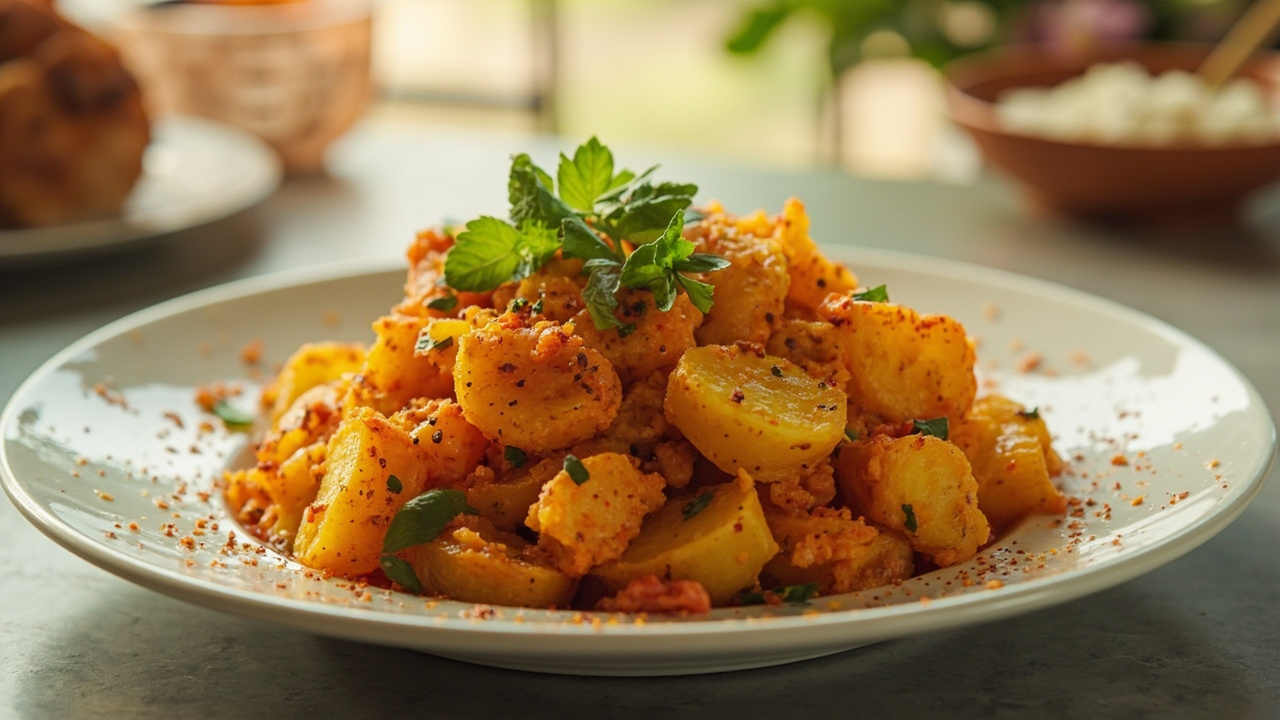
Creamy, crisp, and fragrant, indian potato recipes have a way of turning humble spuds into something utterly irresistible.
Think golden edges that give way to pillowy interiors, a whisper of mustard seed and turmeric, and a hit of tangy tomatoes or bright cilantro that keeps you reaching for one more forkful.
These aloo recipes are comfort and celebration at once, perfect as a potato curry with rice, a quick potato sabzi for rotis, or a masala potato side that steals the show.
Indian Potato Recipes
Equipment
- Heavy skillet – for even browning and controlled heat
- Medium saucepan – for parboiling potatoes
- Sharp knife – for consistent potato cubes
- Spatula or wooden spoon – for gentle stirring
Ingredients
- 900 g Yukon or Russet potatoes peeled and cut into cubes
- 45 ml vegetable oil
- 5 g mustard seeds
- 5 g cumin seeds
- 10 g turmeric powder
- 8 g Kashmiri chili or paprika
- 10 g coriander powder
- 6 g garam masala
- 120 g onion finely chopped
- 60 g tomato chopped
- 10 g ginger-garlic paste
- 6 g salt
- 15 g fresh cilantro
- 15 ml lemon juice
Instructions
- Bring a medium saucepan of salted water to a boil. Add potato cubes and simmer 6-8 minutes until just tender when pierced; they should not fall apart.
- Drain and let the potatoes steam-dry for a few minutes; this reduces surface moisture so they crisp in the skillet.
- Heat oil in a heavy skillet over medium-high heat until it shimmers. Add mustard seeds and cumin seeds; listen for the mustard seeds to pop, about 30 seconds.
- Add chopped onions and sauté until translucent and slightly golden, about 4-5 minutes, releasing a sweet, caramelized aroma.
- Stir in ginger-garlic paste and cook 30-45 seconds until the raw edge softens and the mixture becomes glossy.
- Add tomatoes, turmeric, chili, coriander powder, and salt. Cook until tomatoes collapse and the oil separates, about 3-4 minutes; you’ll see a glossy sheen.
- Gently place parboiled potatoes into the pan. Toss carefully to coat with the masala; press down lightly and let them sear without stirring for 2 minutes to build crisp edges.
- Toss again and continue to cook, turning occasionally, until potatoes are golden and slightly crusted in places, about 6-8 minutes. You’ll smell warm spices and toasted notes.
- Sprinkle garam masala and lemon juice; fold in cilantro. Taste and adjust salt. The final texture should be crisp outside, tender inside, with layered spice flavors.
- Serve hot as a potato sabzi alongside roti, or as a potato curry accompaniment to steamed rice.
Notes
- Spice level: Use Kashmiri chili for color without too much heat; swap for cayenne if you want more kick.
- Oil choice: Neutral oils tolerate high heat; ghee adds richness if not keeping it vegan.
- Make-ahead: Parboil potatoes up to a day ahead and refrigerate; crisp them just before serving.
Why We Love This Indian Potato Recipes Recipe?
- The textural contrast is seductive: crisped exteriors and a cloudlike interior create a satisfying mouthfeel that keeps you coming back for more.
- The spice layering: mustard seeds, cumin, turmeric, and garam masala – builds a complex aroma profile without overwhelming the potato’s mild sweetness.
- Cooking technique is forgiving: Parboiling then searing ensures even doneness and great browning, whether you make a simple potato sabzi or a richer potato curry.
- Versatility is another win: These aloo recipes can be adapted to be dry, saucy, or pan-fried, and pair beautifully with both rice and breads.
The Flavor-Building Cast for Indian Potato Creations
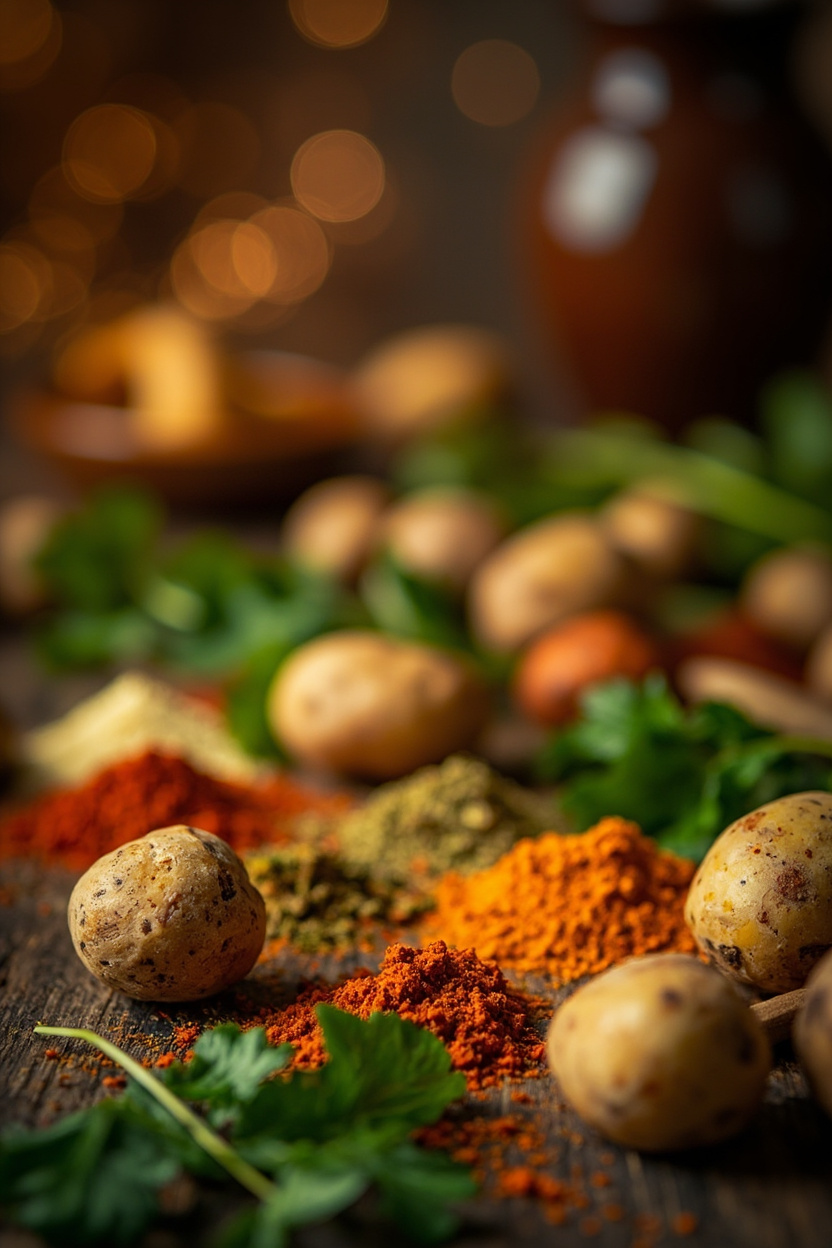
- 900 g (2 lb) potatoes: starch content affects texture; waxy types hold shape while starchy yield fluffier interiors.
- 45 ml (3 tbsp) vegetable oil: high smoke point allows proper searing and Maillard reactions.
- 5 g (1 tsp) mustard seeds: sulfur compounds burst when popped, releasing pungent aroma.
- 5 g (1 tsp) cumin seeds: contains terpenes that add warm, slightly citrusy notes.
- 10 g (2 tsp) turmeric powder: curcumin gives color and gentle earthiness with anti-inflammatory properties.
- 8 g (2 tsp) Kashmiri chili or paprika: capsanthin adds a vibrant red hue without excessive heat.
- 10 g (2 tsp) coriander powder: linalool imparts floral, lemony undertones to balance richness.
- 6 g (1 tsp) garam masala: blend of roasted spices adds aromatic complexity via Maillard-derived flavors.
- 120 g (1/2 cup) onion: sugars caramelize to produce sweet, savory depth.
- 60 g (1/4 cup) tomato: citric and malic acids cut through fat and brighten flavors.
- 10 g (2 tbsp) ginger-garlic paste: enzymes and sulfur compounds add savory umami and warmth.
- 6 g (1 tsp) salt: essential for protein and starch flavor activation and balance.
- 15 g (2 tbsp) cilantro: fresh volatile oils provide a herbaceous finish.
- 15 ml (1 tbsp) lemon juice: citric acid lifts and balances the palate.
Kitchen Tools You’ll Need
- Heavy skillet or cast-iron pan.
- Medium saucepan with lid.
- Sharp chef’s knife.
- Colander or sieve.
How to Assemble Your Perfect Potato Dish?
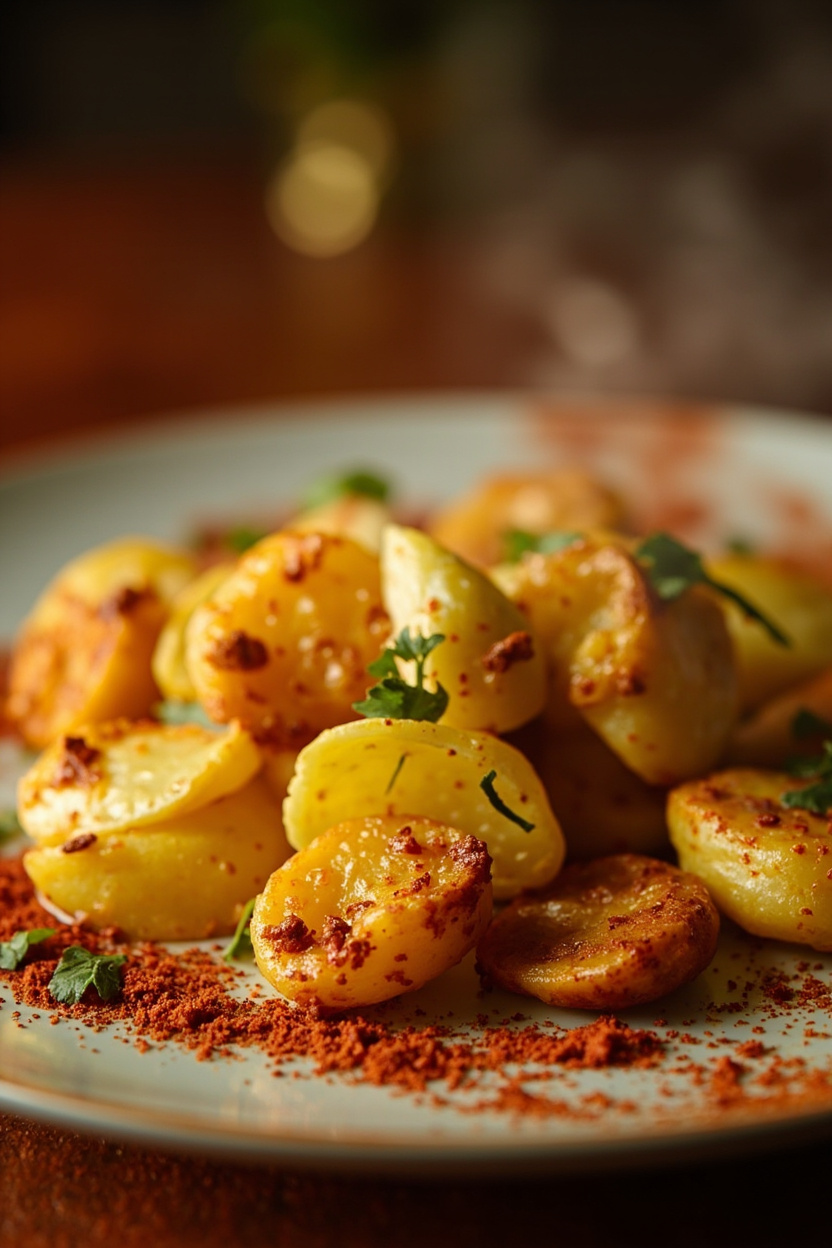
- Prepare potatoes by cutting into even cubes: Even sizing ensures uniform cooking so each piece reaches the same tender point.
- Parboil in salted water until a skewer meets slight resistance: The aroma will be clean and starchy; this step prevents a raw center later.
- Drain and let steam-dry: Dry surfaces brown better, giving you the crust that contrasts with the fluffy interior.
- Heat oil until shimmering, then add mustard and cumin seeds: Listen for the pop and smell the nutty, pungent notes as they bloom in the fat.
- Sauté onions until golden: The kitchen will fill with a sweet, caramelized scent indicating readiness for the next layer.
- Stir in ginger-garlic and spices; cook until the oil separates from the tomato masala: The masala will smell roasted and balanced, a sign flavors have melded.
- Add potatoes and toss gently to coat: Let them sit undisturbed to sear; you want distinct golden patches that crackle with texture.
- Turn and continue cooking until the potatoes feel tender and the edges are crisp: Texture should be both yielding and slightly resistant at the crust.
- Finish with garam masala, lemon, and cilantro: The final aroma should be bright, warm, and herbaceous-perfect with steamed rice or flatbread.
Chef’s Little Alchemy: Tricks for Fluffier, Spicier Potatoes
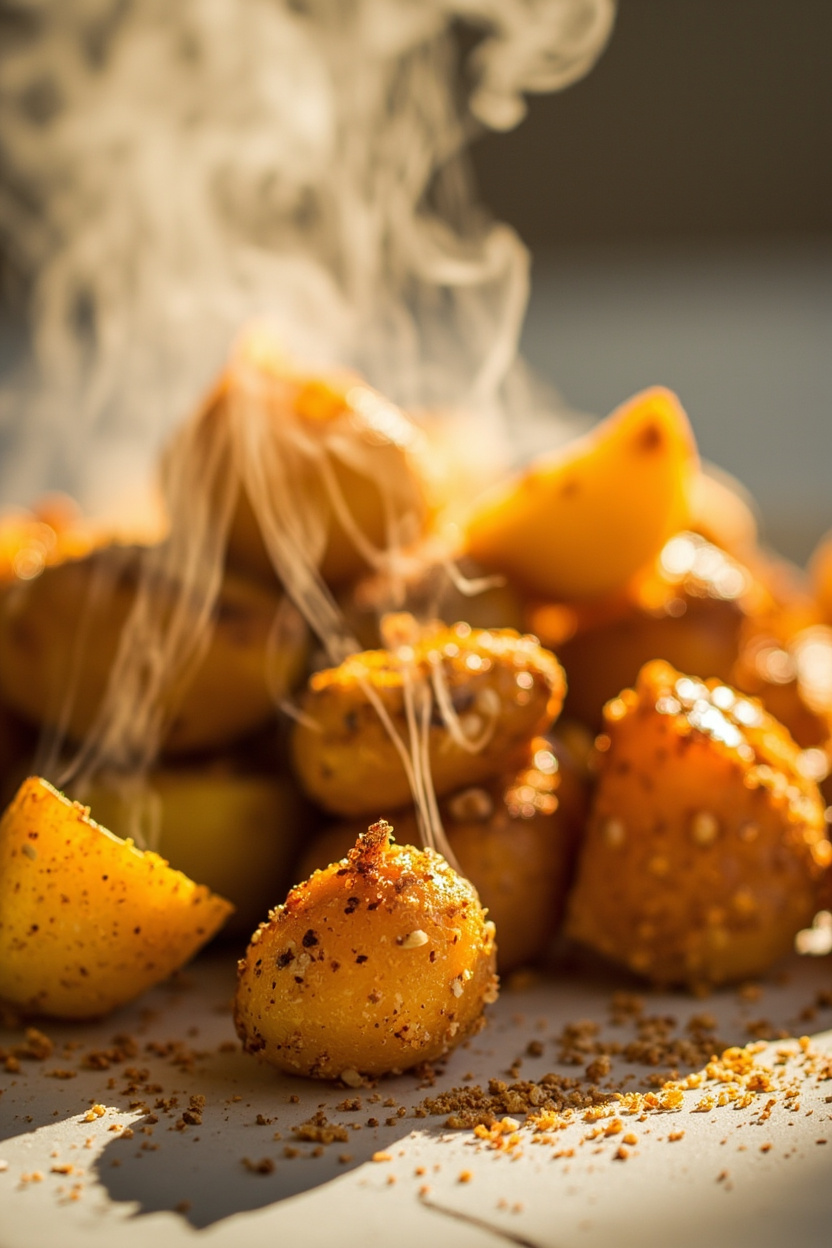
Parboil, Don’t Overboil
Parboiling to just-tender keeps the interior soft without turning mushy. Overcooked potatoes absorb too much water and break apart when you try to sear them, losing that coveted crisp exterior.
Dry Before You Sear
Allowing steam to escape from cut potatoes creates a drier surface for better browning. Moisture prevents Maillard reactions, so a quick air-dry or pat with a towel gives you better color and crunch.
Toast Whole Spices First
Blooming mustard and cumin in hot oil releases essential oils that infuse the dish with depth. It’s a small step that yields a big aromatic payoff and amplifies the overall spice profile.
Adjust Acid at the End
Add lemon or tomato at the end to brighten flavors. Acids cut through the richness and refresh the palate, making each bite feel lively and balanced.
How to Store indian potato recipes?
- Room temperature: Best eaten fresh; leave no longer than 2 hours.
- Refrigeration: Store in an airtight container up to 3 days; re-crisp in a hot skillet.
- Freezing: Blanched or sauced versions freeze for up to 2 months, but texture may soften on thawing.
Variations and Substitutions
Swap potatoes for sweet potatoes for a sweeter, vitamin-rich twist.
Make it saucier: add 100 ml coconut milk or yogurt for a potato curry.
Add peas or cauliflower for a hearty aloo mixed sabzi.
Use ghee and curry leaves for a South Indian masala potato with a deeper aroma.
Nutrition Information
A serving delivers complex carbohydrates, vitamin C, potassium, and moderate fiber.
Not high in protein; pair with lentils or yogurt. This recipe is naturally gluten-free and can be made dairy-free by using oil instead of ghee; it is not keto-friendly due to potato starch.
Frequently Asked Questions
Yes, the basic recipe contains no gluten ingredients. Always check spice blends for hidden gluten.
Use vegetable oil instead of ghee and skip any dairy additions for a vegan-friendly aloo recipe.
Reheat in a hot skillet with a splash of oil over medium-high heat to restore the crunchy exterior.
Fresh is best. Frozen diced potatoes release more moisture and won’t crisp as well; parboiling from fresh potatoes gives the best texture.
