
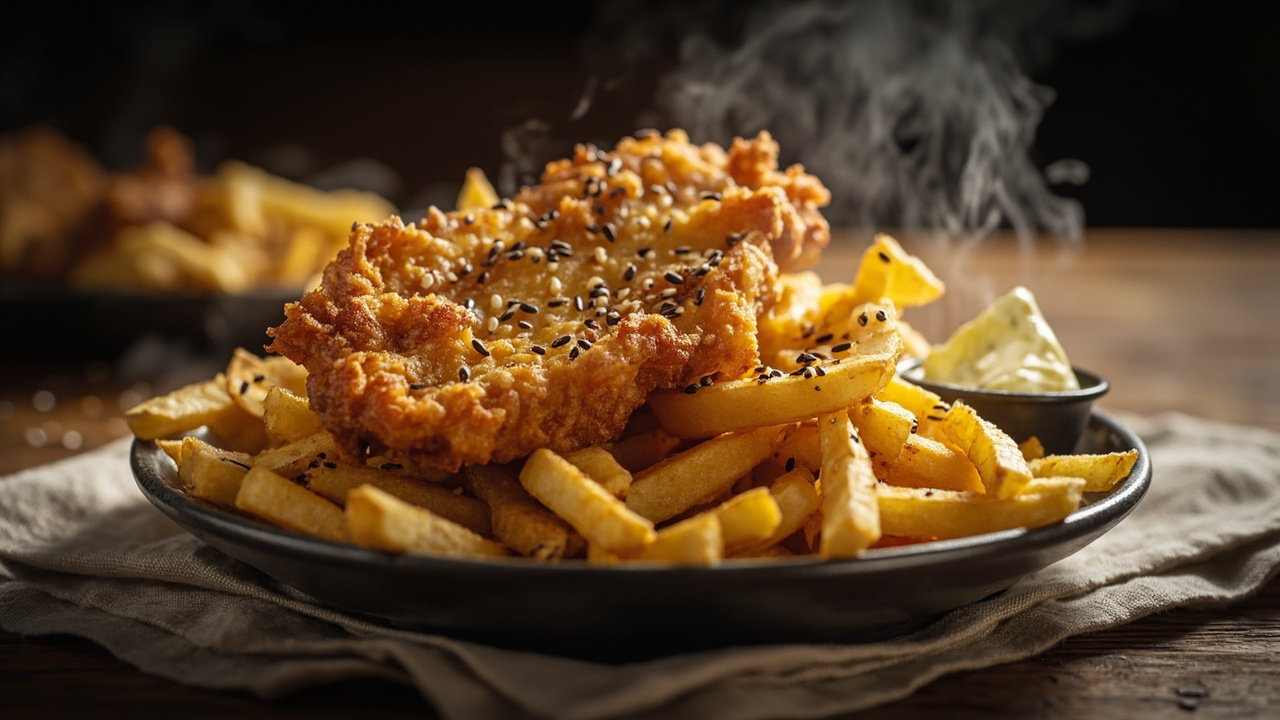
Fish and fries have a powerfully comforting crunch that taps into texture, flavor, and memory.
I recommend you treat the batter as more than coating; it’s a thin shell that protects delicate white fish while delivering an immediately satisfying crack.
You should aim for a contrast: flaky, moist flesh against a deeply golden, feather-light crust and crisp, evenly cooked fries.
The aroma of hot oil, the tang of a bright tartar or lemon, and the starch-rustle of potatoes make this a must-make weeknight or celebration dish that rewards attention to technique.
Fish and Fries
Equipment
- Heavy pot or deep fryer – maintains steady oil temperature for even frying
- Wire rack and baking sheet – drains oil while keeping crust crisp
- Thermometer – ensures accurate oil temperature for perfect texture
Ingredients
- 500 g 1.1 lb cod or haddock, cut into 4 fillets
- 300 g 2 cups all-purpose flour
- 200 ml 3/4 cup + 1 tbsp cold beer or sparkling water
- 2 large eggs 100 g
- 900 g 2 lb Russet potatoes, peeled and cut into 1 cm fries
- 1 tsp 6 g baking powder
- Salt and freshly ground black pepper to taste
- Vegetable oil for frying approx. 2 L (8 cups)
- Fresh lemon wedges and tartar sauce to serve
Instructions
- Prepare the fries: Rinse cut potatoes under cold water until water runs clear to remove surface starch. Pat dry thoroughly – dryness prevents oil splatter and promotes crispness. Par-fry at 160 C (320 F) for 4-5 minutes until pale and tender; remove and drain.
- Increase oil to 190 C (375 F) for final fry. Fry par-cooked potatoes again for 2-3 minutes until golden brown and crackly. Season with fine salt immediately and keep warm on a wire rack.
- Make batter: Whisk 300 g flour with 1 tsp baking powder and 1 tsp salt in a bowl. Add 2 beaten eggs, then slowly whisk in 200 ml cold beer until smooth. The batter should be the consistency of heavy cream. Let rest 5 minutes; bubbles indicate aeration for a light crust.
- Dry fish fillets with paper towel and season with salt and pepper. Dust lightly with a tablespoon of flour to help batter adhere. Heat oil to 190 C (375 F) and test with a drop of batter; it should sizzle and rise immediately.
- Working in batches, dip fillets into batter, allowing excess to drip off, then gently lower into oil. Fry 4-5 minutes, turning once, until crust is deep golden and fish flakes at the thickest point. Remove to a wire rack to drain and rest 1-2 minutes; internal texture should be opaque and delicate.
- Serve hot: Plate fries and fish immediately. Garnish with lemon wedges and a spoonful of tartar sauce. The contrast between the warm, steamy fish and the sharp citrus brightens the palate and balances the fried richness.
Notes
- Oil temperature: Use a thermometer – steady 190 C (375 F) keeps batter crisp without overcooking fish.
- Resting batter: Short rest helps bubbles form for a lighter crust.
- Potato choice: Use high-starch Russets for best fry texture; waxy potatoes stay dense and won’t crisp as well.
The Flavorful Cast of Fish & Fries
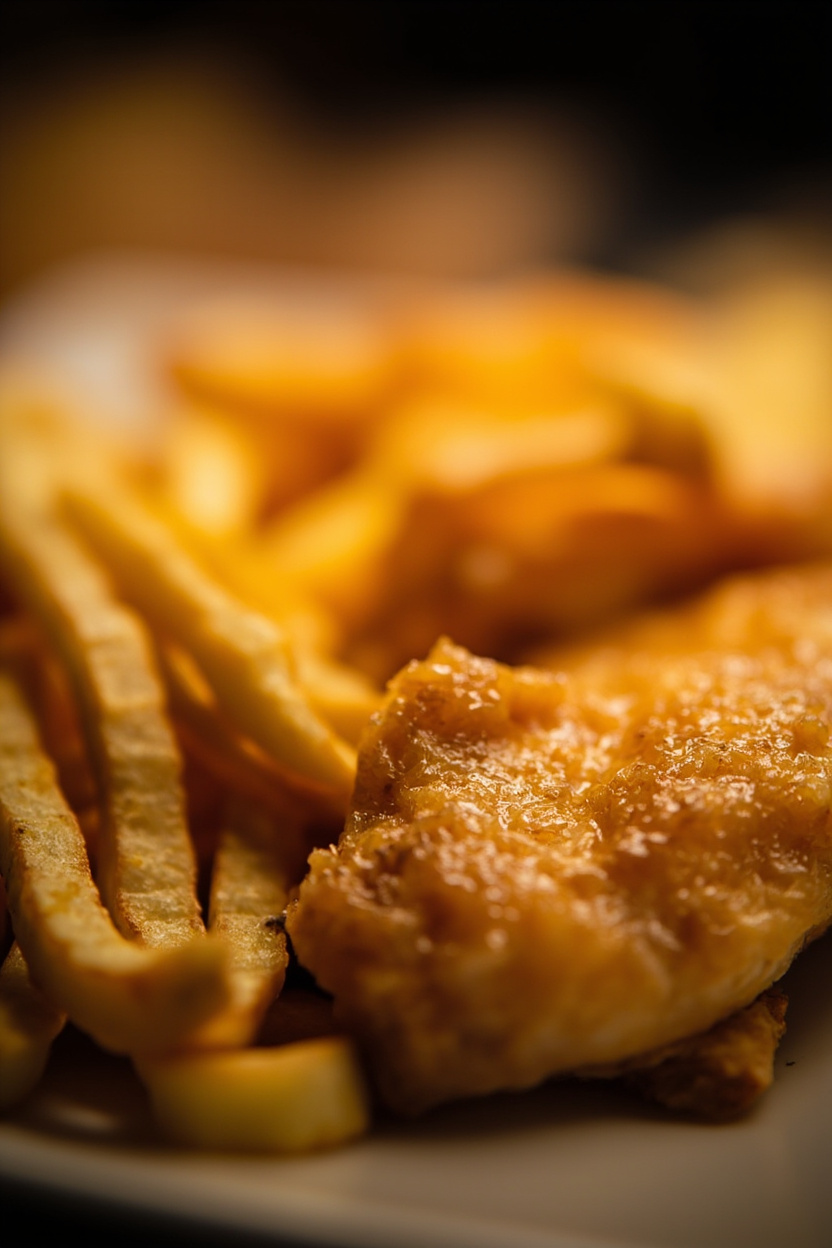
- 500 g (1.1 lb) cod or haddock: mild-flavored white fish chosen for firm flakes and low oil content, which fry cleanly
- 300 g (2 cups) all-purpose flour: contains starch and protein that gelatinize and brown to form a crisp crust
- 200 ml (3/4 cup + 1 tbsp) cold beer or sparkling water: carbonation creates bubbles in batter, reducing density and increasing crispness
- 2 large eggs (approx. 100 g): egg proteins coagulate during frying, adding structural integrity to the batter
- 900 g (2 lb) Russet potatoes: high amylose content gives a fluffy interior and dry surface ideal for crisp frying
- 1 tsp (6 g) baking powder: releases CO2 when heated, lightening the batter and aiding expansion
- Salt and freshly ground black pepper: essential for flavor balance; salt also enhances crust browning
- Vegetable oil, neutral with a high smoke point, approx. 2 L: prevents off-flavors and allows consistent frying temperature
- Fresh lemon wedges and tartar sauce: acid and emulsified fats cut through richness and brighten the palate
Alchemy in the Fryer: Building Golden, Flaky Perfection
- Start with potatoes: After cutting, submerge fries in cold water to leach surface starch. You should see water cloud the first time, then clear after repeated rinses. Dry thoroughly; dampness causes violent oil reactions and soggy fries.
- Par-fry at 160 C (320 F): The fries will be pale, soft on the outside, and tender inside. Smell will be neutral with faint potato sweetness. This step sets up a fluffy interior that crisps in the second fry.
- Rest and bring oil to final temperature: Increase oil to 190 C (375 F). Use a thermometer; you want a steady shimmer without smoking. At this heat, the oil releases a clean frying aroma and browns surfaces quickly.
- Make batter cold and active: Whisk flour, baking powder, and salt, then add eggs and cold beer. The batter should cling lightly to a spoon and show bubbles. A cold batter hitting hot oil creates rapid steam lift for a feather-light shell.
- Prep fish: Pat fillets dry; a dry surface lets batter adhere. Lightly dust with flour – you’ll notice the flour “grabs” the batter so it won’t slide off in oil. Season simply with salt and pepper so the fish flavor remains front and center.
- Fry fish in batches: Lower battered fillets into 190 C oil. You should hear a lively sizzle; the batter will expand and turn golden in 4-5 minutes. Fish should flake with gentle pressure and feel springy, not rubbery.
- Final fries: Return par-fried potatoes to the 190 C oil for 2-3 minutes until deeply golden and audibly crunchy. Drain on a wire rack and salt while hot so crystals stick and dissolve slightly.
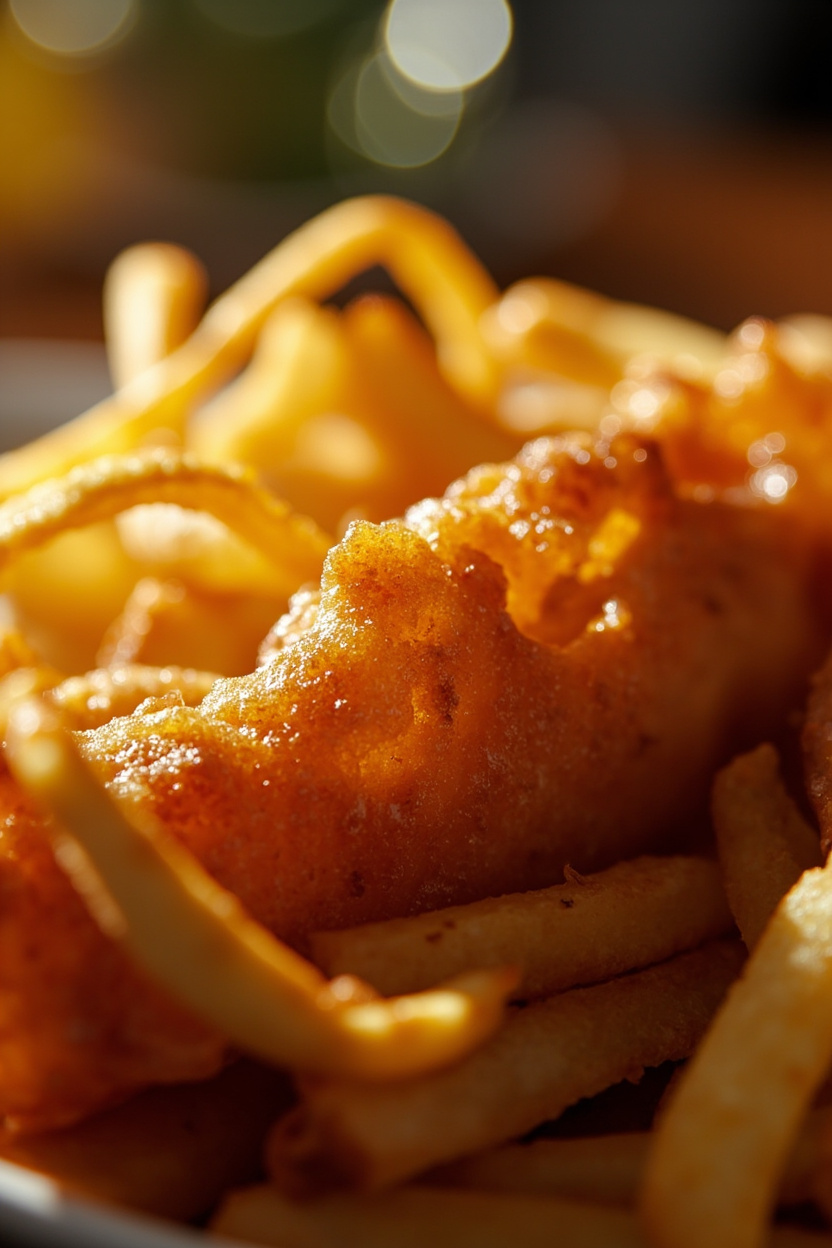
- Assemble and serve: The first bite should offer an audible crack, the batter shattering to reveal warm, flaky fish. The fries should provide a dry, powdery interior and crisp exterior. Squeeze lemon and dip into tartar sauce as you eat to balance fat with acid and cream.
Don’t Make These Mistakes with Fish And Fries
Overcrowding the fryer
Keep batch sizes small. Overcrowding drops oil temperature and produces soggy crusts. Fix it by working in 2-3-piece batches and letting the oil return to 190 C between additions.
Using wet batter or wet fish
Too-moist surfaces prevent batter adhesion and produce oil splatter. Pat fish dry and dust with flour before dipping. Keep batter cold to ensure lift when it hits hot oil.
Wrong oil temperature
Too low and you get greasy food; too high and the crust burns before the fish cooks. Use a thermometer to maintain 190 C for frying after par-cooking at 160 C for fries.
Overmixing batter
Vigorously overmixing develops gluten and yields a dense crust. Mix until just combined; a few lumps are fine. Rest briefly to retain bubbles.
How to store fish and fries?
- Room temperature: Serve within 30 minutes of frying for best texture; do not leave fried food more than two hours at room temperature.
- Refrigerator: Store cooled fish and fries in a single layer in an airtight container for up to 2 days. Re-crisp in a 200 C (400 F) oven on a wire rack for 6-8 minutes.
- Freezer: Flash-freeze cooked fries or battered fish on a tray, then transfer to airtight bags for up to 1 month. Reheat from frozen in a 200 C (400 F) oven, spray lightly with oil, and bake 12-18 minutes until hot and crisp.
Nutrition Information for Fish And Fries
A typical serving is high in protein from the fish and provides carbohydrates from potatoes. Fish supplies B vitamins, selenium, and omega-3s if using certain species.
This recipe is not gluten-free unless you swap to a gluten-free flour, and it contains eggs so it is not vegan. It can be dairy-free if tartar sauce is selected accordingly.
Frequently Asked Questions
You can par-cook fries and refrigerate fish raw, but finish frying just before serving. Cooked fish and fries lose crispness; reheat in a hot oven or air fryer to restore crunch.
I recommend firm, mild white fish like cod, haddock, or pollock. You should choose fillets that are of similar thickness for even cooking and a flaky texture.
Substitute a 1:1 gluten-free flour blend and use a gluten-free baking powder. I suggest a sparkling water batter for the lightest gluten-free crust, and always test oil for contamination if frying other gluten items.
You can bake fries for a lighter dish, and you should still batter and fry the fish for that classic contrast. For a fully baked version, use panko and a high-heat oven for the fish to approximate crispiness.
