
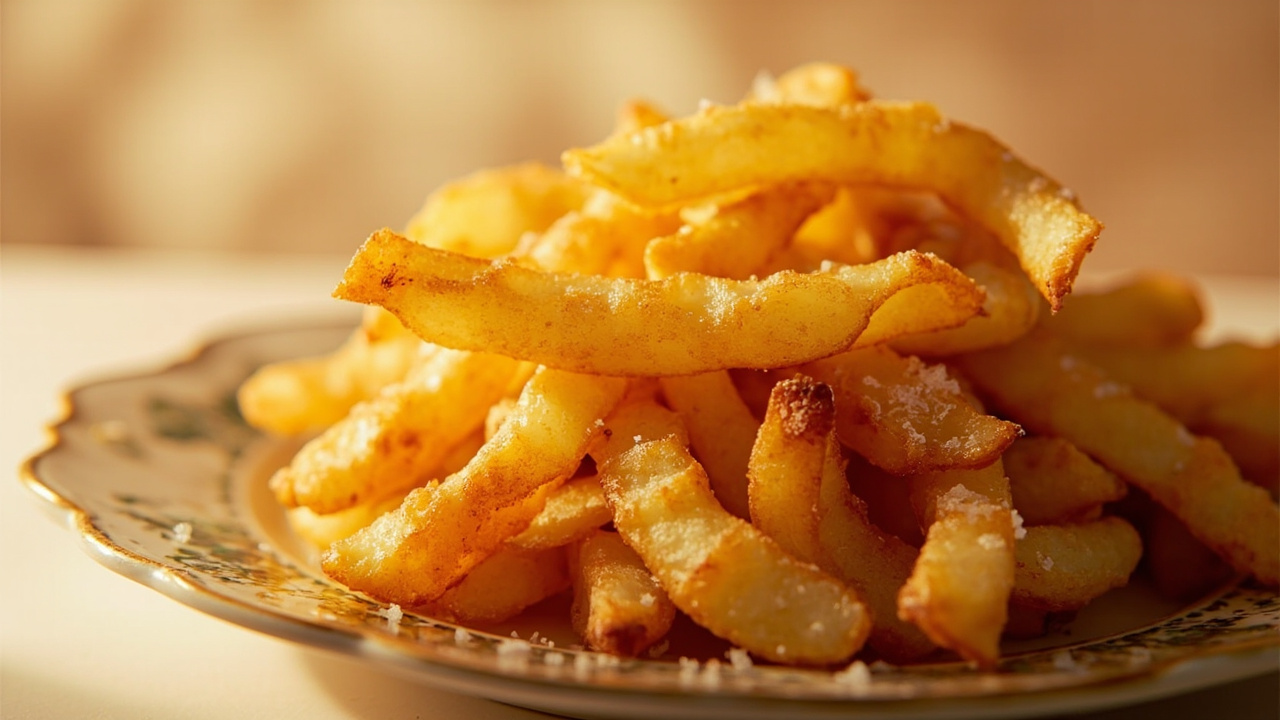
Duck fat fries deliver a crisp exterior, silky interior, and a savory depth ordinary oils can’t match.
If you want a single, actionable upgrade to homemade fries that changes texture and flavor, this is it.
Read on for precise methods, sourcing advice, nutrition trade-offs, troubleshooting, and pro-level finishing techniques.
- What Are Duck Fat Fries and Why Are They So Popular?
- Health and Flavor: Benefits and Nutritional Considerations of Cooking with Duck Fat
- Choosing the Right Potatoes and Duck Fat
- Step-by-Step: How to Make Perfectly Crispy Duck Fat Fries at Home?
- Techniques That Improve Crispness: Blanching, Double-Frying, and Starch Activation
- Seasoning, Sauces, and Serving Ideas: Classic Salts, Aiolis, and Pairings
- Troubleshooting and Common Mistakes (Greasy, Soggy, or Uneven Fries)
- Safety and Storage: Proper Handling of Duck Fat and Reheating Leftovers
- Final Summary
- Common Questions
What Are Duck Fat Fries and Why Are They So Popular?
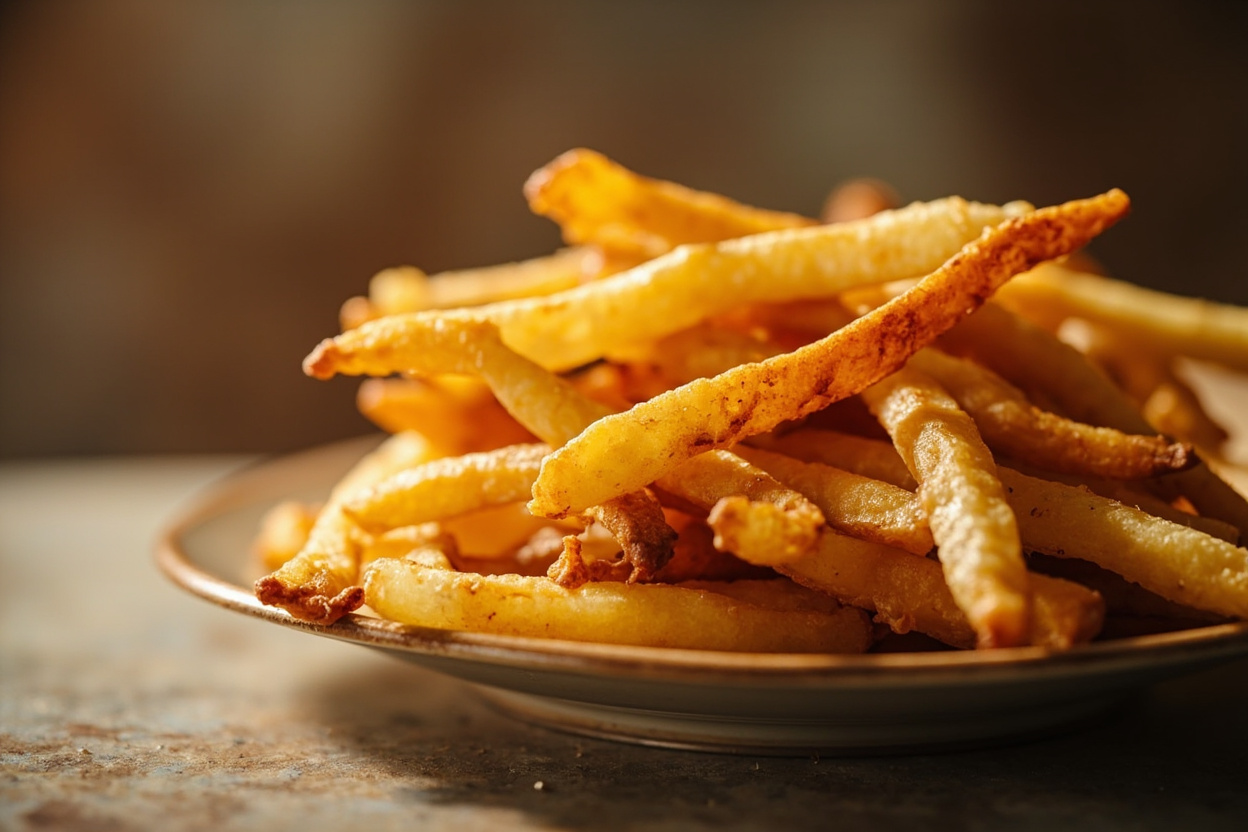
Duck fat fries are potatoes fried in rendered duck fat, rather than vegetable oil. The fat’s high monounsaturated content and low water levels yield a superior browning reaction and a richer mouthfeel.
They became a restaurant staple because duck fat amplifies Maillard reactions and carries savory flavors better than neutral oils. That yields deeper color, more crunch, and a full-bodied finish.
Restaurants favor duck fat for consistent results at moderate temperatures and for its ability to keep fries crisp longer on a plate. Home cooks chase that same texture and flavor boost.
Health and Flavor: Benefits and Nutritional Considerations of Cooking with Duck Fat
Duck fat contains about 50–55% monounsaturated fat, roughly 30–35% saturated fat, and the remainder polyunsaturated.
That profile gives it a higher smoke point than butter but lower than high-oleic vegetable oils.
Flavor benefits: the fat carries and enhances savory compounds, adds slight sweetness, and produces deeper umami through Maillard reactions.
A little duck fat goes a long way for perceived richness.
- Calories: ~115 kcal per tablespoon.
- Smoke point: 375–400°F (190–205°C).
- Shelf life: refrigerated 6–8 months; frozen 12+ months when sealed.
Nutrition trade-offs: higher saturated fat than many vegetable oils, so adjust portioning and frequency.
Use duck fat as a finishing or occasional cooking fat rather than an everyday replacement.
Choosing the Right Potatoes and Duck Fat
- Potatoes: choose high-starch varieties for maximum fluffiness inside and crisp exterior. Russets and Maris Piper are top choices for fries. Waxy potatoes produce denser, less fluffy results.
- Duck fat: rendered fresh from duck breast trimmings or purchased jarred from specialty butchers and gourmet food suppliers. Look for refined, food-grade rendered fat labeled for cooking.
| Ingredient | Best Option | Why |
|---|---|---|
| Potato | Russet / Maris Piper | High starch, low moisture for crisp exterior and fluffy interior |
| Duck fat | Refined, food-grade | Neutralized flavors, higher smoke point, consistent quality |
| Backup fat | High-oleic sunflower | Neutral flavor and high smoke point for blending |
Where to buy: artisan butchers, French specialty shops, online gourmet retailers, or render your own from supermarket duck breasts.
Buying in bulk yields better value per tablespoon.
Step-by-Step: How to Make Perfectly Crispy Duck Fat Fries at Home?
Follow exact temperatures, timings, and sequences. Precision beats improvisation for fries.
- Equipment: heavy pot or fryer, thermometer, slotted spoon, wire rack.
- Yield: 1 lb potatoes = ~4 servings as a side.
- Fat amount: 2–4 tablespoons of duck fat per pound of potatoes for shallow frying; double this amount for deep frying.
- Process overview: cut → rinse → dry → starch-activate (optional) → blanch at 300°F → cool → fry at 375–400°F → drain → salt immediately.
- Timings: blanch 4–6 minutes, final fry 2–4 minutes until golden-brown.
Target internal temp after final fry: 205–210°F for a fully gelatinized interior without collapse. Use a probe thermometer on a test fry to validate.
Techniques That Improve Crispness: Blanching, Double-Frying, and Starch Activation
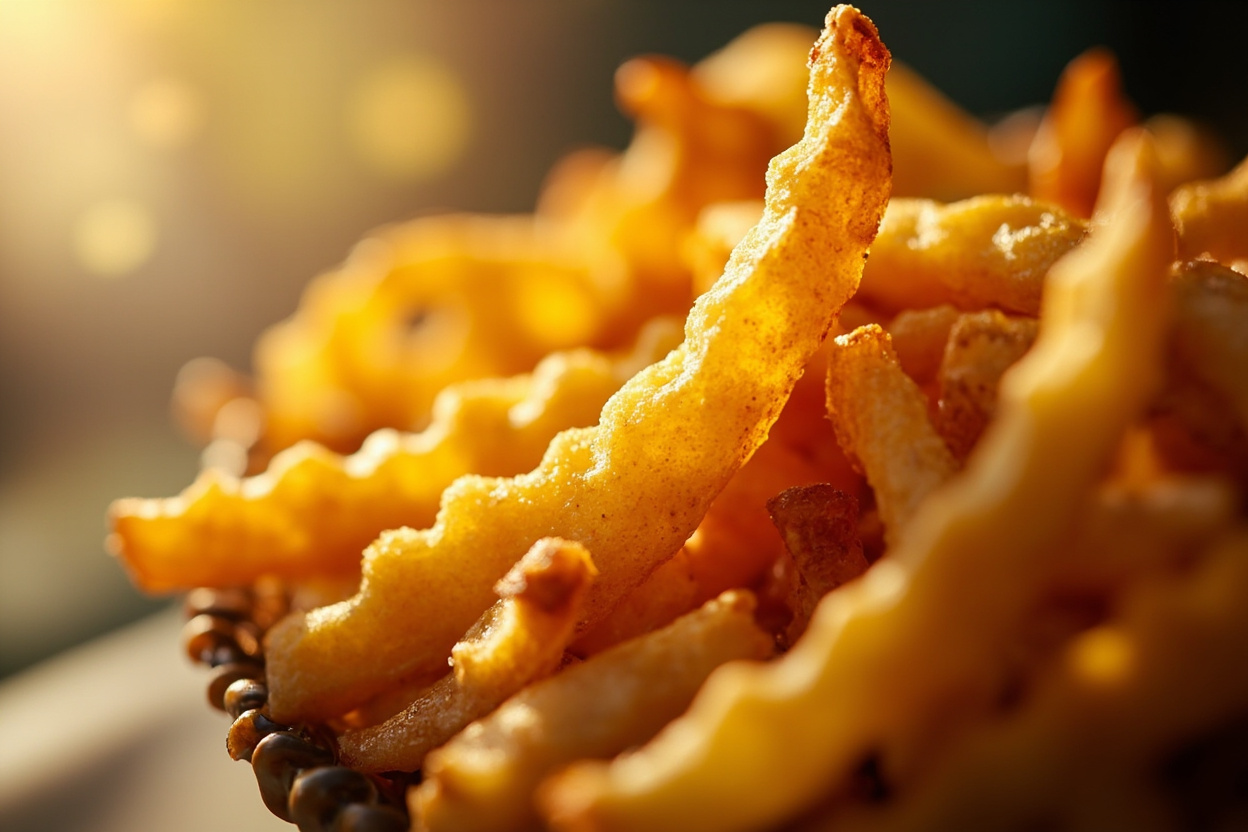
Blanching partially cooks the potato and removes surface moisture, reducing steam during the final fry.
- Typical blanch temp: 275–300°F for 4–6 minutes, depending on cut thickness.
- Double-frying: first fry ata lower temp sets the structure; second fry at a higher temp crisps and browns. This separated heat strategy ensures a crunchy shell with a tender core.
- Starch activation: soak or shake cut fries in cold water to remove loose starch, or toss with a light rice flour or cornstarch slurry for extra crunch.
- Drying: pat completely dry; any surface water creates steam pockets and sogginess.
| Technique | Temp (°F) | Effect |
|---|---|---|
| Blanch | 275–300 | Sets interior, reduces moisture |
| Rest/Cool | Room / refrigerator | Crust firms; moisture redistributes |
| Final fry | 375–400 | Browns and crisps exterior |
Seasoning, Sauces, and Serving Ideas: Classic Salts, Aiolis, and Pairings
Season immediately after frying to ensure salt adheres to the hot oil. Use coarse finishing salts for texture and quick melting.
- Classic: flaky sea salt or smoked salt.
- Herb finish: finely chopped thyme, rosemary, or parsley tossed hot.
- Sauces: garlic aioli, mustard-miso mayo, duck demi reduction, or truffle mayo for luxury pairing.
- Pairings: crisp whites, malty beers, and rich sandwiches. Duck fat fries complement pork, steak, roasted vegetables, and egg dishes.
- Plating idea: stack fries on a warm plate with a small ramekin of aioli; finish with micro herbs and a citrus zest for contrast.
Troubleshooting and Common Mistakes (Greasy, Soggy, or Uneven Fries)
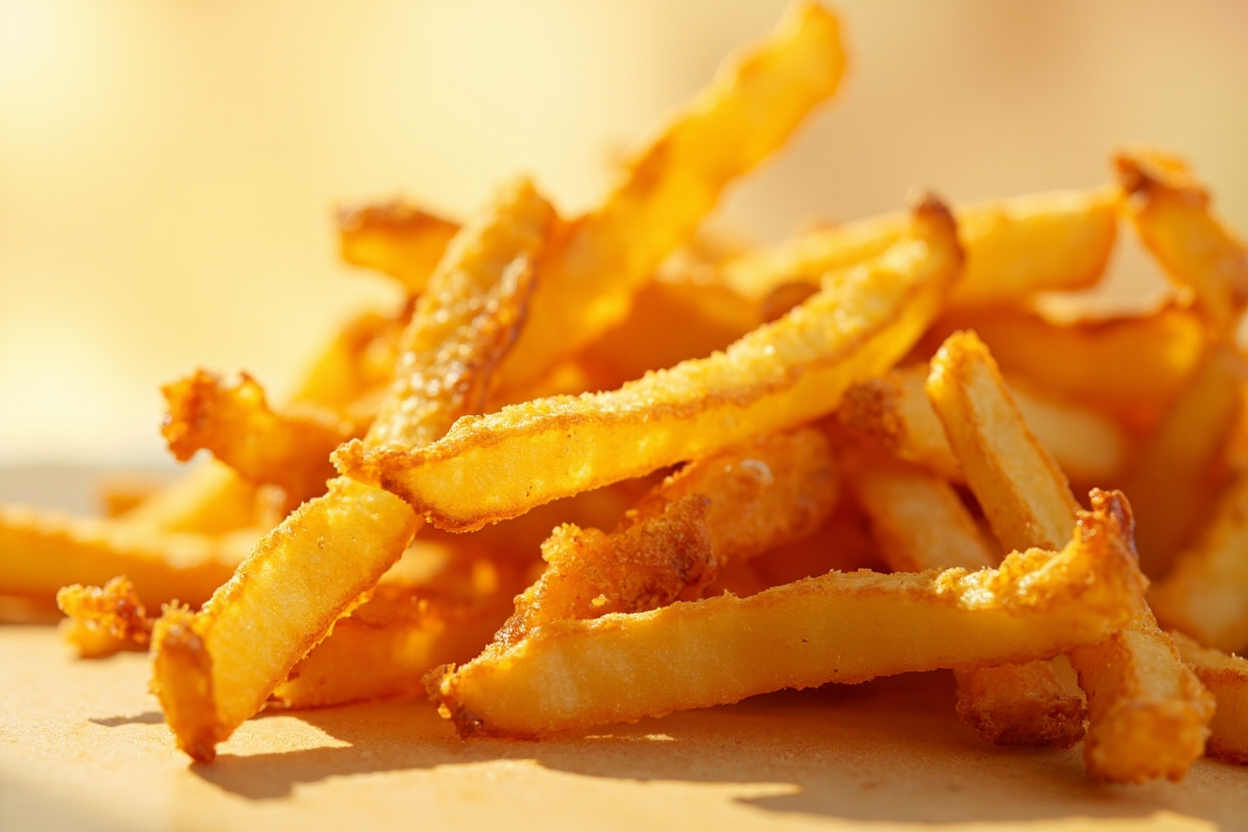
- Greasy fries: caused by oil temperature too low or overcrowding. Fix by increasing the temperature in 10–15°F increments and fry in smaller batches.
- Soggy fries: moisture is the culprit. Ensure thorough drying after rinsing and extend blanch time slightly to reduce internal water content before final fry.
- Uneven browning: cut thickness is inconsistent; use a mandoline or guide for uniform cuts.
- Dark exterior, undercooked interior: final fry temp too high or blanch insufficient; lower final temp or extend blanch time.
| Symptom | Likely Cause | Quick Fix |
|---|---|---|
| Greasy | Low temp / overcrowding | Raise temp; fry fewer at once |
| Soggy | Excess moisture | Dry thoroughly; longer blanch |
| Uneven color | Inconsistent cuts | Cut uniform; sort by size |
Safety and Storage: Proper Handling of Duck Fat and Reheating Leftovers
- Storage: cool fat to room temp, strain through cheesecloth to remove solids, and store sealed in fridge or freezer. Oxidation and off-flavors occur if exposed to air and heat.
- Reusing fat: safe to reuse 2–4 times for similar frying; discard when smell or color degrades. Filter after each use to remove crumbs that accelerate rancidity.
- Reheating fries: oven 400°F on a wire rack for 6–8 minutes or a 350°F skillet with a teaspoon of duck fat for 2–3 minutes.
- Food safety: do not mix raw meat drippings into rendered fat; cool promptly and refrigerate within two hours.
| Item | Refrigerated Life | Frozen Life |
|---|---|---|
| Rendered duck fat | 6–8 months | 12+ months |
| Cooked fries (refrigerated) | 3–4 days | Not recommended for quality |
Final Summary
Duck fat fries are a targeted upgrade: modest extra cost and technique produce dramatically better flavor and texture.
Use high-starch potatoes, control temperatures, and employ blanch + double-fry for peak results.
Store rendered fat correctly, season immediately, and treat duck fat as a specialty ingredient rather than an everyday substitute.
Common Questions
High-starch varieties like Russet or Maris Piper yield the crispiest exterior and fluffiest interior.
Yes. Blending with high-oleic sunflower or peanut oil raises the smoke point and stretches fat while retaining flavor.
Use 2–4 tablespoons per pound for shallow frying; double that for full deep frying to fully submerge fries.
Most often due to the oil temp too low or overcrowding. Increase the temperature by 10–15°F and reduce the batch size.
Duck fat has more monounsaturated fat than butter or lard, but still contains significant saturated fat. It’s preferable for occasional use, not daily replacement.
Strain while warm, cool, seal in an airtight container, refrigerate for 6–8 months or freeze for 12+ months to maintain quality.
