
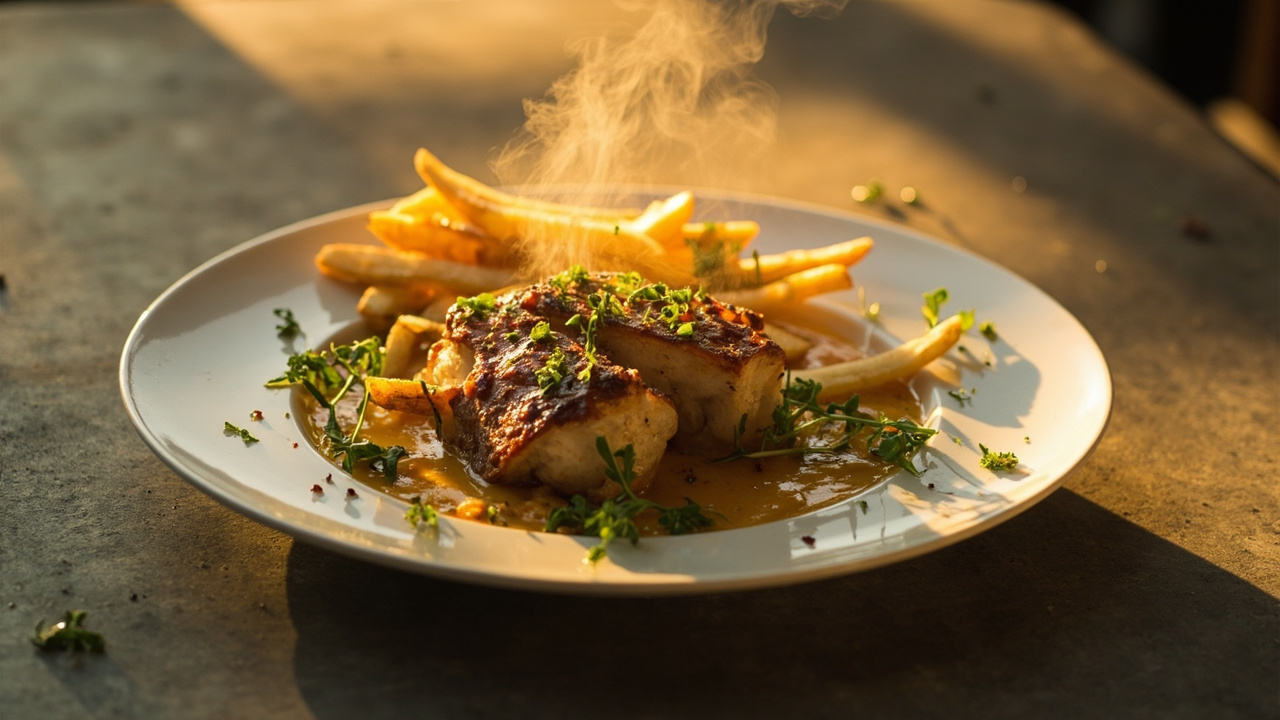
I love a well-composed dinner with fries on the side because it balances texture, temperature, and flavor in a way that satisfies both appetite and curiosity.
I found that pairing a succulent main – think a perfectly seared steak or a herb-roasted chicken breast, with crisp, golden fries creates contrast you can taste and feel.
Notice how the crunchy exterior of a fry plays against a tender interior of protein; texture becomes a primary flavor enhancer.
Dinner with Fries on the Side
Equipment
- Heavy skillet or cast iron pan – for even searing and Maillard development
- Deep fryer or heavy pot with thermometer – for controlled frying temperatures
- Baking sheet with wire rack – to rest fries and keep them crisp
- Sharp chef's knife and cutting board – for uniform fry cuts and safe prep
Ingredients
- 900 g 2 lb Russet potatoes – high-starch potato gives fluffy interior after frying
- 60 ml 1/4 cup vegetable oil for tossing
- 1.2 L 5 cups neutral oil for frying
- 4 x 200 g 7 oz sirloin steaks
- 10 g 2 tsp kosher salt + to taste
- 10 g 2 tsp freshly ground black pepper
- 30 g 2 tbsp unsalted butter
- 15 g 1 tbsp fresh rosemary, chopped
Instructions
- Cut potatoes into 10 mm (3/8 inch) sticks; rinse until water runs clear to remove surface starch, then soak in ice water for 30 minutes to firm the interior.
- Drain and pat dry thoroughly. Toss with 60 ml (1/4 cup) vegetable oil and a pinch of salt to promote even browning.
- Heat frying oil to 150 C (300 F). Blanch fries in batches for 4-5 minutes until soft but not colored. Remove and cool on a rack.
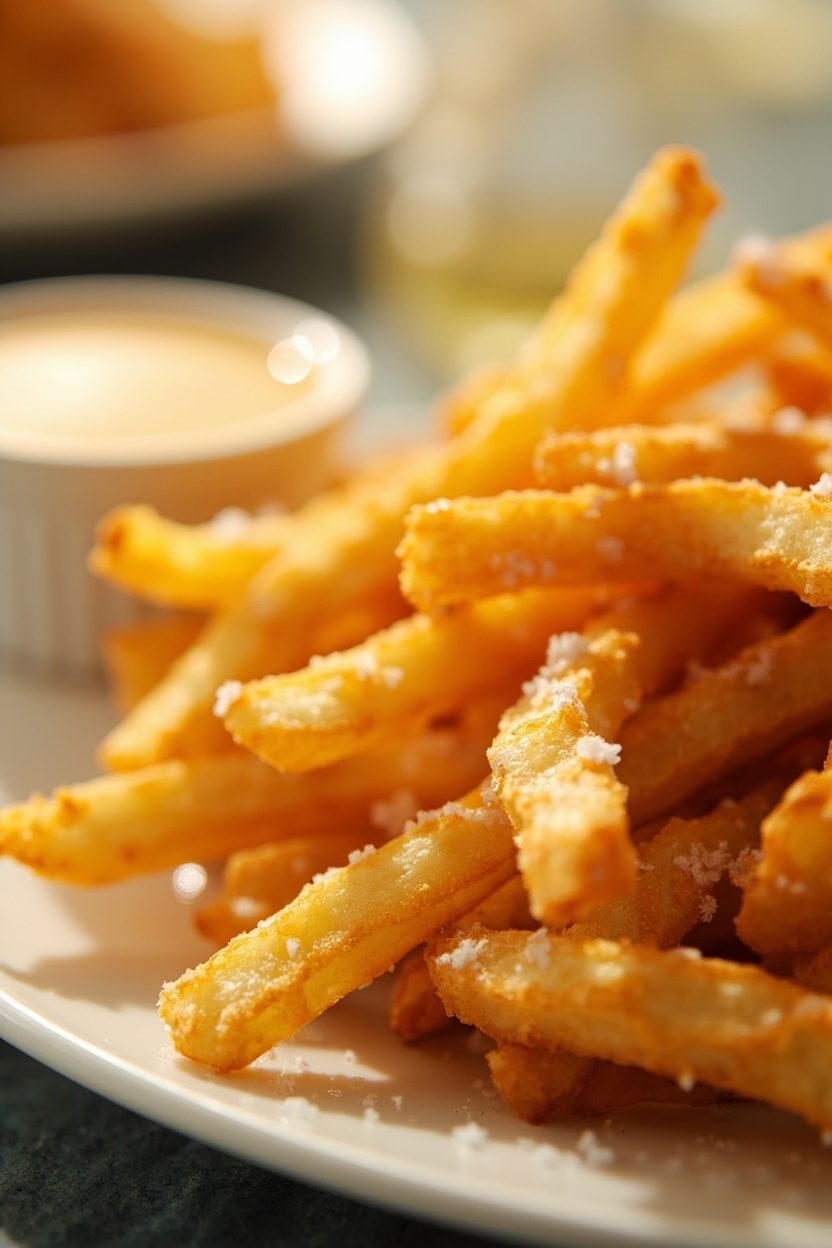
- Increase oil to 190 C (375 F). Fry second time, 2-3 minutes per batch, until golden and crisp. Drain on paper, season immediately with salt.
- Meanwhile, dry steaks and season with 10 g (2 tsp) salt and pepper. Heat skillet over high heat until smoking point, add 10 g butter and sear steaks 2-3 minutes per side for medium-rare depending on thickness.
- Add rosemary and baste with butter for 30 seconds, then rest steaks for 5-7 minutes to let muscle fibers relax and redistribute juices.
- Plate steaks with fries on the side. Notice sizzling fat aromas and contrast between crunchy fries and tender meat. Serve with a simple pan sauce or aioli if desired.
Notes
- Soaking is key: Ice water removes excess starch, ensuring maximum crispiness.
- Two-stage frying: Low-temp blanch then high-temp finish creates a tender core and crisp shell.
- Rest steaks: Resting prevents juice loss when slicing, preserving tenderness and flavor.
What Sets This Dinner With Fries On The Side Apart?
First, technique-driven texture. I found that twice-cooking the fries controls starch gelatinization and surface dehydration, giving you a crisp shell and a pillowy interior.
The same principle applied to steak – high heat for Maillard, then rest for juice redistribution.
Second, flavor synergy. You get Maillard-derived aromatics from the steak and browned potato sugars from the fries. Those volatile compounds interact on the palate to amplify savory notes.
Third, temperature contrast and plating. Serving fries hot and fries separate prevents steam-softening, so fries stay crisp.
You can treat this as a gourmet home-cooked meal by plating with a simple pan sauce or fancy side dishes like a herb salad.
Fourth, small chemistry tweaks matter. Salt timing, oil temperature, and mechanical handling determine final texture. Notice how tiny adjustments produce large sensory differences.
The Flavorful Parts Behind Dinner with Fries
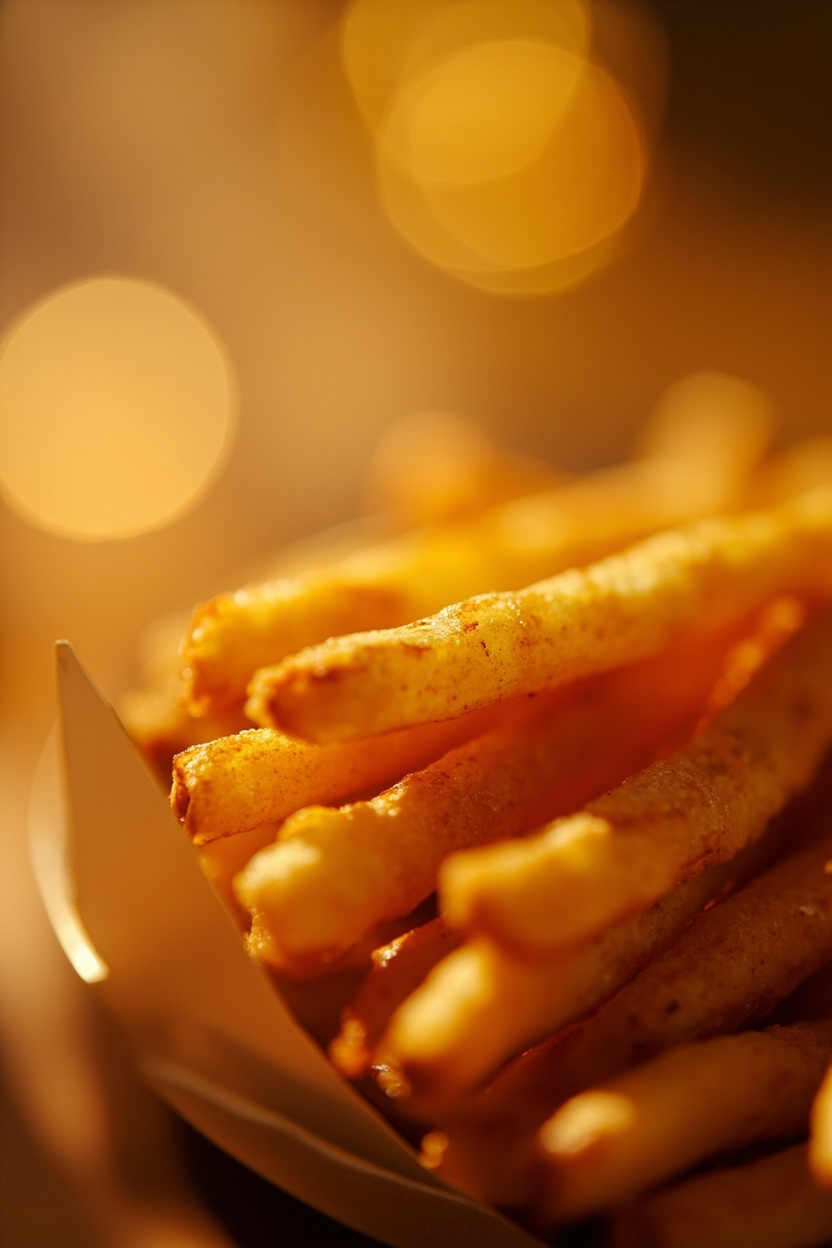
- 900 g (2 lb) Russet potatoes: high starch for a dry interior and crisp exterior after frying
- 60 ml (1/4 cup) vegetable oil: coats surfaces to promote uniform browning via convection
- 1.2 L (5 cups) neutral frying oil: stable smoke point preserves clean flavor and crispness
- 4 x 200 g (7 oz) sirloin steaks: intramuscular fat drives Maillard browning and juicy mouthfeel
- 10 g (2 tsp) kosher salt: draws surface moisture and concentrates flavor through osmosis
- 30 g (2 tbsp) unsalted butter: milk solids support caramelization and add richness
Kitchen Tools You’ll Need
- Cast iron skillet.
- Deep pot or fryer with thermometer.
- Baking sheet and wire rack.
- Sharp chef’s knife.
Turn Up the Heat: Building Dinner with Fries to Perfection
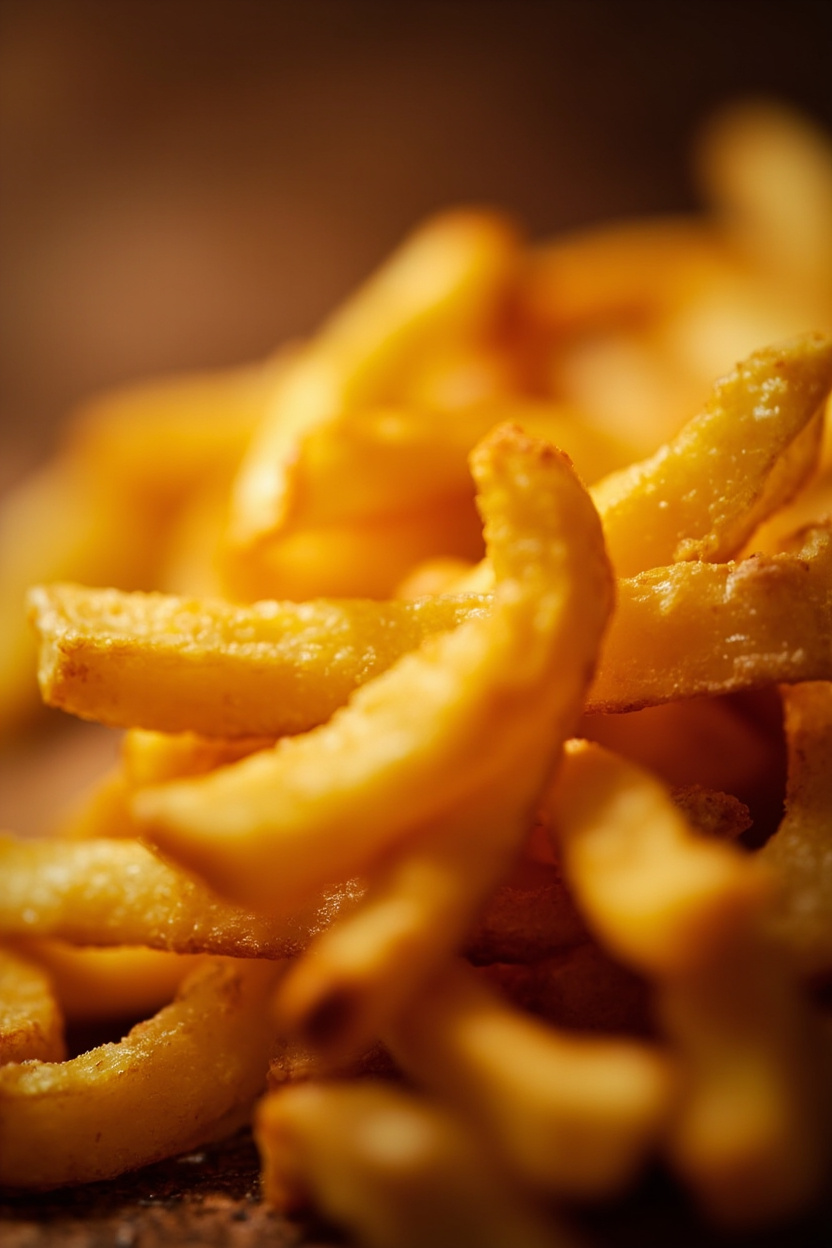
- Prep and soak potatoes. You’ll notice the water gets cloudy; that’s starch leaving the surface, which you want removed for crisp fries.
- Dry and pre-toss with oil. The thin film of oil ensures uniform heat transfer and an even crust when frying.
- Blanch at low heat. You’ll see bubbles mellow and a pale, soft fry emerge; that’s partial gelatinization without browning.
- Cool on a rack. Cooling firms the fry and lets surface moisture evaporate so the second fry crisps efficiently.
- Finish at a higher heat. Watch the color shift to golden brown and smell nutty aromas; that signals the Maillard and sugar browning you want.
- Sear steaks hot. Listen for a loud sizzle and watch for a deep brown crust; that’s flavor being locked in through Maillard chemistry.
- Rest steaks. You’ll feel the meat relax and juices redistribute; cutting too soon makes the juices run and dries the steak.
- Serve with fries on the side. The contrast in temperatures and textures becomes immediately apparent, and the meal feels deliberately composed.
Crisp Secrets: Pro Hacks for Fry-Perfect Sides and Sauces
Soak and Dry
Soaking removes surface starch that otherwise gels and prevents crisping. I found that patting completely dry before the first fry reduces oil sputter and improves browning.
Double Frying
The first fry cooks the interior, the second crisps the exterior. You’ll get a superior texture compared to a single high-temp fry.
Acidic Sauce Balance
A tangy aioli cuts through fat and refreshes the palate. A squeeze of lemon or a splash of vinegar brightens rich flavors without adding complexity.
Troubleshooting Your Dinner With Fries On The Side
Oil Temperature Too Low
If fries turn greasy, raise the oil temp with a thermometer. Lower temp prevents rapid crust formation, so oil penetrates.
Overcooking Protein
If the steak is dry, stop cooking earlier and use a thermometer. Pull steaks at 52 C (125 F) for medium-rare; carryover heat will finish them.
Steam-Softened Fries
If fries become limp, serve them on a rack, not a plate covered by a lid. Space and airflow keep them crisp.
Variations and Substitutions
- Swap russets for Yukon Gold for creamier fries and a slightly buttery flavor.
- Use chicken breast or portobello caps instead of steak for a lighter main.
- Try sweet potato fries, but reduce frying time and watch for faster browning.
- Make loaded fries as a side by topping with cheese and herbs for a shareable, fancy side dish.
How to Store dinner with fries on the side
- Room temp: Best eaten immediately; fries lose crispness within 30 minutes.
- Fridge: Store steak and fries separately in airtight containers for up to 3 days. Re-crisp fries in a 220 C (425 F) oven for 5-7 minutes.
- Freezer: Freeze fries par-cooked on a tray, then bag for up to 3 months. Re-fry or bake from frozen.
Nutrition Information for Dinner With Fries On The Side
This steak and fries dinner is protein-forward with moderate fat from pan-searing and frying. Potatoes provide complex carbohydrates and potassium.
Swap butter for oil to make it dairy-free; use gluten-free condiments to keep it gluten-free.
Ready to Make Dinner With Fries On The Side?
This recipe pairs simple science with practical technique to make a reliable steak and fries dinner that feels gourmet yet approachable.
Try the timing and temp tweaks I shared, and you’ll understand why texture and chemistry matter as much as seasoning. Go ahead, experiment with a fancy side dish or sauce and make it your own.
Frequently Asked Questions
From rinse to plate, about 35-45 minutes. Soaking adds 30 minutes but requires little active work.
You can prep potatoes and par-cook fries earlier, refrigerate, then finish frying and searing the steak before serving.
It can be balanced: lean cuts and an oven-baked fry option lower fat, while the meal still supplies protein, carbs, and micronutrients.
A neutral oil with a high smoke point, like peanut, sunflower, or refined vegetable oil, gives consistent results.
