
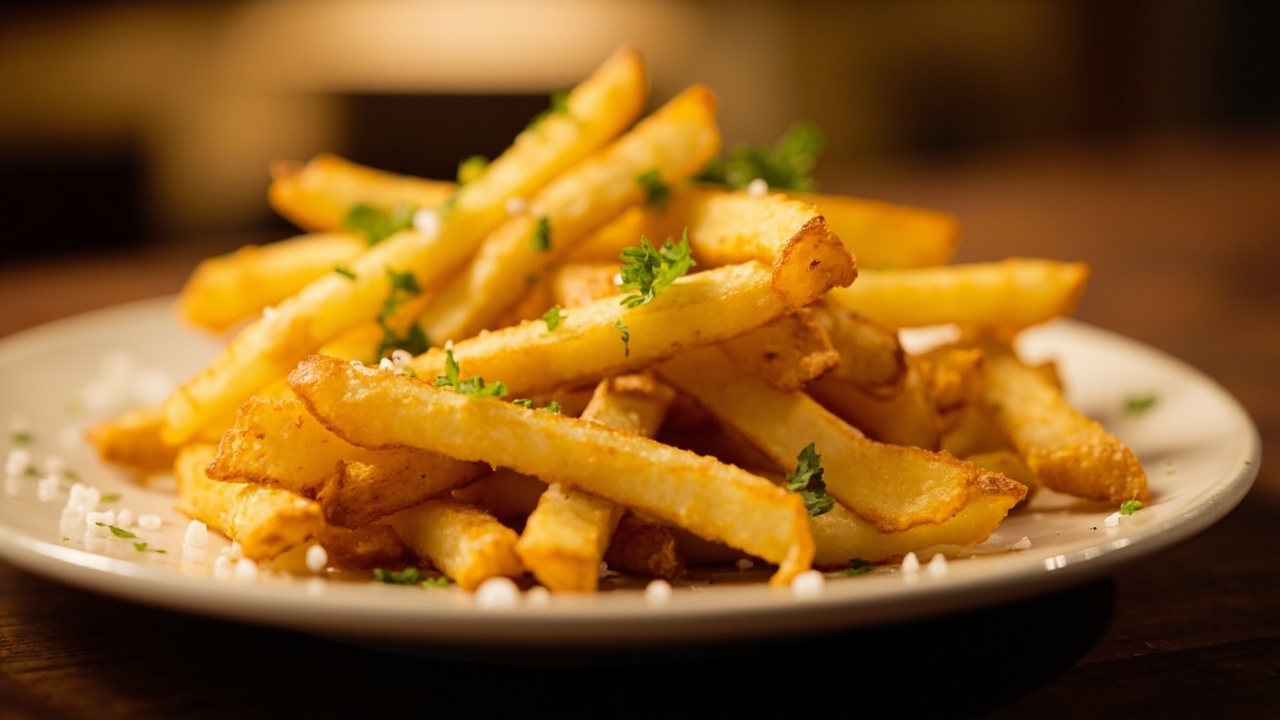
Crispy French fries that crackle with every bite and yield a tender, fluffy interior are one of life’s simplest pleasures.
From the initial sizzle to the finished golden edge, texture and flavor combine, making a humble potato irresistible.
Make these at home, and you’ll taste the difference – salt-kissed, slightly nutty oil aroma, and a crunch that holds under dipping.
This is a must-make recipe for anyone who values perfect texture, honest technique, and a few professional tips that transform ordinary spuds into restaurant-level crispy French fries.
Why This Crispy French Fries Recipe Works?
The twice-fry method separates cooking stages so the interior sets first, then the second high-heat fry creates immediate surface dehydration and Maillard browning, giving a lasting crisp shell.
Parboiling in salted water with a touch of vinegar reduces surface sugar and gelatinizes the exterior slightly, which prevents premature darkening while still allowing the centre to become pillowy.
Resting and chilling the fries firms the starch network so oil can crisp the outer layer without collapsing the structure.
A light dusting of cornflour forms a thin, dry barrier that crisps into tiny flakes, amplifying audible crunch and resisting sogginess from sauces.
Ingredients That Make Fries Frenziedly Crispy
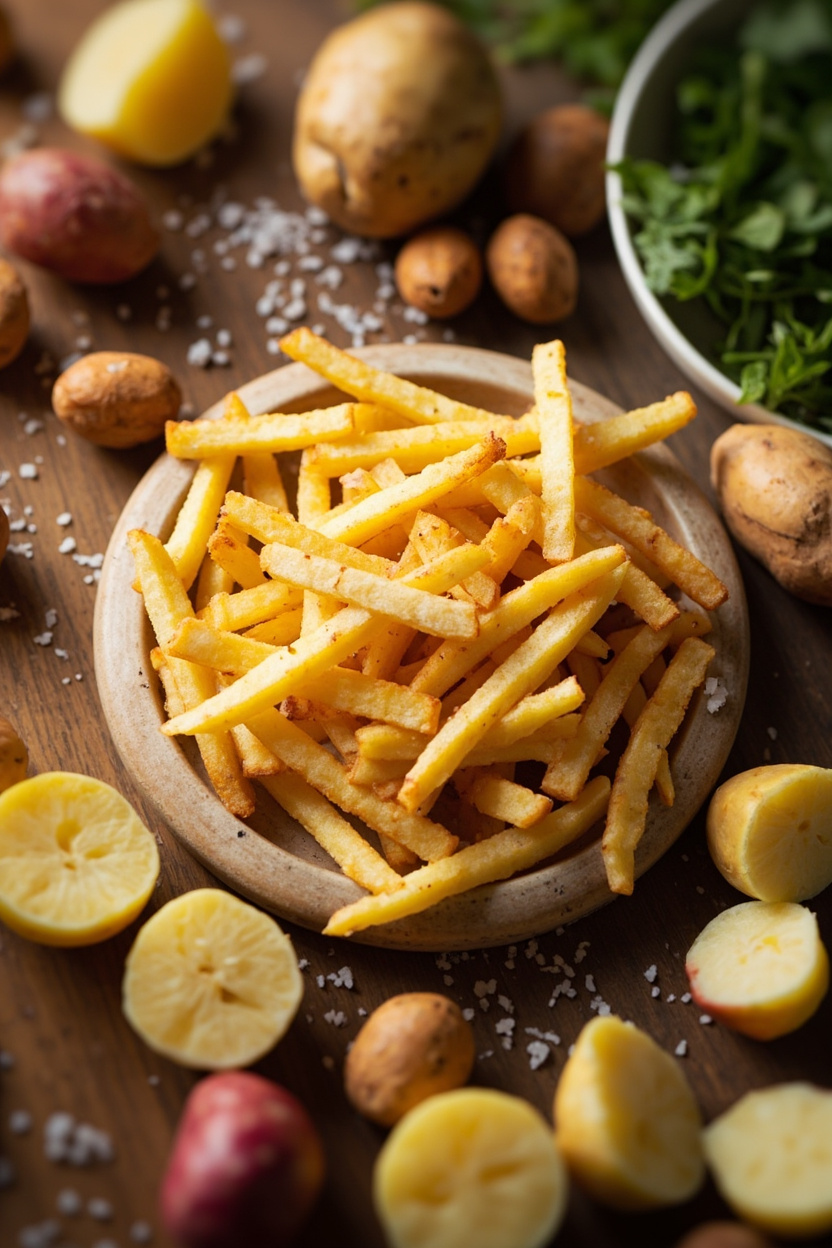
- 1 kg russet or Maris Piper potatoes: high starch to create a fluffy interior and encourage cell collapse that yields a soft crumb
- 1.5 L water + 1 tbsp white vinegar: acid moderates surface sugars and helps prevent excessive browning during frying
- 60 g kosher salt: ionic seasoning that draws moisture and seasons the fry both internally and on the surface
- 500 ml neutral oil (vegetable or peanut): high smoke point allows extended frying without off-flavors or burning
- 15 g cornflour (optional): creates a dry microscopic coating that enhances crispness by absorbing surface moisture
Kitchen Tools You’ll Need
- Heavy-based pot or deep fryer with a reliable thermometer.
- Chef’s knife and mandoline or fry cutter for consistent sizing.
- Colander and clean kitchen towels for drying.
- Slotted spoon or spider for safe frying.
Building Crunch from Raw Potato to Golden
1. Prepare and cut: Peel and slice potatoes into even 10 mm sticks. Uniformity is crucial so each fry browns and crisps at the same rate. You’ll feel a raw potato scent and see bright white flesh.
2. Rinse and soak: Rinse off loose starch, then soak in cold water with vinegar for 30 minutes. The water will cloud with starch at first, then clear; that tells you it’s working.
3. Parboil gently: Bring salted water to a simmer and cook the fries for 6-8 minutes until the surface softens but the centers remain slightly firm. The aroma shifts to a clean, cooked potato scent, and the fries will have lost some raw edge.
4. Steam dry and chill: Drain well, spread on towels, and let steam off. If using cornflour, toss lightly now. The surface should feel tacky, then dry as it chills; chilling firms the exterior proteins and starches.
5. First fry – low temp: Heat oil to 150°C (300°F). Fry in batches until the fries are pale, soft, and slightly bubbling around the edges, about 4-6 minutes. They should feel tender but stable when lifted.
6. Rest and increase heat: Drain and cool for at least 10 minutes. Raise the oil to 190°C (375°F) for a blistering final fry.
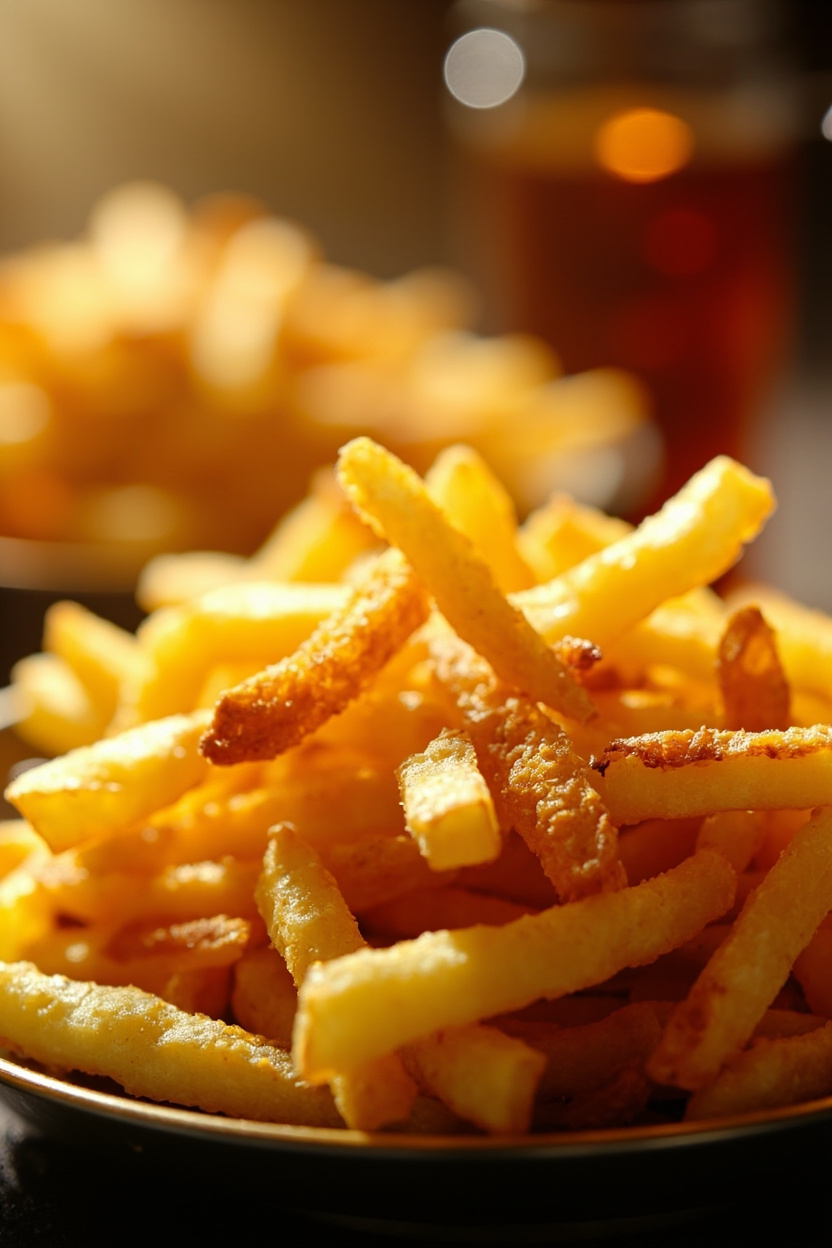
7. Second fry – finish to golden: Fry until deep golden and crackling, 2-4 minutes, stirring gently so heat hits all sides. The smell will deepen to toasted, nutty notes, and you’ll see tiny bubbles shrink as moisture leaves.
8. Drain and season: Drain immediately on paper, season with salt while hot so the grains adhere, and serve. Expect a loud crunch and a soft, steaming interior with a clean potato sweetness.
Chef Tricks for Perpetual Crunch
Tip 1: Consistent Cut
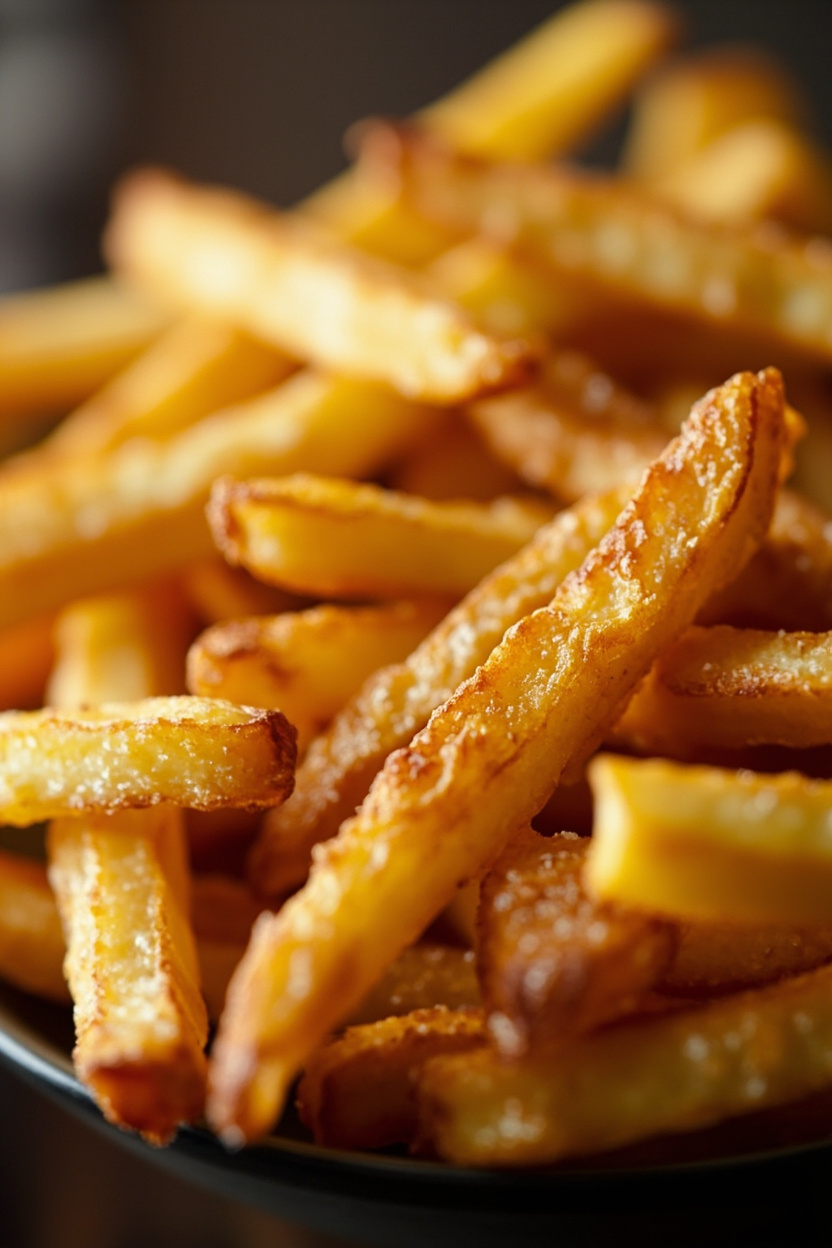
A uniform size means even heat transfer and synchronized moisture loss. Use a mandoline or a steady knife technique.
If pieces vary, thinner ones will overbrown while thicker ones stay undercooked.
Tip 2: Control Surface Starch
Soaking and rinsing remove loose starch that can create a gluey surface. The vinegar soak slightly alters pH and reduces reducing sugars, helping fries brown evenly without burning.
Tip 3: Two Temperatures Matter
Low-temperature first fry cooks interiors without aggressive browning. The hotter second fry instantly dries and crisps the exterior.
Skipping steps sacrifices texture for speed.
Tip 4: Season Immediately
Salt adheres when fries are hot because the surface still contains tiny amounts of steam and oil. Wait, and the salt will fall off, leaving bland fries.
How to Store and Freeze?
- Room temperature: Eat within 30 minutes for the best texture. Fries lose crispness quickly as they cool.
- Refrigerator: Store cooled fries in an airtight container up to 2 days; re-crisp in a hot oven or fryer.
- Freezing: Flash-freeze single layers on a tray, then transfer to a bag for up to 3 months. Re-fry from frozen at 190°C (375°F) until golden.
Seasonal Variations & Pro Swaps
1. The Seasonal Edge: Potatoes are at their best in cooler months when starch concentration is higher, so late autumn and winter yield the fluffiest interiors and deepest fry flavor.
Cooler harvests often have drier flesh, which crisps more reliably.
2. Variations: Try rosemary and lemon zest for a bright winter companion. Toss with smoked paprika and garlic powder for a smoky summer-sided fry.
Swap sweet potatoes for fall color and a caramelized edge – reduce second fry time slightly to avoid burning. For a festive twist, finish with grated parmesan and black pepper for a salty, melty crust.
Frequently Asked Questions
You can, but parboiling ensures a fluffy interior and steadier hold during the second fry; skipping risks undercooked centers or overbrowned exteriors.
High-starch varieties like russet or Maris Piper produce the best contrast – crisp outside, soft inside.
The first fry cooks the potato through, the second dehydrates and crisps the surface, creating a durable crust.
Roasting yields good results but won’t replicate the same deep, uniform crisp you get from hot oil; use high heat and a light coating of oil if oven-baking.
