

This breakfast potato casserole is a must-make when you want a dish that feeds a crowd, travels well, and keeps its texture from turning gummy.
The potatoes provide a satisfying bite, eggs and cream bind everything into a silky custard, and aromatic herbs lift the whole dish so it never tastes heavy.
Trust me, once you try a properly layered, well-seasoned breakfast potato casserole, it becomes your go-to for holiday mornings, weekend brunches, and cozy cold-weather breakfasts.

breakfast potato casserole
Ingredients
- 900 g Yukon Gold or russet potatoes
- 200 g shredded cheddar
- 6 large eggs
- 240 ml whole milk or cream
- 1 small onion finely diced
- 2 cloves garlic minced
- 2 tbsp butter
- Salt and black pepper to taste
- Fresh thyme or chives chopped
Instructions
- Par-cook the potatoes until tender but still firm.
- Sauté onion and garlic in butter until translucent and fragrant.
- Whisk eggs with milk, salt, pepper, and herbs until smooth.
- Layer potatoes, aromatics, cheese, pour custard and bake until golden and set.
Why We Love This Breakfast Potato Casserole Recipe?
- Textural contrast is king: par-cooked potatoes keep structure while the top crisps, giving a satisfying bite against the smooth custard.
- Layering flavor builds depth: sautéing onions and garlic in butter concentrates savory compounds that meld into the custard and cheese.
- Protein and fat balance: Eggs provide a stable network of coagulated proteins, and dairy contributes fat that keeps the interior creamy without becoming watery.
- Temperature control matters: gentle baking at moderate heat ensures the custard sets evenly while encouraging Maillard browning on the surface for color and complex aromas.
Pantry Stars & Flavor Anchors That Make This Casserole Sing

- 900g (2 lb) Yukon Gold or russet potatoes: provides a balanced starch content for creaminess and browning – starch gelatinization improves texture.
- 200g (2 cups) shredded sharp cheddar: rich in melting milk proteins to create a cohesive, savory matrix – casein and fat aid emulsification.
- 6 large eggs – 6 large eggs (approx. 300g): egg proteins coagulate to set the custard and trap moisture.
- 240ml (1 cup) whole milk or cream: offers fat and lactose that contribute to mouthfeel and color during baking – fat slows protein over-tightening.
- 1 small onion, finely diced – about 70g: provides sulfur compounds that caramelize and amplify umami when sautéed.
- 2 cloves garlic, minced – around 6g: concentrated aromatic compounds enhance savory perception.
- 2 tbsp (28g) unsalted butter: aids browning and carries fat-soluble flavor molecules.
- Salt – 1-1.5 tsp (5-8g): essential for flavor enhancement and protein interaction.
- Black pepper: 1/2 tsp (1g) – volatile terpenes add a warm, pungent lift.
- Fresh thyme or chives: 2 tbsp chopped (6-8g) – volatile aromatics add brightness that cuts richness.
Kitchen Tools You’ll Need
- 9×9-inch (23×23 cm) baking dish or equivalent.
- Large saucepan for par-cooking potatoes.
- Mixing bowl and whisk.
- Nonstick skillet for sautéing aromatics.
- Sharp knife and cutting board.
Layering, Seasoning, and Baking – How to Build It Flawlessly?
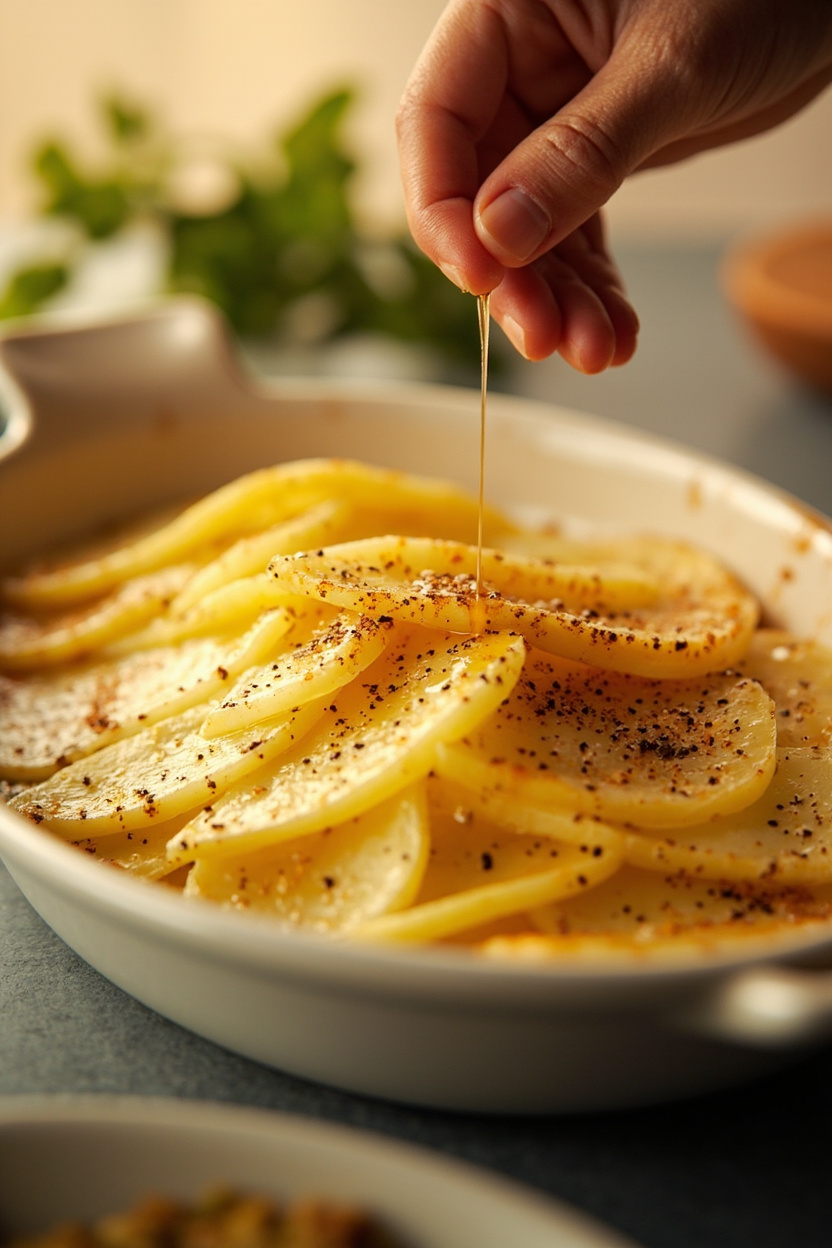
- Preheat the oven to 180 °C (350 °F). Boil the whole or halved potatoes in salted water until just tender when pierced, about 10-12 minutes. Drain and let cool slightly, then slice into 1cm (1/3 inch) rounds. The potatoes should still hold their shape to create layers and avoid a gluey texture.
- While the potatoes cool, melt butter in a skillet over medium heat. Add the diced onion and sweat until soft and translucent, about 5 minutes. Stir in the minced garlic and cook until fragrant, 30-45 seconds. The kitchen will fill with a warm, savory aroma that signals a flavor foundation is forming.
- Whisk eggs in a large bowl with the milk or cream, salt, pepper, and chopped herbs. The mixture should be smooth and slightly frothy. This custard will envelop the potato layers and set into a silky interior rather than a dense bake.
- Layer half the potato slices in the prepared baking dish, overlapping them slightly to form a compact base. Scatter half of the sautéed onions and a third of the cheese. Press the layers gently so the custard can permeate between slices.
- Repeat with remaining potatoes and aromatics, reserving a generous handful of cheese for the top. Pour the egg mixture slowly across the dish, allowing it to settle; tap the pan lightly so air bubbles rise and escape. Sprinkle the final cheese evenly over the surface.
- Bake in the center of the oven for 30-40 minutes, until the top is golden and the center jiggles only slightly. You want a set custard without overbaking. The aroma should be deeply savory with notes of browned cheese and butter.
- Let the casserole rest 10 minutes before slicing. Resting allows the proteins to relax and the custard to firm up, giving clean slices with a crisp edge and creamy interior.
Kitchen Secrets for Crispy Tops and Foolproof, Creamy Centers

Par-cook the potatoes just enough
Par-cooking prevents the casserole from becoming mushy. Cook until a knife slides in with slight resistance.
Cool the potatoes before layering so they don’t prematurely release starch into the custard.
Control moisture with temperature
Use whole milk or a mix of milk and cream rather than water-heavy dairy. Bake at moderate heat so the custard sets before excessive steam softens the top.
If the surface browns too fast, tent with foil.
Add texture on top
For extra crunch, mix Panko with melted butter and a little grated Parmesan and sprinkle on top for the last 10 minutes of baking. The result is a nutty, crisp finish that contrasts beautifully with the creamy center.
How to Store Breakfast Potato Casserole?
- Room temperature: Leave out no more than 2 hours.
- Fridge: Store covered in an airtight container for up to 4 days; reheat in a 180 °C (350°F) oven until warmed through.
- Freezer: Freeze portions for up to 3 months; thaw overnight in the fridge and reheat gently to preserve texture.
Variations and Substitutions
- Swap cheddar for Gruyere or fontina for a nuttier flavor and silkier melt.
- Add cooked breakfast sausage or smoked salmon for extra protein and savory depth.
- Use sweet potatoes for a sweeter, vitamin-rich version; reduce sugar with a squeeze of lemon.
- Make it vegetarian by adding roasted peppers, spinach, and a sprinkle of feta for tang.
Nutrition Information
This breakfast potato casserole is a balanced source of carbohydrates and protein with moderate fat from dairy and eggs.
It provides vitamin C and potassium from potatoes, and protein from eggs and cheese.
Not gluten-free if served with breadcrumbs; can be made dairy-free by substituting plant-based milk and cheese alternatives.
Frequently Asked Questions
Yes, assemble the casserole, cover, and refrigerate overnight. Bake from cold and add 10-15 minutes to the bake time.
Reheat covered in a 160 °C (325°F) oven until warmed through, or microwave in short bursts with a damp paper towel to retain moisture.
You can, but thaw and pat dry thoroughly first to prevent excess water from watering down the custard and making the casserole soggy.
