
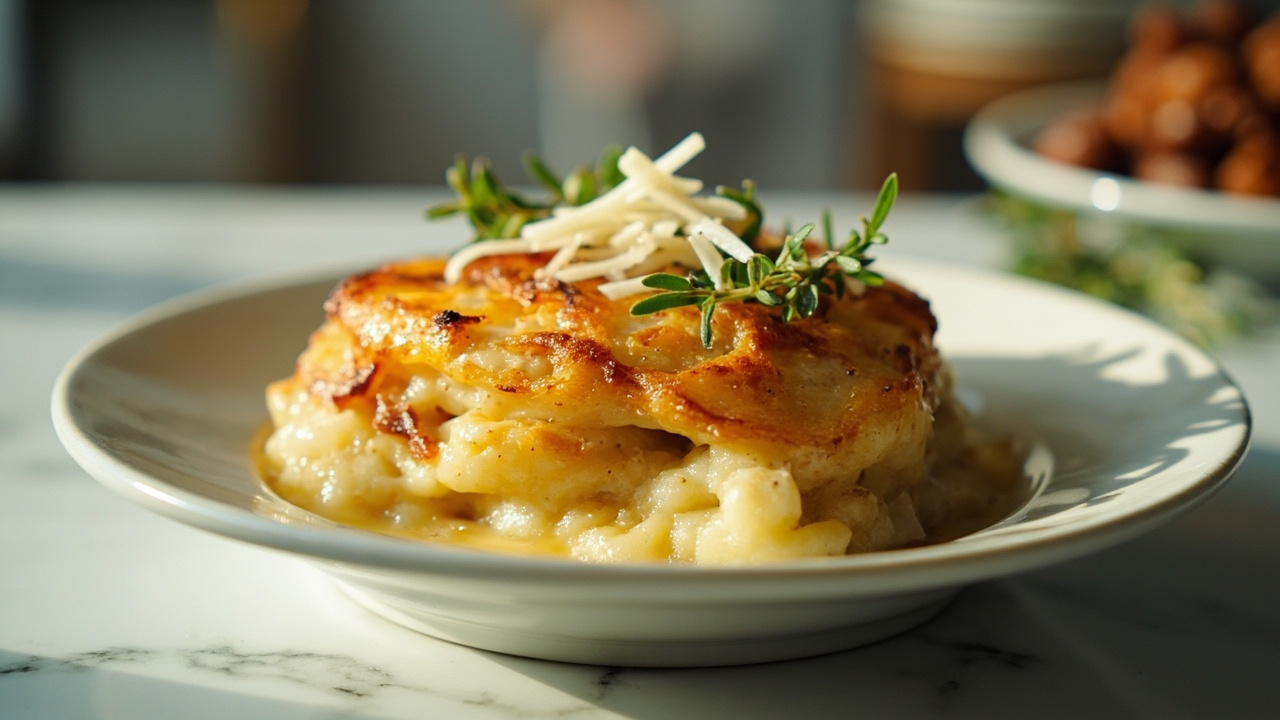
There’s a reason au gratin potato recipes feel like a small, secret luxury at the table. Silky, paper-thin potatoes bake in a cloud of cream and cheese until the edges are tender and the top is bronzed and crackling.
The contrast of a crisp, cheesy crust with a molten, savory interior-rich with butter, garlic, and nutty Gruyere or sharp cheddar-is pure comfort.

Cheesy Au Gratin Potatoes
Equipment
- 9×13 inch baking dish – for even layering and browning
- Mandoline or sharp chef's knife – for precise, uniform slices
- Heavy saucepan – to make the cream sauce
- Microplane grater – to shred cheese finely for melting
Ingredients
- 900 g 2 lb Russet or Yukon Gold potatoes
- 480 ml 2 cups heavy cream
- 240 ml 1 cup whole milk
- 100 g 1 cup Gruyere cheese, grated
- 80 g 3/4 cup sharp cheddar, grated
- 2 cloves garlic minced
- 30 g 2 tbsp unsalted butter
- 8 g 1 tsp kosher salt
- 2 g 1/2 tsp freshly ground black pepper
- 1 g 1/4 tsp ground nutmeg
Instructions
- Preheat the oven to 190C (375F). Butter the baking dish so the first potatoes slide and the edges brown evenly.
- Thinly slice potatoes 2-3 mm (1/16-1/8 inch) using a mandoline for consistent cooking; you want tender sheets that still hold shape.
- In a saucepan, sweat minced garlic in butter over medium heat until fragrant, about 30 seconds, then add cream and milk.
- Bring the cream to a gentle simmer – small bubbles around the edge – then whisk in salt, pepper and nutmeg. Do not boil; simmering concentrates flavor without breaking the cream.
- Remove the pan from heat and stir in half the grated cheeses until mostly melted, creating a glossy, seasoned cream.
- Arrange a single layer of potato slices in the dish, slightly overlapping, then spoon a third of the cream mixture over and sprinkle a touch of cheese. The cream should just cover the potatoes, creating steam and richness.
- Repeat two more layers, finishing with the remaining cheese on top for a deeply browned crust that crackles when cut.
- Cover loosely with foil and bake for 35 minutes, then remove foil and bake another 20-30 minutes until the top is golden and bubbling and a knife slides through the center easily.
- Let rest 10-15 minutes; the gratin will set and the textures will meld. You should smell butter, toasted cheese and a subtle nutmeg aroma.
Notes
- Make-ahead: Assemble, refrigerate up to 24 hours, then bake straight from the fridge adding 10-15 minutes.
- Cheese swap: Use Comté or Emmental for similar melt and flavor if Gruyere is unavailable.
- Crispier top: Toss a tablespoon of panko with melted butter and sprinkle before the final 15 minutes of baking.
Reasons to Make This Au Gratin Potato Recipe
- Layering theory: Thin, consistent slices allow starches to gelatinize evenly, creating a luxurious, cohesive interior rather than grainy pockets.
- Fat and protein balance: The combination of cream and high-quality cheese supplies both butterfat for silkiness and proteins that brown and form a flavorful crust.
- Aroma and seasoning synergy: Garlic, nutmeg, and proper salting activate volatile compounds that heighten perceived richness without adding extra calories.
- Versatility: This potato gratin framework adapts to herbs, meats, or vegetables, so it performs equally well as a simple side or a hearty, creamy potato casserole centerpiece.
The Flavor Building Blocks for Au Gratin
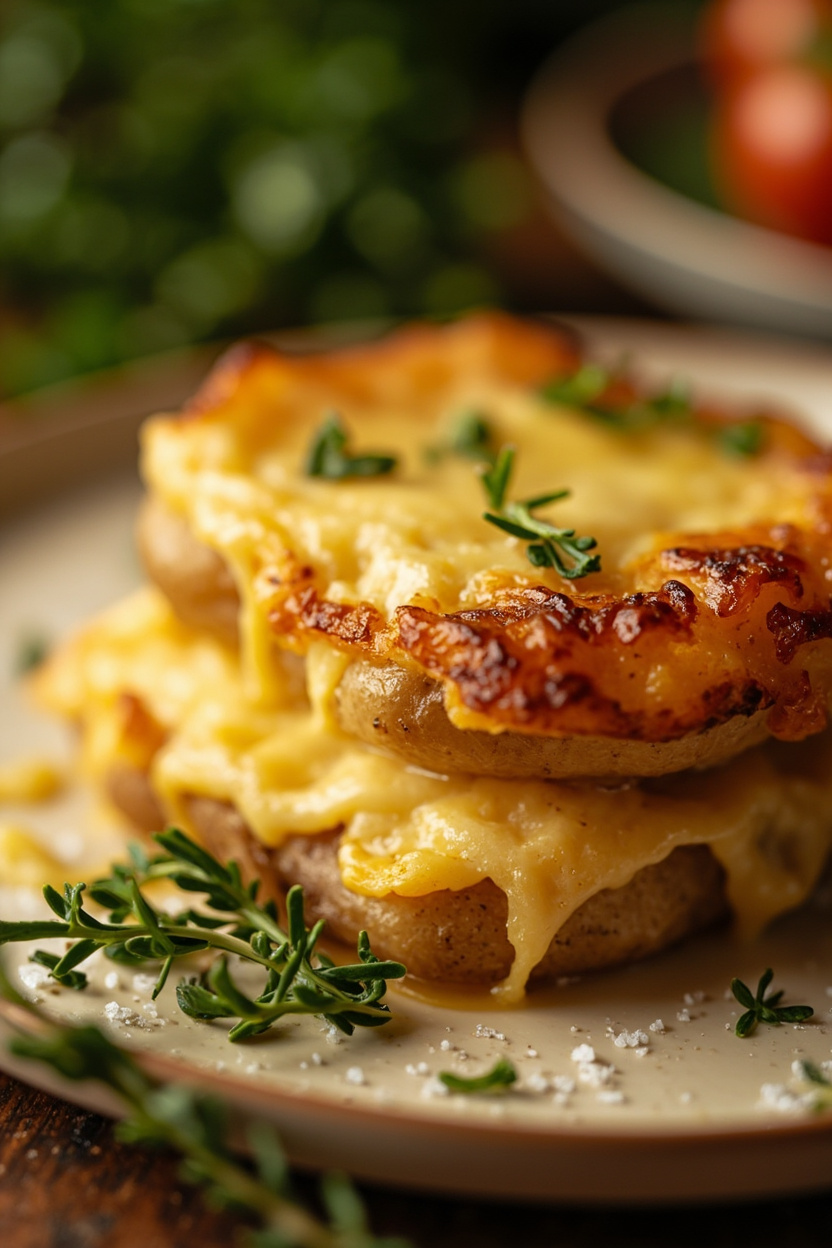
- 900 g (2 lb) Russet or Yukon Gold potatoes: starch gelatinizes during cooking, yielding tender layers.
- 480 ml (2 cups) heavy cream: high milk fat emulsifies flavors and creates a silky mouthfeel.
- 240 ml (1 cup) whole milk: lowers overall fat viscosity so the cream penetrates slices.
- 100 g (1 cup) Gruyere, grated: melts smoothly due to its protein-to-fat ratio, adds nutty notes.
- 80 g (3/4 cup) sharp cheddar, grated: provides sharp flavor and caramelized browning compounds.
- 2 cloves garlic, minced: sulfur compounds add savory depth and enhance umami perception.
- 30 g (2 tbsp) unsalted butter: milk fats promote Maillard reactions at the edges.
- 8 g (1 tsp) kosher salt: essential for unlocking starch flavor and balancing sweetness.
- 2 g (1/2 tsp) black pepper: piperine brings warmth and aroma to the dairy base.
- 1 g (1/4 tsp) nutmeg: contains myristicin, which brightens creamy dairy flavors.
Kitchen Tools You’ll Need
- Mandoline or sharp chef’s knife.
- 9×13-inch baking dish.
- Heavy-bottomed saucepan.
- Microplane grater.
- Mixing bowl and spatula.
Layer by Layer: Sculpting Silky, Golden Au Gratin Perfection
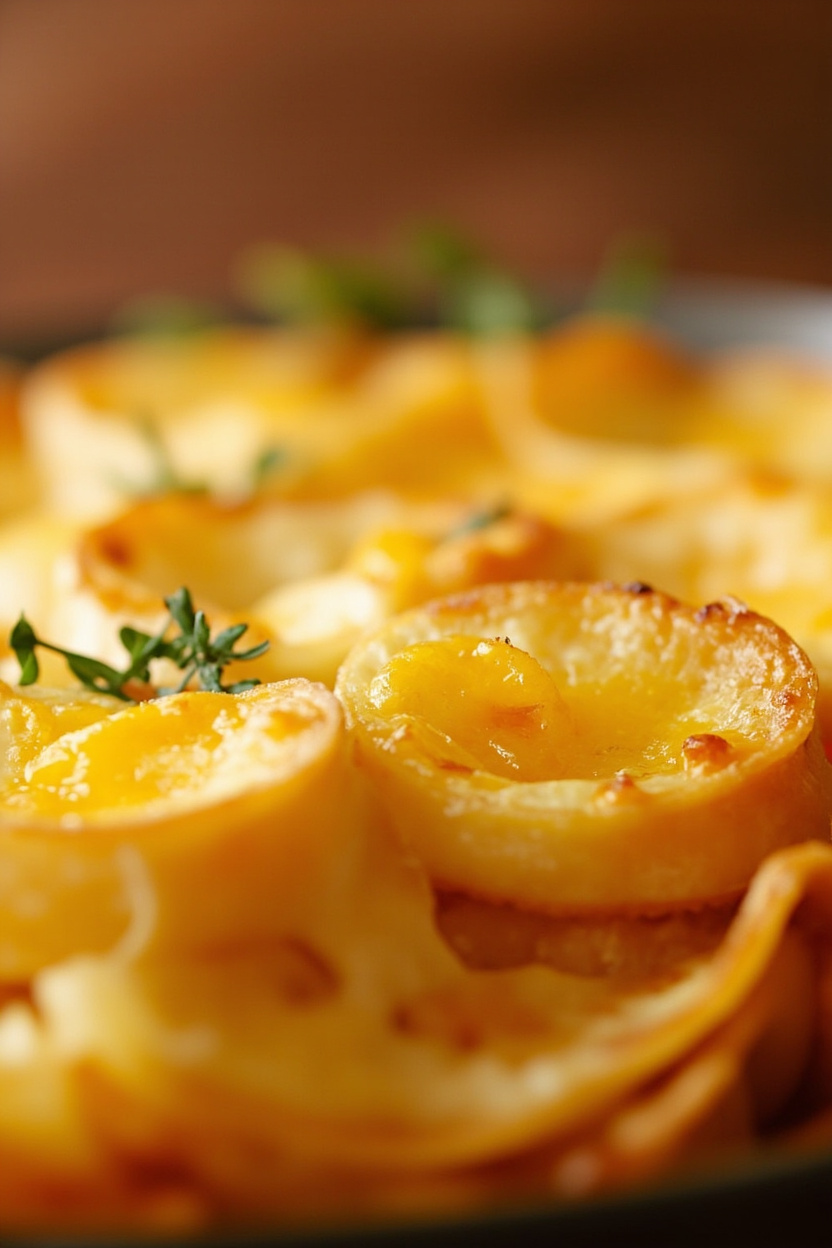
- Preheat the oven to 190 °C (375°F) and butter the baking dish. The butter helps the first layer glide and encourages browning at the edges.
- Slice potatoes 2-3 mm (1/16-1/8 inch) thin, aiming for uniformity. Even slices cook at the same rate and produce a consistent, creamy texture.
- In a saucepan over medium heat, melt butter and sweat the garlic until you smell a soft, aromatic note, but before it browns – about 20-30 seconds.
- Add cream and milk and bring to the edge of a simmer. Watch for gentle steam and small bubbles; this concentrates flavor without separating the dairy.
- Season the cream with salt, pepper, and nutmeg. Remove from heat and stir in half the cheese until it becomes glossy and slightly thickened.
- Arrange a single overlapping layer of potatoes in the dish; the thin overlap creates support while allowing steam to circulate between layers.
- Spoon 1/3 of the cheese cream over the first layer so it just kisses the tops. Sprinkle a little cheese for structural browning.
- Repeat two more times, finishing with the remaining cheese on top to form a caramelized, crackling crust during baking.
- Cover loosely with foil and bake 35 minutes. Uncover and bake an additional 20-30 minutes until the top is bronzed and a skewer slides through with no resistance.
- Allow the gratin to rest 10-15 minutes. The steam redistributes and the gratin firms slightly, giving a silky interior and a crisp top you can cut into with clean slices.
Chef’s Little Hacks for Crispy Tops and Luscious Centers
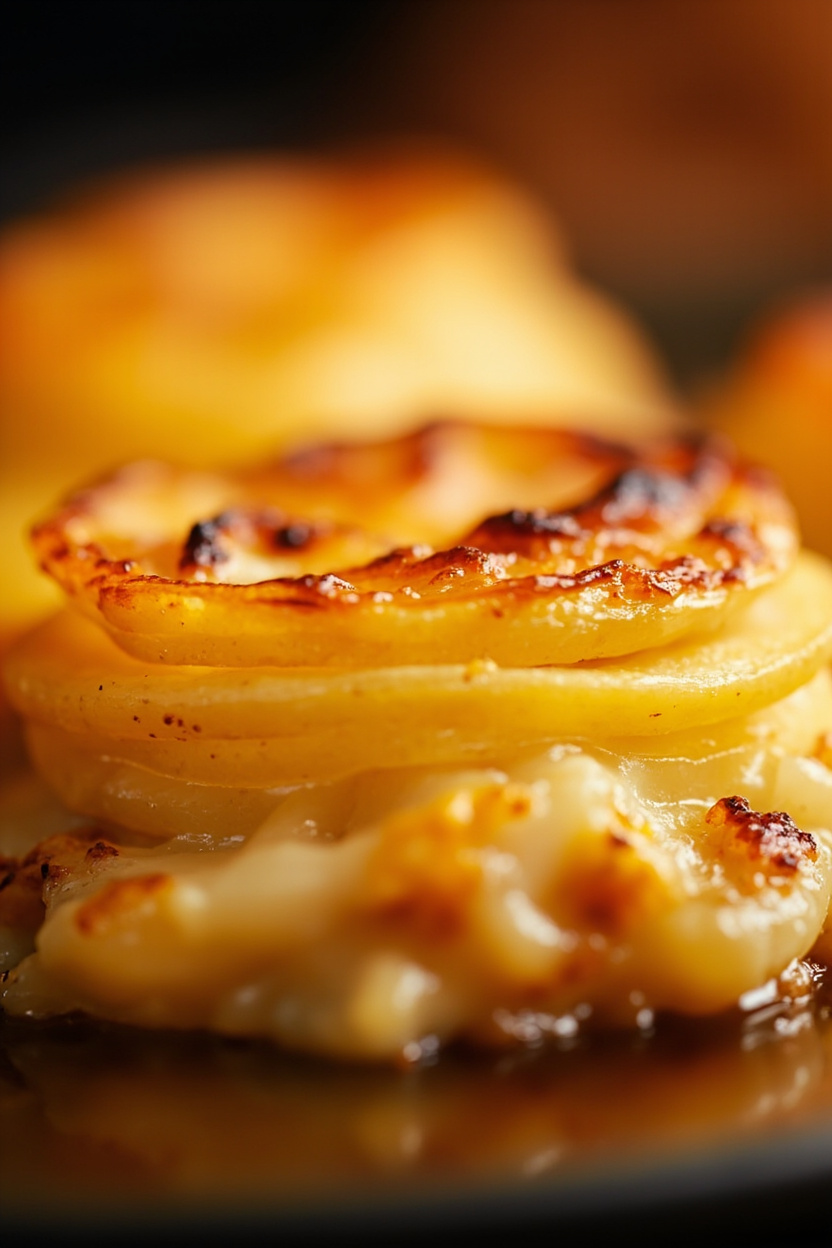
Even Slices Every Time
If you don’t trust your knife, use a mandoline at the thinnest safe setting for repeatable 2-3 mm slices. Uniform slices ensure all layers finish simultaneously, avoiding gummy centers.
Control Moisture
Briefly rinse and pat potatoes dry if you want a slightly firmer bite. Excess surface starch creates gluey textures; drying the slices helps the cream penetrate while keeping layers distinct.
Browning Technique
For an extra-crisp top, switch the oven to broil for the last 1-2 minutes, watching closely. The Maillard reaction on finely grated cheese yields that irresistible toasty flavor.
Make-Ahead Ease
Assemble the dish, cover tightly, and refrigerate up to 24 hours. Bake from chilled, adding 10-15 minutes to the covered baking time to ensure the center reaches doneness.
How to store au gratin potato recipes?
- Room temperature: Do not leave the gratin at room temperature for more than two hours.
- Fridge: Cool, cover, and refrigerate up to 3 days. Reheat covered at 175 °C (350°F) until warmed through.
- Freezer: Freeze portions up to 2 months in an airtight container. Thaw overnight in the fridge before reheating to maintain texture.
Variations and Substitutions
- Mushroom and thyme: Sauté mushrooms and layer between potatoes for earthy depth.
- Bacon and caramelized onion: Add cooked bacon and sweet onion for a smoky-sweet combo.
- Cauliflower gratin: Swap half the potatoes for blanched cauliflower for a lighter, veggie-forward casserole.
- Dairy-free: Use full-fat coconut milk and a nut-based cheese alternative for a dairy-free version.
Nutrition Information
This creamy potato gratin provides carbohydrates for energy and calcium and protein from cheese. Not low-carb or keto-friendly, and not dairy-free unless adapted.
Gluten-free by default when using gluten-free toppings.
Frequently Asked Questions
Bake at 190 °C (375°F) covered for about 35 minutes, then uncovered for 20-30 minutes until a knife slides through; adjust times for deeper dishes.
Yes, assemble and refrigerate up to 24 hours. Bake from chilled, adding 10-15 minutes; leftovers reheat well in a 175 °C (350°F) oven.
Scalloped potatoes often use a cream sauce without cheese, while au gratin features a cheese-topped crust; both rely on thin slicing and layered baking.
Use 2% milk with a splash of cream and swap half the cheese for a flavorful hard cheese; expect less silkiness but still satisfying results.
