
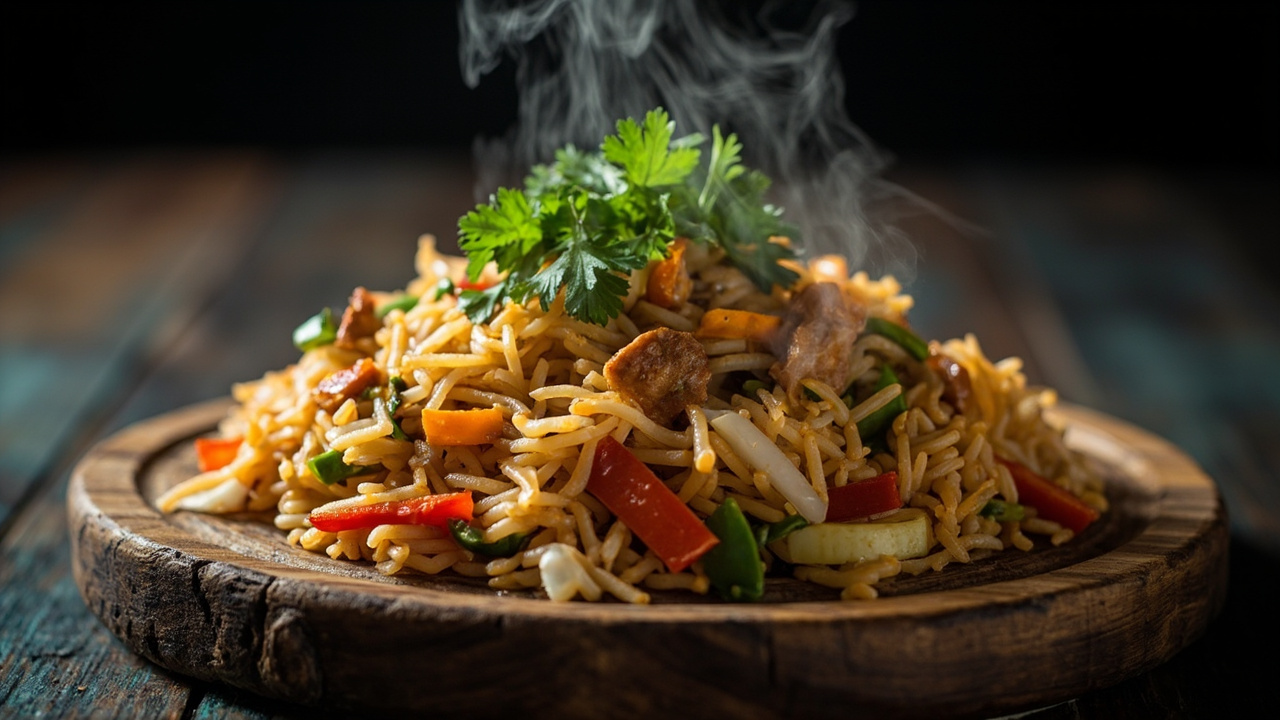
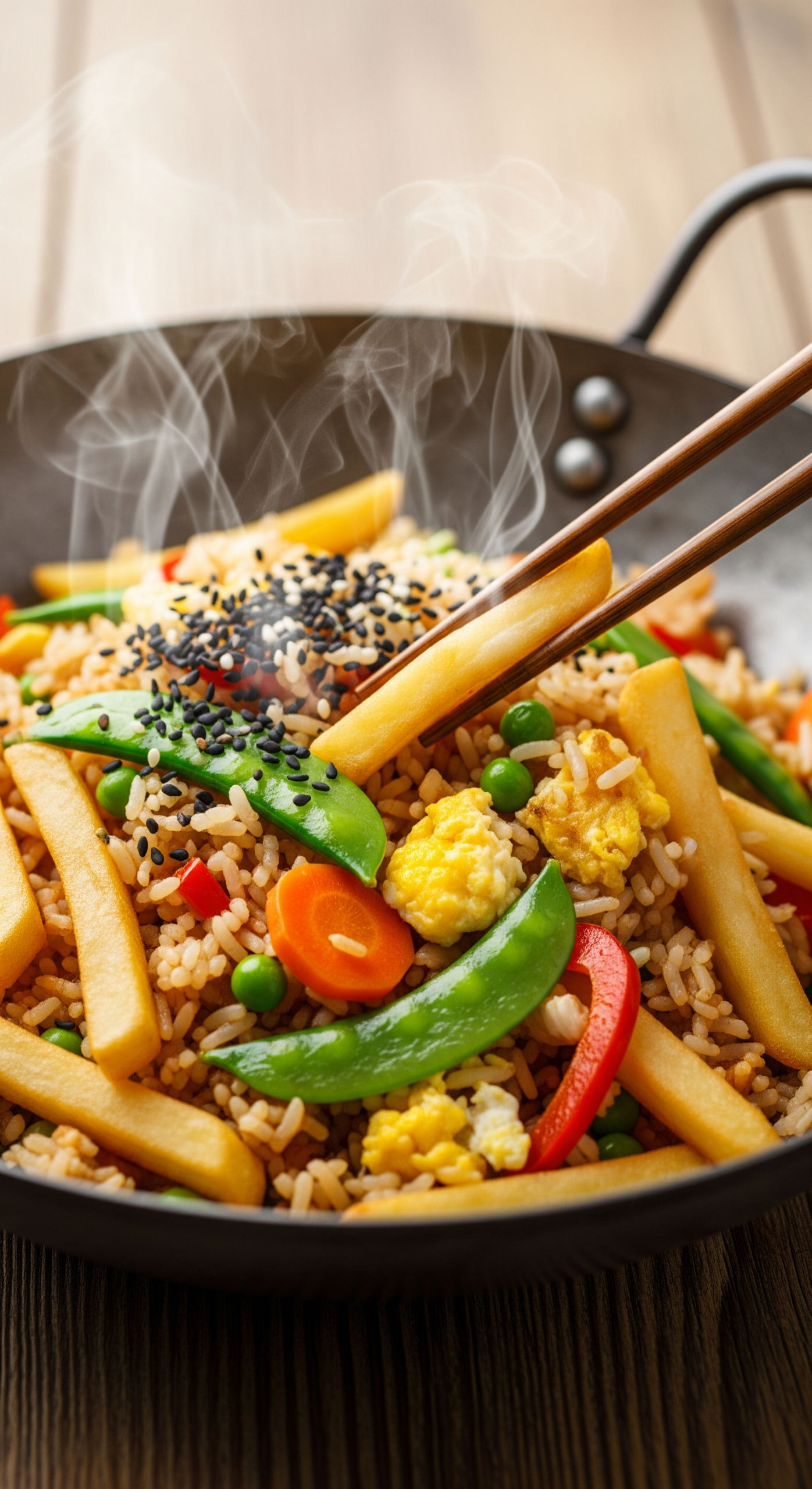
I love the textural contrast when crispy homemade fries meet savory grains, so I named and tested this fries rice recipe Chinese to marry potato crunch with classic wok-seasoned rice.
The first bite is about texture – crisp edges yielding to tender centers, while flavor comes from toasted sesame, light soy umami, and a hint of scallion brightness.
I found that the science of starch gelatinization and Maillard reactions explains why fries retain crunch when treated right, and you’ll notice how timing and heat control make all the difference.
This is a must-make when you want familiar comfort with an analytical twist.
Fries Rice Chinese Recipe
Equipment
- Wok or large skillet – for rapid, even searing and stirring
- Heavy-bottomed saucepan – to par-cook potatoes if blanching
- Spider or slotted spoon – for transferring fries without oil
Ingredients
- 600 g 4 cups day-old cooked jasmine rice
- 500 g 1.1 lb Russet potatoes, cut into 1 cm fries
- 160 ml 2/3 cup vegetable oil, total
- 2 large eggs about 100 g
- 60 g 1/2 cup frozen peas and carrots
- 30 ml 2 tbsp light soy sauce
- 15 ml 1 tbsp sesame oil
- 2 scallions sliced (30 g)
- 5 g 1 tsp kosher salt
- 5 g 1 tsp white pepper
Instructions
- Par-cook fries: Bring a pot of salted water to a simmer and blanch the cut potatoes for 4 minutes until just tender, not falling apart. This partial gelatinization reduces interior cooking time and prevents oil overbrowning.
- Dry and fry: Drain and pat fries completely dry. Heat 120 ml (1/2 cup) vegetable oil in a deep pan to 160 C (320 F) and fry fries in batches for 4-5 minutes until pale golden. Transfer to a rack to drain and cool.
- Double fry to crisp: Raise oil to 190 C (375 F) and flash-fry fries 2-3 minutes until deep golden and crisp. The two-stage frying maximizes crust formation by completing Maillard reactions without overcooking the interior.
- Prepare wok: Wipe out most oil from the deep pan or heat a clean wok over high heat until smoking slightly, about 2 minutes. Add 1 tbsp oil and swirl to coat; high thermal mass keeps temperature stable during tossing.
- Scramble eggs: Add beaten eggs and scramble quickly until just set, pulling into larger curds. Remove eggs; they will finish in the rice and maintain silkiness rather than drying out.
- Sear vegetables and rice: Add another tablespoon oil, then add peas, carrots, and rice. Press rice into the hot surface briefly, then toss to encourage crisp nuclei. You want isolated toasting and surface browning, not steaming.
- Season and combine: Add soy, sesame oil, white pepper, and salt. Toss in scallions and scrambled eggs, then gently fold in the double-fried fries so they retain structure. The goal is contrast – crunchy fries against chewy, toasted rice.
- Finish and rest: Taste and adjust seasoning. Plate immediately to preserve crunch, and notice a nutty aroma from sesame oil and a light caramelization from the rice edges.
Notes
- Soaking is key: If you start from raw potatoes, a 30-minute cold soak removes surface starch and improves crisping.
- Day-old rice: Refrigeration dries grains slightly, preventing mushiness and encouraging separate grains.
- Oil temperature: Use a thermometer; low first fry prevents over-browning, high second fry creates crisp crust quickly.
Build the Ultimate Chinese-Style Fries Rice Flavor Kit
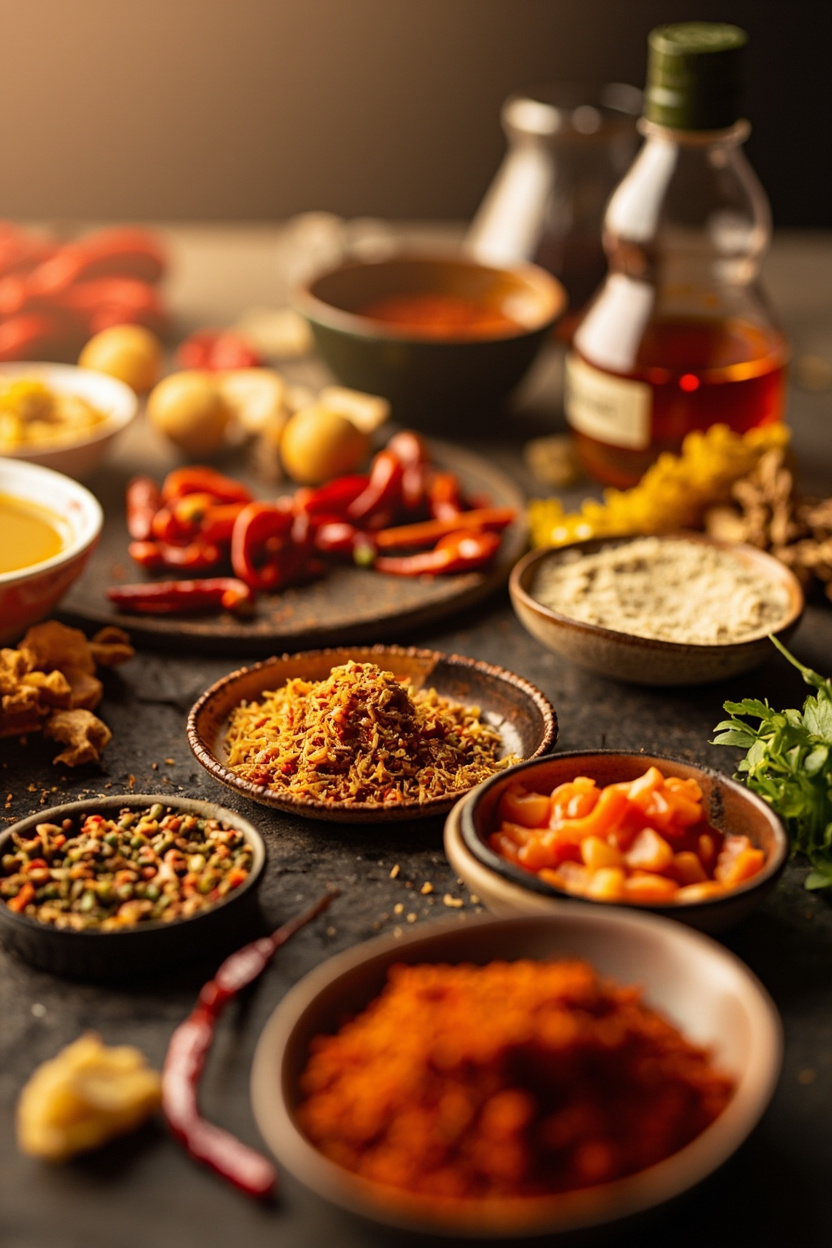
- 600 g (4 cups) day-old jasmine rice: refrigerated starch retrogrades slightly, producing firmer grains that toast rather than glue together.
- 500 g (1.1 lb) Russet potatoes: high amylose content creates a fluffy interior and a crispible surface when fried.
- 160 ml (2/3 cup) vegetable oil: stable triglycerides withstand high wok temperatures without oxidizing rapidly.
- 2 large eggs (≈100 g): coagulated proteins add emulsification and a glossy mouthfeel when incorporated quickly.
- 30 ml (2 tbsp) light soy sauce: glutamates supply umami, increasing perceived savoriness and depth.
- 15 ml (1 tbsp) sesame oil: aromatic lipids volatilize at finishing heat to amplify flavor perception.
- 2 scallions (30 g): enzymes and sulfur compounds give a fresh, sharp top note that cuts fat.
Kitchen Tools You’ll Need
- Wok or large heavy skillet.
- Deep-frying thermometer.
- Spider or slotted spoon.
- Large mixing bowl.
Wok Magic: How to Layer Heat, Texture, and Umami Perfectly?
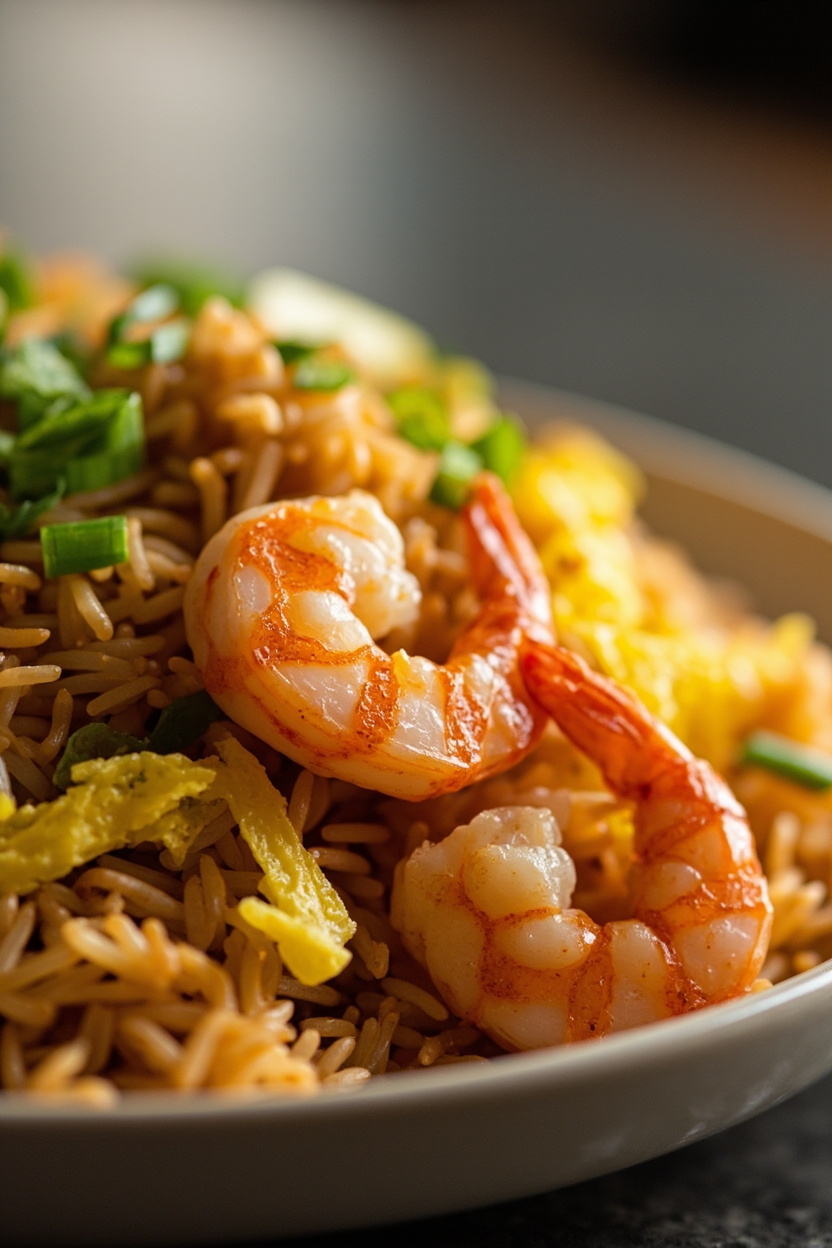
- Heat management: Preheat your wok until it shimmers and a drop of water skitters. High surface temperature ensures rapid Maillard browning on rice and fries. You’ll smell a faint nutty aroma as the metal reaches peak searing range.
- Egg texture: Quickly scramble eggs until custardy curds form, then remove. This prevents overcooking and yields silky pieces that integrate with rice, creating pockets of soft richness against crisp fries.
- Rice searing: Add oil and cold, day-old rice. Press and let it sit briefly to form toasted bits, then toss. Notice the toasty scent and the shift from damp to slightly brittle grains.
- Vegetable aromatics: Toss in peas, carrots, and scallions. The veggies release a vegetal sweetness and moisture; you want quick contact with high heat so they warm without steaming the rice.
- Seasoning chemistry: Add light soy for ion-driven flavor enhancement and a splash of sesame oil at the end so aromatic compounds remain volatile and prominent.
- Integrating fries: Gently fold in double-fried fries to preserve structural integrity. You should still feel crunch when stirring; if they collapse, you fried them too long or added them too early.
- Final sensory check: Taste for balance – salt, crunchy texture, and a pop of scallion. The finished dish should have audible crispness, a toasted aroma, and a harmony of savory notes.
Chef’s Hackbook: Crispy, Non-Soggy Tricks for Restaurant Results
Tip 1 – Control Moisture
Pat both potatoes and rice dry. I found that residual surface water is the single biggest culprit for sogginess.
You want grains and fries to be as dry as practical before oil contacts them, so heat goes into crisping, not steaming.
Tip 2 – Two-Stage Frying
Use a low-temperature first fry and a high-temperature second fry. This creates a gelatinized interior and a fast-forming crust. You’ll notice the difference when the fries stay crunchy for longer after tossing.
Tip 3 – Use Day-Old Rice
Refrigerated rice recrystallizes some starch, which reduces stickiness. If you must use fresh rice, spread it on a tray to cool and dry for at least 30 minutes before using.
How to Avoid Messing Up the Fries Rice Recipe Chinese?
Mistake 1: Too-Low Wok Heat
If your wok isn’t hot enough, ingredients steam instead of searing, and you lose texture. Fix: preheat until the wok is visibly smoking and use high smoke-point oil to maintain heat when adding food.
Mistake 2: Overmixing
Aggressive stirring breaks fries into crumbs and releases starch to gum up the rice. Fix: fold gently and add fries at the end so they keep their structure and deliver crunch.
Mistake 3: Wet Fries or Rice
Wet ingredients cool the oil and cause splattering and sogginess. Fix: thoroughly dry potatoes after blanching and use refrigerated rice to minimize moisture content.
How to Store Fries Rice Recipe Chinese?
Cool quickly at room temperature for no more than one hour, then refrigerate in an airtight container for up to 3 days.
For longer storage, flash-freeze portions on a tray, then transfer to freezer bags for up to 2 months. Re-crisp in a hot oven or wok to restore texture.
Nutrition Information for Fries Rice Recipe Chinese
Per serving estimate: 380 kcal, moderate protein from eggs, moderate carbs from rice and potatoes, and some healthy fats from sesame oil.
This dish is dairy-free and can be gluten-free if you use tamari instead of light soy sauce.
Frequently Asked Questions
Yes. Substitute light soy sauce with tamari or coconut aminos of equal volume to keep the umami without gluten. Check labels on any packaged ingredients for hidden gluten.
They’ll soften over time. To retain crunch, store fries separately and fold in just before serving, or re-crisp fries in a hot oven or air fryer for 3-5 minutes before combining.
It balances carbs and protein but is fried, so moderate portioning helps. Use an air-fry or oven-bake method for fries to reduce oil and still get texture, and bulk up with more vegetables for fiber.
You can. Sweet potatoes caramelize more quickly due to higher sugar content, so reduce frying time to avoid burning and expect a sweeter flavor profile.
