
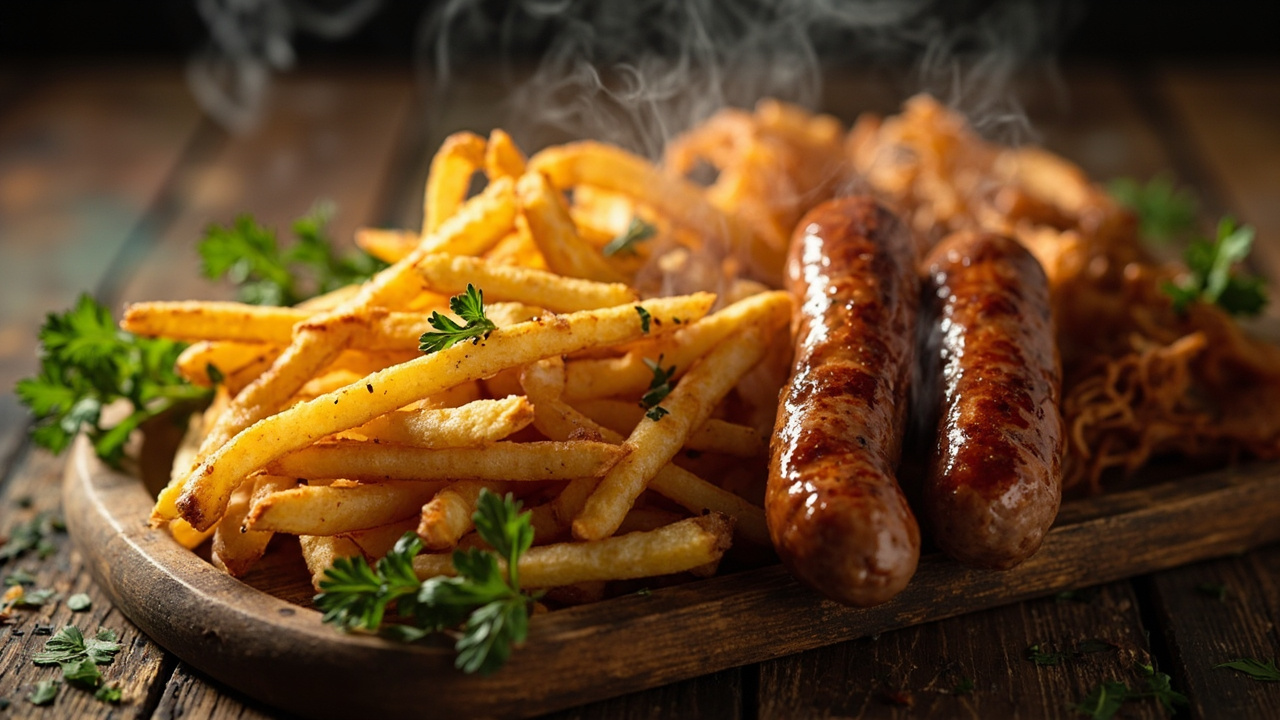
Fries and sausage deliver gritty comfort with precise technique. Think blistered, golden-brown homemade fries next to seared sausage that snaps and releases juicy, savory fat.
Texture is key – crisp exterior, fluffy interior on the fries, and a browned casing that yields a flavorful, juicy bite.
Flavor is direct, salty, and meaty, with bright aromatics. This is a must-make when you want a simple, satisfying meal that scales for a crowd or a solo feast.

Sausage and Fries
Equipment
- Heavy skillet or cast-iron pan – for even browning of sausage
- Large heavy-bottomed pot or deep fryer – for blanching and frying homemade fries
- Wire rack and baking sheet – for draining and keeping fries crisp
- Mandoline or sharp chef's knife – for uniform fries
Ingredients
- 900 g 2 lb Russet potatoes, peeled and cut into sticks
- 1.1 L 4 cups Water, plus ice
- 15 g 1 tbsp Kosher salt
- 60 ml 4 tbsp Neutral oil
- 680 g 1.5 lb Sausages, pork or preferred variety
- 15 g 1 tbsp Butter or oil for finishing
- 5 g 1 tsp Smoked paprika
- To taste black pepper and parsley
Instructions
- Soak the cut potatoes in 1.1 L (4 cups) ice water for 30 minutes. This removes excess surface starch, preventing fries from bonding and helping crispness.
- Drain and pat the fries completely dry. Dry surface equals proper browning. If wet, the oil splatters and fries steam rather than crisp.
- Heat oil in a deep pot to 150 C (300 F). Blanch fries in batches for 5 to 6 minutes until tender but not colored. The blanched fries will feel soft and slightly translucent.
- Remove blanched fries, drain on a wire rack, and cool for 10 minutes. Cooling firms the interior and readies them for final fry.
- Increase oil to 190 C (375 F). Fry the cooled fries in batches for 2 to 3 minutes until deep golden and crunchy. They should snap when bent and show a toasted aroma.
- Transfer fries to a rack, season immediately with 15 g (1 tbsp) kosher salt and smoked paprika if using. Seasoning adheres best while the fries are hot.
- While fries cool slightly, heat a heavy skillet over medium-high. Add sausages and sear for 3 to 4 minutes per side, turning for even color. You should hear a steady sizzle and see a browned crust.
- Lower heat to medium, add 15 g (1 tbsp) butter or oil, and continue cooking sausages until internal temperature reaches 71 C (160 F) for pork. The casing should be browned and slightly crisp.
- Rest sausages 3 to 5 minutes. Resting lets juices redistribute. Slice on the bias for nice presentation and combine with fries. Garnish with black pepper and parsley.
Notes
- Soaking is key: Ice water removes surface starch for maximum crispiness.
- Two-stage fry: Low-temp blanch then high-temp finish ensures fluffy interior and crisp exterior.
- Test sausage temp: Use a probe thermometer for safe, juicy results.
- Keep fries dry: Moisture kills crispness; pat dry and cool between fries.
The Flavor Cast for Your Fries & Sausage
- 900 g (2 lb) Russet potatoes: starch content yields a fluffy interior and crisp exterior when fried.
- 1.1 L (4 cups) Water, plus ice: osmotic action and temperature prevent enzymatic browning and remove surface starch.
- 15 g (1 tbsp) Kosher salt: ionic seasoning enhances flavor and balances the sweetness of the potato.
- 60 ml (4 tbsp) Neutral oil (vegetable or peanut): high smoke point for consistent Maillard reaction and crispness.
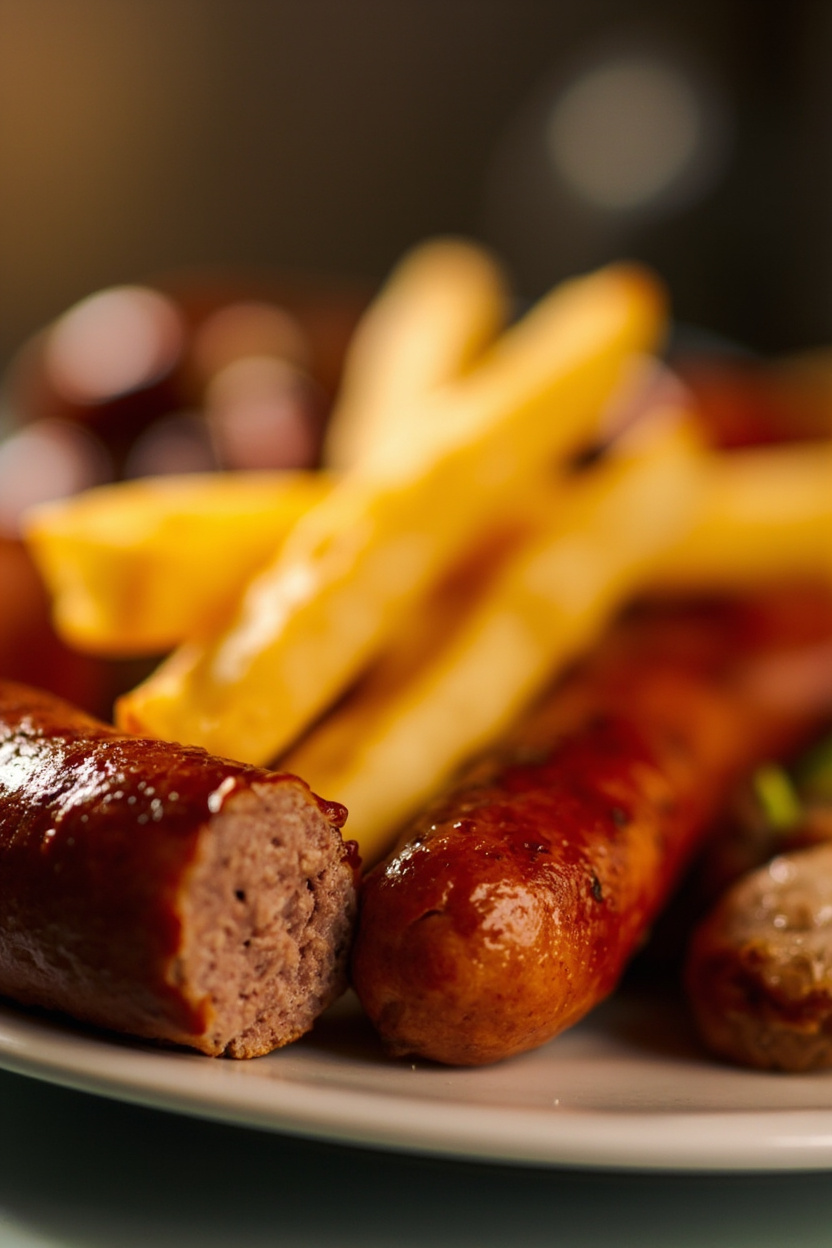
- 680 g (1.5 lb) Sausages (4 links): fat and proteins in sausage provide caramelized crust and savory umami.
- 15 g (1 tbsp) Butter or oil for finishing: adds fat for mouthfeel and assists in browning the casing.
- 5 g (1 tsp) Smoked paprika: phenolic compounds provide smoky depth and aromatic lift.
- Fresh chopped parsley and black pepper to taste: volatile aromatics for freshness and spice contrast.
Fry-Side Alchemy: Building Crispy, Juicy Perfection
- Prep the potatoes uniformly. Cut 10 mm (3/8 inch) sticks for even cooking. Consistent thickness gives uniform texture; if sizes vary, some will be underdone while others burn.
- Soak in ice water for 30 minutes. Smell: clean, faint potato scent. Texture: fries should feel slightly firm after patting dry. My trick is a quick towel press to remove all surface moisture.
- Dry thoroughly. Wet fries will spit and steam. Use a kitchen towel and spread fries single layer on a tray to air for a few minutes if possible.
- Blanch at 150 C (300 F) for 5 to 6 minutes. Visual cue: fries become paler and slightly translucent. Aroma: subtle cooked potato. They should be tender but not colored.
- Cool on a wire rack for 10 minutes. Cooling firms the internal structure and prevents steam during the final fry. You’ll notice a firmer, drier exterior at this point.
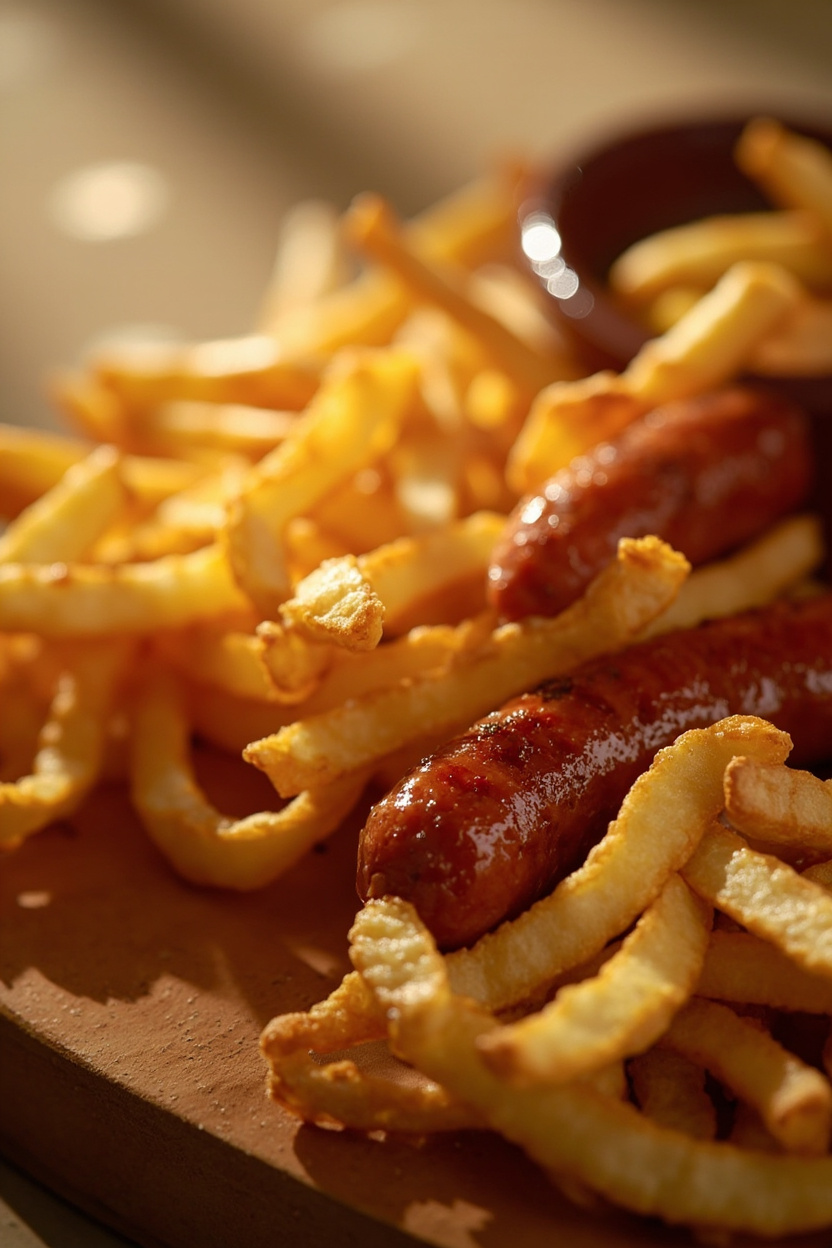
- Heat oil to 190 C (375 F) and fry in small batches for 2 to 3 minutes. Visual cue: deep golden edges and a crisp surface. Sound: a steady crisp sizzle. Texture: they should snap when bent.
- Drain on a rack and season immediately with salt and smoked paprika if using. Seasoning adheres best when fries are hot; the taste opens up within seconds.
- Cook the sausages in a heavy skillet over medium-high heat. Sear 3 to 4 minutes per side until deeply browned. Aromas: rich, roasted meat notes and rendered fat.
- Lower the heat and finish until the internal temperature reaches 71 C (160 F) for pork. Visual cue: juices run clear. Texture: casing crisp, interior juicy and slightly springy.
- Rest sausages 3 to 5 minutes. Slice and serve with fries piled beside them. The contrast of a crunchy fry and the juicy, savory sausage is the point of the dish; you should taste crisp salt, fatty umami, and a hit of herbaceous freshness.
Common Mistakes When Making Fries And Sausage
Cooking at too high a temperature
If the oil is too hot, the fries brown outside but stay raw inside. Fix: monitor with a thermometer, blanch first at 150 C, then finish at 190 C.
Not drying the fries
Wet fries steam and never crisp. Fix: pat thoroughly, air-dry, and avoid overcrowding the fryer.
Overcrowding the pan with sausages
Crowding drops the pan temperature and prevents browning. Fix: Sear in batches and let the pan reheat between batches.
Skipping rest time for sausages
Cutting too soon loses juices. Fix: rest sausages 3 to 5 minutes before slicing to keep them juicy.
How to store fries and sausage?
- Room temperature: Keep food covered for up to 2 hours; beyond that, bacterial risk increases. Do this only if serving immediately.
- Fridge: Cool to room temperature, then refrigerate in an airtight container for up to 3 days. Reheat fries in a 200 C (400 F) oven on a wire rack for 8 to 10 minutes to restore crispness.
- Freezer: Flash-freeze fries in a single layer, then store in a sealed bag for up to 3 months. For sausages, cool, wrap tightly, and freeze up to 2 months. Reheat sausages from frozen at 160 C (325 F) until the internal temp reaches 71 C (160 F).
Nutritional Benefits of Fries And Sausage
Fries provide potassium and vitamin C from potatoes, while sausages deliver high protein and B vitamins.
This meal is calorie-dense and satisfying. It can be made gluten-free if the sausages are GF and no wheat fillers are used. It is not inherently dairy-free unless butter is omitted.
Frequently Asked Questions
Yes. Par-cook the fries by blanching and then chill. Store blanched fries refrigerated up to 24 hours. Finish frying just before serving. Sausages can be fully cooked, cooled, and reheated gently to maintain juiciness.
Choose sausages with a good fat-to-lean ratio, like pork bratwurst or German-style sausage. Higher fat content promotes browning and flavor. If you want leaner, pick chicken or turkey, but expect less juiciness.
Use starchy Russets, soak in cold water, dry completely, and use the two-stage fry method – low-temp blanch then high-temp finish. Fry in small batches and drain on a wire rack, not a paper towel.
You can air-fry both, but cook them separately for the best texture. Air-fryer fries need light oil and high heat for crispness; sausages need space to brown. Cook fries first and keep warm while searing sausages in a skillet.
