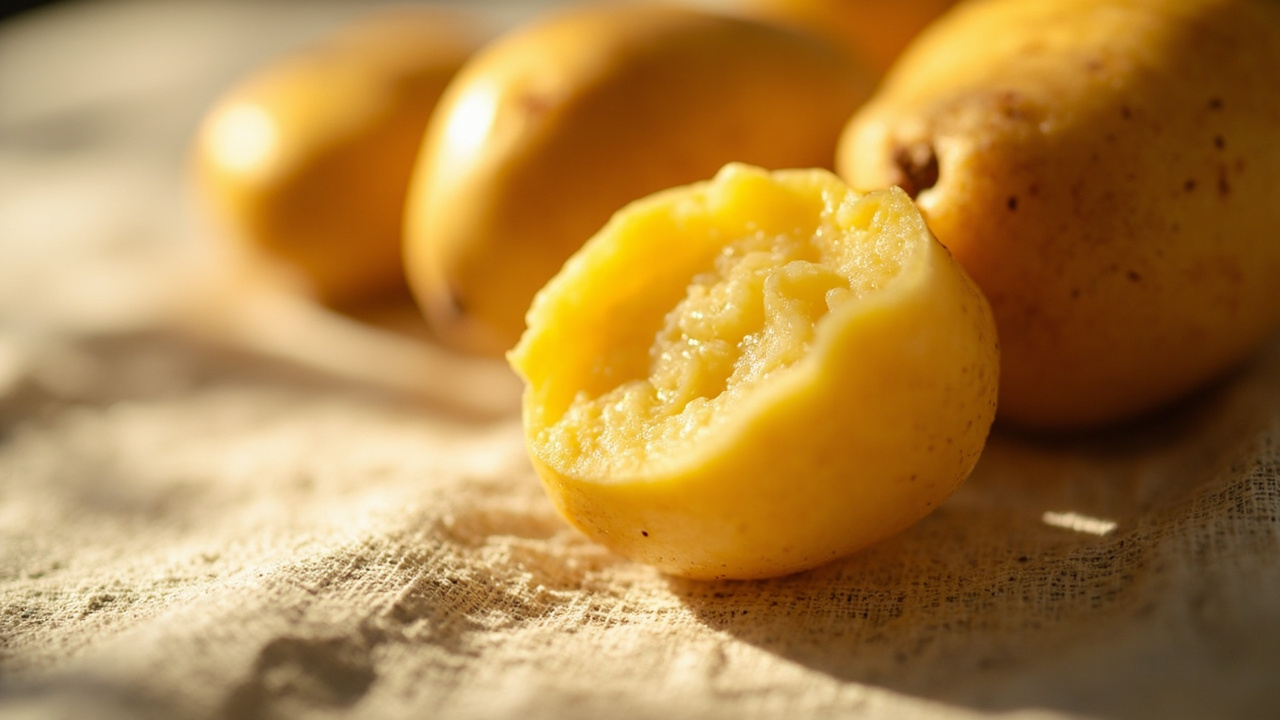
Potato carbs are often the subject of diet debates despite a simple fact: a medium potato contains roughly 26 grams of carbohydrate, making it a substantial but not excessive source of energy for most people.
This article answers practical questions about the types of carbs in potatoes, how those carbs influence blood sugar and performance, and cooking strategies to lower glycemic
impact, and how to include potatoes in balanced or diabetes-friendly meals.
- What Are the Carbohydrates in Potatoes? (Types, Amounts per Serving, and Net Carbs)
- How Potato Carbs Affect Blood Sugar and Energy?
- Health Benefits and Downsides of Potato Carbs (Fiber, Nutrients, Weight Management, Keto Concerns)
- How to Cook Potatoes to Reduce Carb Impact and Boost Resistant Starch?
- Portion Sizes, Carb Counts for Popular Potato Varieties and Dishes (Russet, Yukon, Sweet Potato, Fries, Mashed)
- How to Include Potatoes in Low-Carb or Diabetic Meal Plans?
- Common Mistakes and Myths About Potato Carbs (Peeling, Overeating Starchy Sides, Misreading Labels)
- Practical Tips and Recipes for Lower-Carb, Nutrient-Dense Potato Meals (Preparation, Seasoning, Meal Ideas)
- Conclusion
- Frequently Asked Questions
What Are the Carbohydrates in Potatoes? (Types, Amounts per Serving, and Net Carbs)
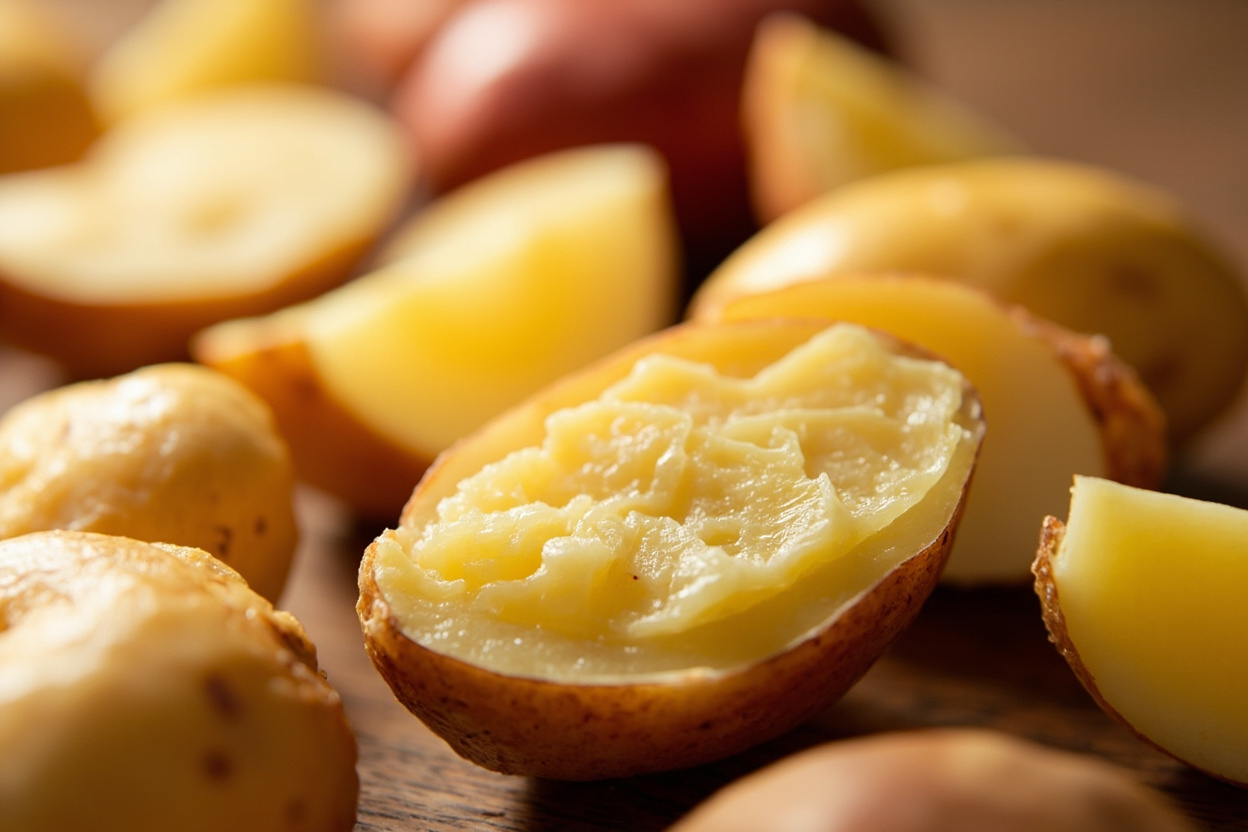
Potatoes are primarily composed of starch, with smaller amounts of simple sugars and dietary fiber. On a fresh-weight basis, a medium (about 150 g) white potato contains ~26 g of total carbohydrates.
The composition varies by variety and cooking method, but generally includes amylose and amylopectin starches, reducing sugars such as glucose and fructose, and about 2 g of fiber per medium tuber.
Net carbs are calculated by subtracting fiber (and in some contexts sugar alcohols, though not relevant to potatoes) from total carbs.
For a medium potato with 26 g total carbs and ~2 g fiber, net carbs are roughly 24 g.
| Component | Typical amount per medium potato (~150 g) |
|---|---|
| Total carbohydrates | ~26 g |
| Dietary fiber | ~2 g |
| Net carbs | ~24 g |
| Digestible starch (approx.) | ~22–24 g |
The starch fraction is split between amylose (linear chains) and amylopectin (branched); the ratio affects digestibility, texture, and glycemic response.
Varietal differences and cooking processes modify how much of that starch is rapidly digestible versus slowly or not digestible (resistant starch).
How Potato Carbs Affect Blood Sugar and Energy?
Potato carbohydrates can raise blood glucose quickly because much of their starch is digestible.
The speed and magnitude of the rise depend on the potato variety, cooking method, serving temperature, and what else is eaten with the potato.
The glycemic index (GI) is a standardized way to quantify how a food raises blood sugar compared with pure glucose (GI = 100).
Boiled and baked potatoes typically have moderate to high GI values-often ranging from ~56 to >90 depending on variety and preparation.
Foods with higher amylose content and higher levels of resistant starch have lower glycemic responses.
| Factor | Typical effect on blood sugar |
|---|---|
| Hot, mashed or pureed potatoes | Higher GI; faster glucose rise |
| Boiled, cooled potatoes (increased resistant starch) | Lower GI; slower glucose rise |
| Varieties higher in amylose | Lower glycemic response |
Resistant starch (RS) behaves like fiber: it resists digestion in the small intestine and ferments in the colon, producing short-chain fatty acids beneficial for gut health and insulin sensitivity.
Cooling cooked potatoes increases RS content through starch retrogradation.
That change is measurable and can reduce the immediate glycemic impact of the same portion of potato.
Health Benefits and Downsides of Potato Carbs (Fiber, Nutrients, Weight Management, Keto Concerns)
Potatoes are more than carbs: they provide potassium, vitamin C, vitamin B6, and small amounts of protein.
The skin contains a significant portion of fiber and many micronutrients, so eating potatoes with skins yields better nutrient density.
Carbs in potatoes supply accessible energy for muscle activity and brain function; for athletes and active people, they are a useful fuel source.
- Fiber and gut health: Whole potatoes contribute ~2 g fiber per medium tuber. Cooling increases resistant starch, which supports colonic fermentation and beneficial bacteria.
- Micronutrients: Potatoes are a rich source of potassium and vitamin C compared with many other starchy staples.
- Satiety and weight management: Whole baked or boiled potatoes can be filling relative to their caloric content when compared with refined carbohydrate snacks.
Downsides appear when potatoes are processed or combined with lots of fats and sodium: French fries, potato chips, and loaded baked potatoes can be high in calories, saturated fat, and sodium, offsetting the tuber’s inherent benefits.
For low-carb diets like ketogenic plans, potatoes are typically too high in carbs to include regularly without disrupting ketosis.
How to Cook Potatoes to Reduce Carb Impact and Boost Resistant Starch?
Cooking modifies starch structure. Boiling and then cooling potatoes increases resistant starch due to retrogradation.
Frying or roasting at high temperatures often makes starch more accessible and increases calorie density due to added fat.
Boil whole or diced potatoes until tender, then refrigerate for at least 12 hours to increase resistant starch.
Consume cooled potatoes as salads or reheat gently; reheating after cooling retains some resistant starch compared with eating freshly hot.
Avoid deep frying when your goal is lower glycemic impact and lower calorie density.
Below is a practical comparison of common cooking methods and their expected effects on digestible carbs, resistant starch formation, and calories.
| Method | Effect on digestible carbs | Resistant starch | Calories (relative) |
|---|---|---|---|
| Boiled, eaten hot | High | Low | Low–moderate |
| Boiled, cooled | Moderate | Higher | Low–moderate |
| Baked | High | Low | Moderate |
| Fried (fries/chips) | High | Low | High |
Small adjustments-using olive oil sparingly, keeping skins on, and preferring boiling-plus-cooling-can substantially shift the metabolic response and caloric load of potato meals.
Portion Sizes, Carb Counts for Popular Potato Varieties and Dishes (Russet, Yukon, Sweet Potato, Fries, Mashed)
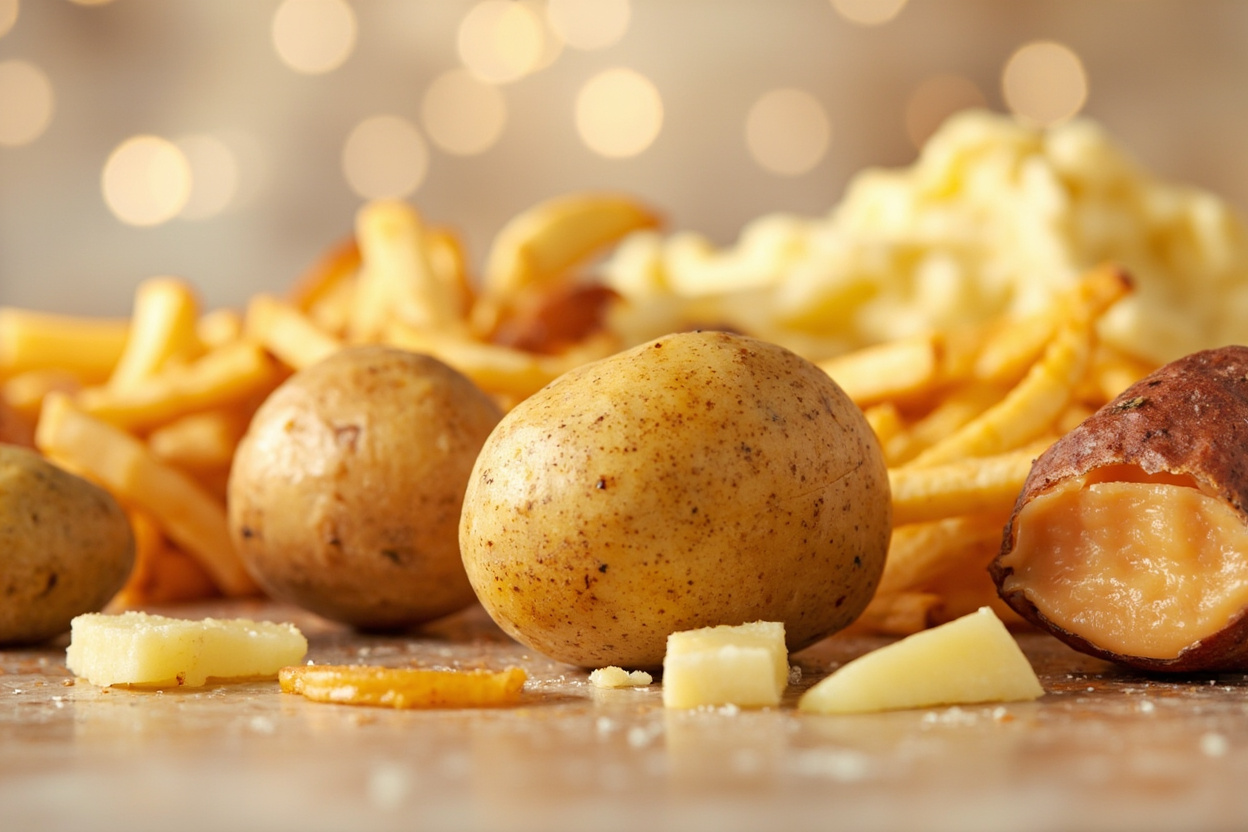
Different potato types and preparations change carbohydrate content per serving only modestly by weight, but portion size and added ingredients create large differences in net carbohydrate and calories.
Sweet potatoes are often perceived differently but have comparable carbohydrate totals per equivalent serving, with slightly different sugar and fiber profiles.
| Item | Serving size | Total carbs | Notes |
|---|---|---|---|
| Medium Russet potato | ~150 g | ~26 g | Common baking potato |
| Medium Yukon Gold | ~150 g | ~24–26 g | Higher moisture, creamy texture |
| Medium sweet potato | ~150 g | ~23–27 g | Higher beta-carotene; slightly higher sugars |
| Handful fries (restaurant) | ~120–150 g | ~30–45 g | High calories due to oil |
| Mashed, with milk/butter | ~150 g | ~30–35 g | Added fats and milk increase calories |
When tracking carbs for blood glucose or weight management, weigh portions and account for added ingredients.
For example, mashed potatoes made with cream and butter will have similar carbs but substantially more calories than plain boiled potatoes with the skin.
How to Include Potatoes in Low-Carb or Diabetic Meal Plans?
Potatoes can be accommodated in diabetes-friendly plans with portion control, strategic pairings, and timing.
Prioritize whole potatoes with skin, use boiling-plus-cooling techniques, and pair potatoes with protein, fiber, and healthy fats to slow glucose absorption.
- Pair with protein: grilled chicken, fish, or legumes reduces glycemic peak.
- Add non-starchy vegetables: salads, steamed greens or cruciferous vegetables raise fiber and volume without many carbs.
- Time carbohydrates around activity: consume larger portions near exercise sessions to improve glucose disposal.
Substitutes can reduce carbs without losing the meal structure: cauliflower mash, roasted turnips, or kohlrabi can mimic texture in some dishes with far fewer carbs.
For strict low-carb diets, replace potatoes in most meals, but for moderate plans, small, well-combined potato portions are acceptable.
| Strategy | Practical example |
|---|---|
| Portion control | Half-medium potato (12–13 g carbs) with a palm-sized protein and salad |
| Cooling method | Make potato salad from boiled-and-cooled potatoes to boost resistant starch |
| Swap | Make potato salad from boiled and cooled potatoes to boost resistant starch |
Common Mistakes and Myths About Potato Carbs (Peeling, Overeating Starchy Sides, Misreading Labels)
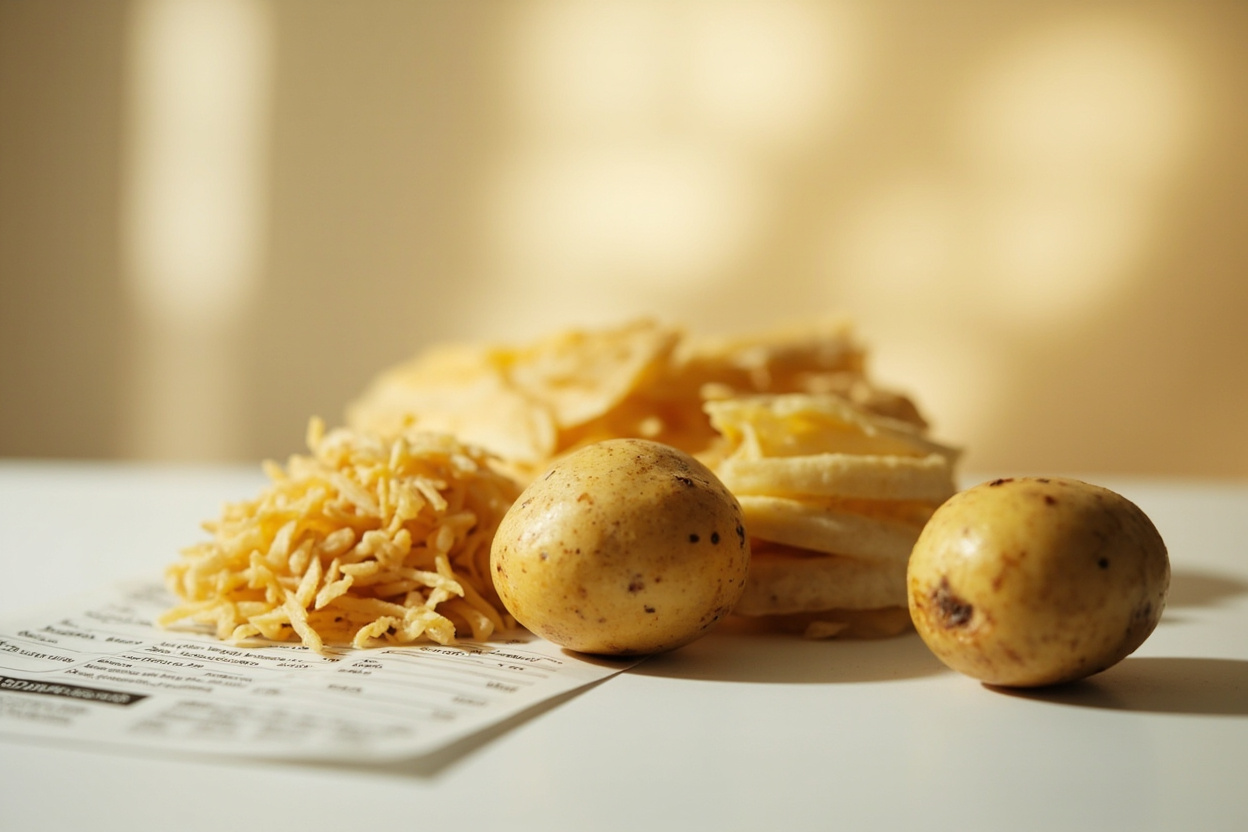
Several common misconceptions persist about potato carbohydrates. Peeling potatoes removes a disproportionate share of fiber and micronutrients, reducing nutrient density and potentially raising glycemic impact.
Equating all potatoes with “bad carbs” ignores the distinction between whole tubers and processed potato products.
- Myth: “All potatoes spike blood sugar dramatically.” Reality: preparation, portion, and pairings control the spike.
- Myth: “Sweet potatoes are always low-GI.” Reality: They can be lower than some white potatoes but still provide substantial carbs per serving.
- Mistake: Relying on labeled serving sizes from restaurants without weighing portions leads to underestimating carbs.
Processed potato products like chips and fast-food fries often contain hidden fats, sodium, and caloric load that negate nutritional benefits.
Read labels, weigh portions if counting carbs, and favor minimally processed preparations cooked at home.
Practical Tips and Recipes for Lower-Carb, Nutrient-Dense Potato Meals (Preparation, Seasoning, Meal Ideas)
Simple techniques preserve nutrients and limit excess calories. Keep skins on, use minimal added fat, incorporate acid (vinegar or lemon) when making potato salads to improve flavor without adding sugar, and combine potatoes with fiber-rich vegetables and lean proteins.
- Meal idea: Boiled-and-cooled potato salad with olive oil, lemon, chopped parsley, capers, and grilled salmon.
- Meal idea: Half a baked potato topped with cottage cheese, chives, and a side of steamed broccoli.
- Snack idea: Roasted baby potatoes tossed with rosemary and a light spray of oil-keep portion to 75–100 g.
Here are three quick recipe sketches showing how to keep potato meals lower in net carbs and higher in nutrients.
| Recipe | Main steps | Why it’s lower-impact |
|---|---|---|
| Chilled Herb Potato Salad | Boil whole small potatoes; cool 12+ hours; toss with olive oil, vinegar, herbs. | Cooling increases resistant starch; minimal fat; high fiber with skins. |
| Baked Potato with Cottage Cheese | Bake medium potato with skin; top with cottage cheese, chives, pepper. | Protein reduces glycemic peak; skin adds fiber. |
| Roasted Potatoes with Greens | Lightly roast diced potatoes with olive oil; serve over sautéed spinach and grilled chicken. | Combines carbs with fiber and protein; controlled oil use. |
Small behavior changes-controlling portion size, choosing boiling-and-cooling when possible, and pairing with protein and non-starchy vegetables-deliver meaningful differences in glycemic outcomes and calorie balance.
Conclusion
Potato carbohydrates are a substantial energy source: a medium potato contains about 26 g of carbs, mainly starch, and provides useful micronutrients like potassium and vitamin C.
The metabolic impact of those carbs is not fixed; it depends on variety, cooking method, temperature, portion size, and meal composition.
Frequently Asked Questions
A medium potato (about 150 g) contains approximately 26 g of total carbohydrates and about 2 g of fiber, yielding roughly 24 g net carbs.
It depends on variety and preparation. Some potato preparations (hot mashed or baked) can have a higher glycemic index than many rice and pasta dishes. Pairing with protein and fiber and using cooling techniques can lower the potato’s glycemic impact.
Yes, with portion control, appropriate pairings (protein, non-starchy vegetables), and mindful preparation. Boiled-and-cooled potatoes and keeping the skin on are practical strategies to reduce glycemic response.
Cooling increases resistant starch, which reduces the amount of starch digested in the small intestine; total carbohydrate weight remains the same, but the immediately digestible carbs and glycemic response are lower.
Not substantially. Per equivalent weight, sweet potatoes and white potatoes have similar total carbohydrate amounts. Sweet potatoes have more beta-carotene and slightly higher natural sugars, whereas white potatoes vary by variety in starch composition.
Deep-fried items like restaurant fries and potato chips are the least favorable: they combine highly available starch with high fat and calories, often leading to larger portion sizes and poorer glycemic and calorie outcomes.
