
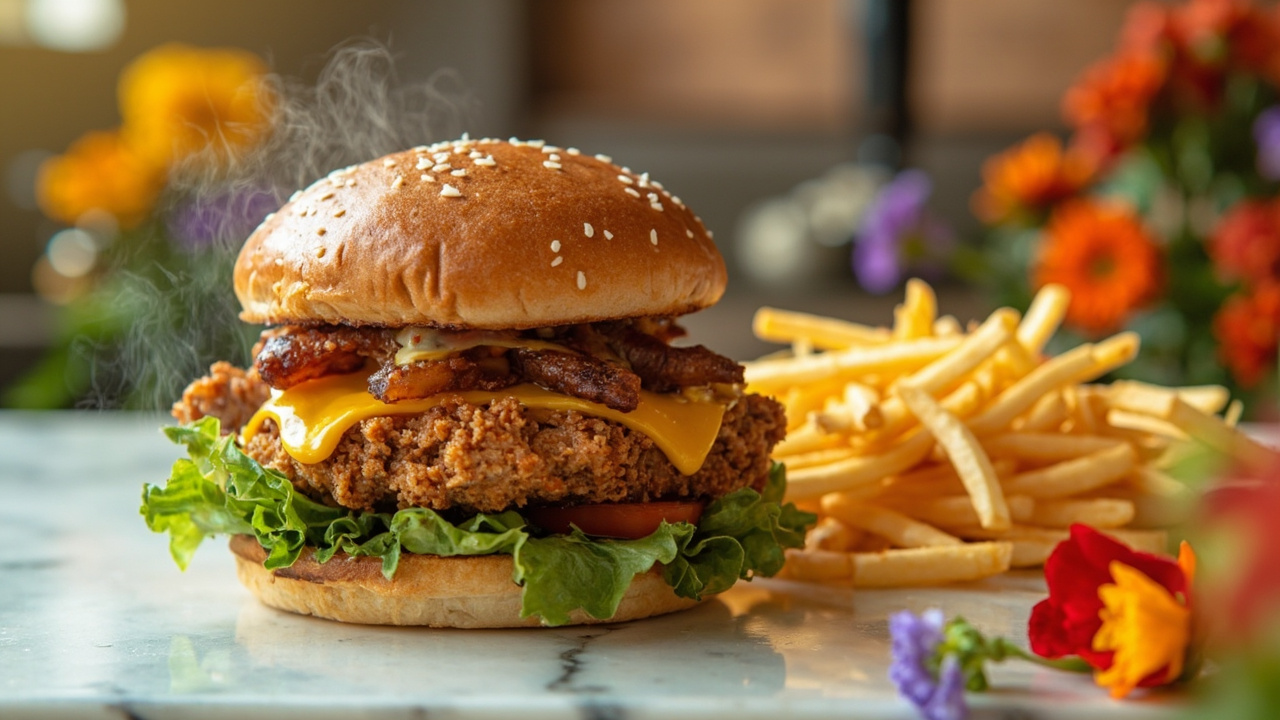
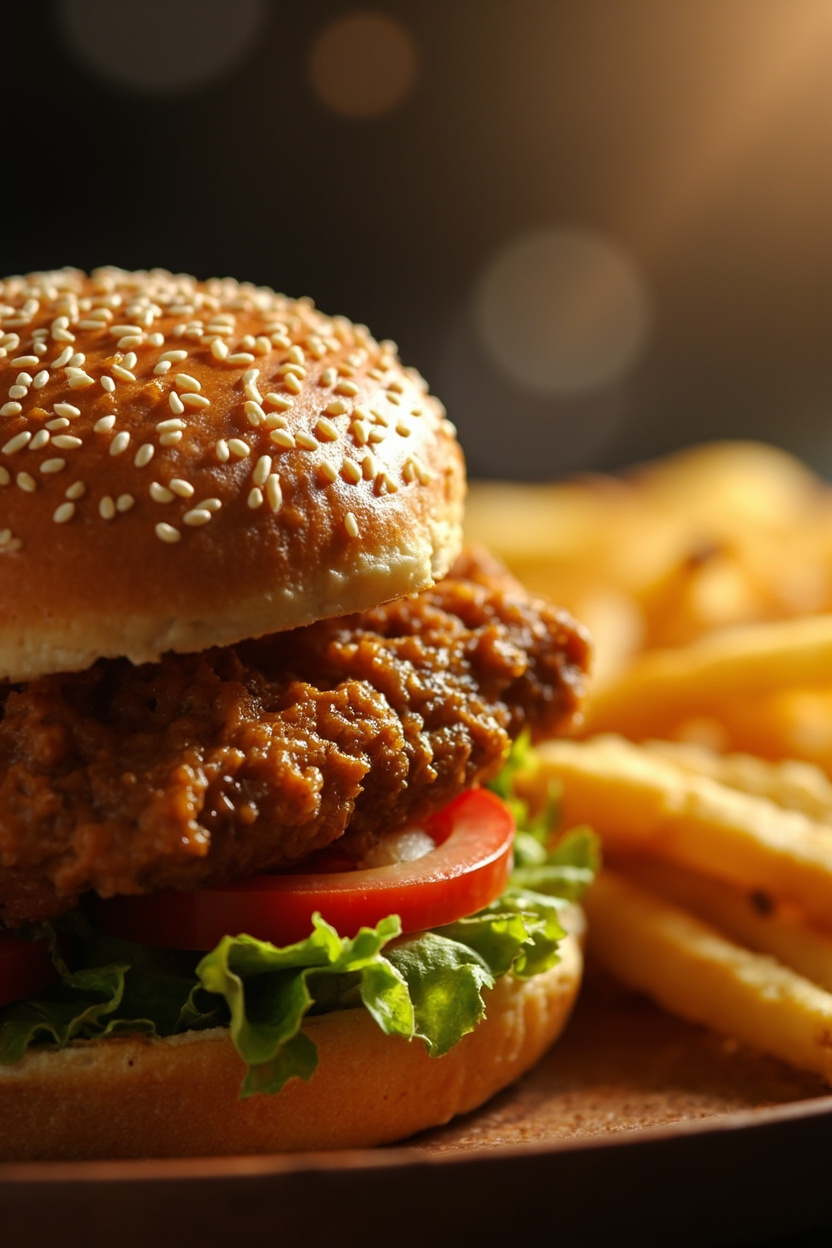
Make a proper chicken burger and fries right now. The contrast matters: a crisp crust on the chicken, a tender, juicy interior, and fries that are golden and crunchy but fluffy inside.
Texture and flavor define success: crisp coating, seasoned meat, salty fries, and a bright sauce cut through richness.
You want a homemade chicken burger that echoes fast food style without the grease overload.
Chicken Burger and Fries
Equipment
- Cast-iron skillet or heavy frying pan – for even browning and stable heat.
- Deep fryer or large pot with thermometer – maintain oil temp for crisp fries.
- Wire rack and baking sheet – rest fried chicken to keep crispness.
Ingredients
- 800 g 1.75 lb boneless skinless chicken thighs
- 200 g 1 1/2 cups all-purpose flour
- 60 g 1/2 cup cornstarch
- 2 large eggs
- 240 ml 1 cup buttermilk
- 4 burger buns
- 900 g 2 lb Russet potatoes
- Salt and pepper to taste
- Oil for frying
Instructions
- Brine: Combine 480 ml (2 cups) water with 30 g (2 tbsp) salt and 30 g (2 tbsp) sugar, submerge chicken for 20 minutes – results in juicier meat via osmosis.
- Prep fries: Cut potatoes into 10 mm (3/8 inch) sticks, rinse, then soak in ice water 30 minutes to remove surface starch for crisper fries.
- Coating mix: Whisk flour, cornstarch, 10 g (2 tsp) smoked paprika, 5 g (1 tsp) garlic powder, salt and pepper. Beat eggs with 120 ml (1/2 cup) milk or buttermilk.
- Dry and coat chicken: Pat chicken dry, dredge in flour mix, dip in egg, then back in flour. Press firmly to form an even crust, essential for even browning.
- Fry fries first: Heat oil to 160 C (320 F). Fry potatoes 4-5 minutes until softened but not brown. Drain and cool on a rack.
- Fry chicken: Increase oil to 175 C (350 F). Fry chicken 5-7 minutes until golden and internal temp 74 C (165 F). Rest on a rack 5 minutes to set crust and redistribute juices.
- Finish fries: Return fries to 190 C (375 F) and fry 2-3 minutes to color and crisp. Salt immediately after removing from oil.
- Assemble: Toast buns, spread sauce, place chicken, add pickles and lettuce. Serve fries hot with dipping sauce. Notice the contrast between the peppery, crunchy crust and the tender internal texture.
Notes
- Brining: Short brine improves moisture retention without making meat overly salty.
- Double-fry: Par-cook then finish fries for the best crisp-to-fluffy ratio.
- Oil temp: Use a thermometer; too cool yields greasy food, too hot burns crust before chicken cooks.
Why is this the Ultimate Chicken Burger And Fries?
Crisp-to-juicy ratio: The double-coating on the chicken and the double-fry technique for potatoes create a durable crust that stays crunchy while the interior stays moist.
That structural contrast is what makes this chicken sandwich sing.
Flavor layering: Seasoning in the brine, flour mix, and sauce adds depth at multiple stages. Salt plus aromatic spices penetrate the meat and develop through Maillard browning for savory complexity.
Texture control: Using thighs or a mixed grind gives natural fat that prevents dryness. Removing surface starch from potatoes and par-cooking prevents collapse, producing crispy fries with a fluffy core.
Execution simplicity: The methods are reproducible in a home kitchen. You get fast food-style results using controlled temps and timing instead of tricks or gimmicks.
Flavor-Building Elements for the Ultimate Chicken Burger & Fries
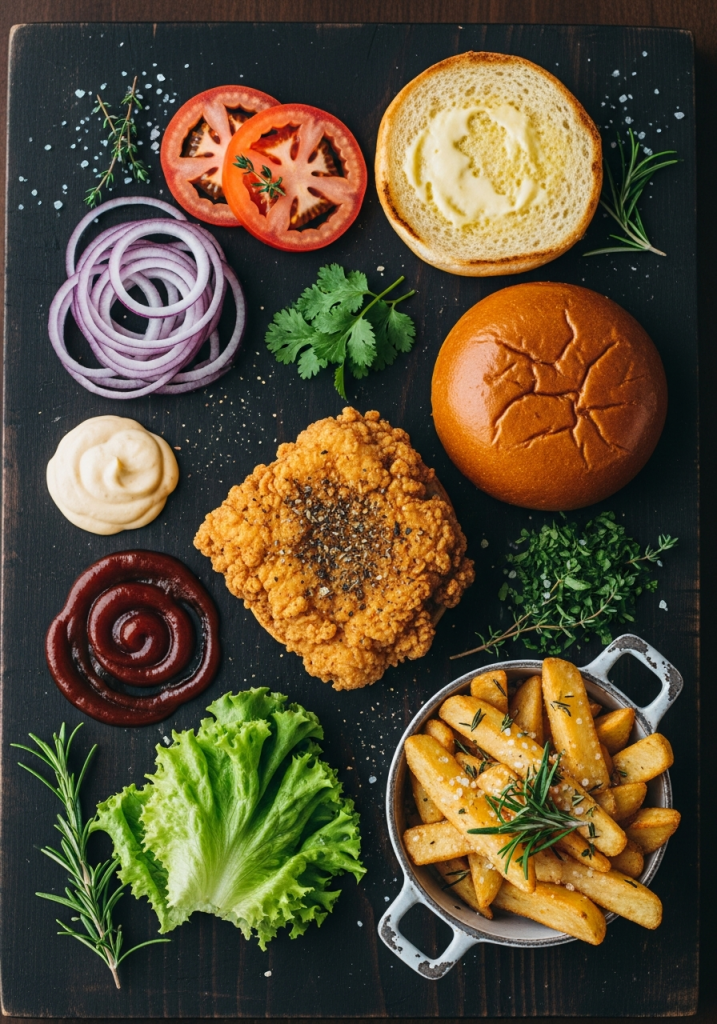
- 800 g (1.75 lb) chicken thighs: adds fat for juiciness and richer mouthfeel.
- 240 ml (1 cup) buttermilk: acid tenderizes proteins and improves tenderness.
- 200 g (1 1/2 cups) all-purpose flour: creates a stable matrix for a crunchy crust.
- 60 g (1/2 cup) cornstarch: interrupts gluten formation, yielding lighter crispiness.
- 900 g (2 lb) Russet potatoes: high starch content delivers fluffy interiors when fried.
- 30 g (2 tbsp) salt: balances flavor and helps proteins retain moisture during cooking.
Kitchen Tools You’ll Need
- Cast-iron skillet or heavy pan.
- Deep fryer or large heavy-bottomed pot.
- Thermometer (instant-read and frying).
- Wire rack and baking sheet.
Sear, Stack, and Smash: The Hands-On Guide to Perfect Burgers and Golden Fries
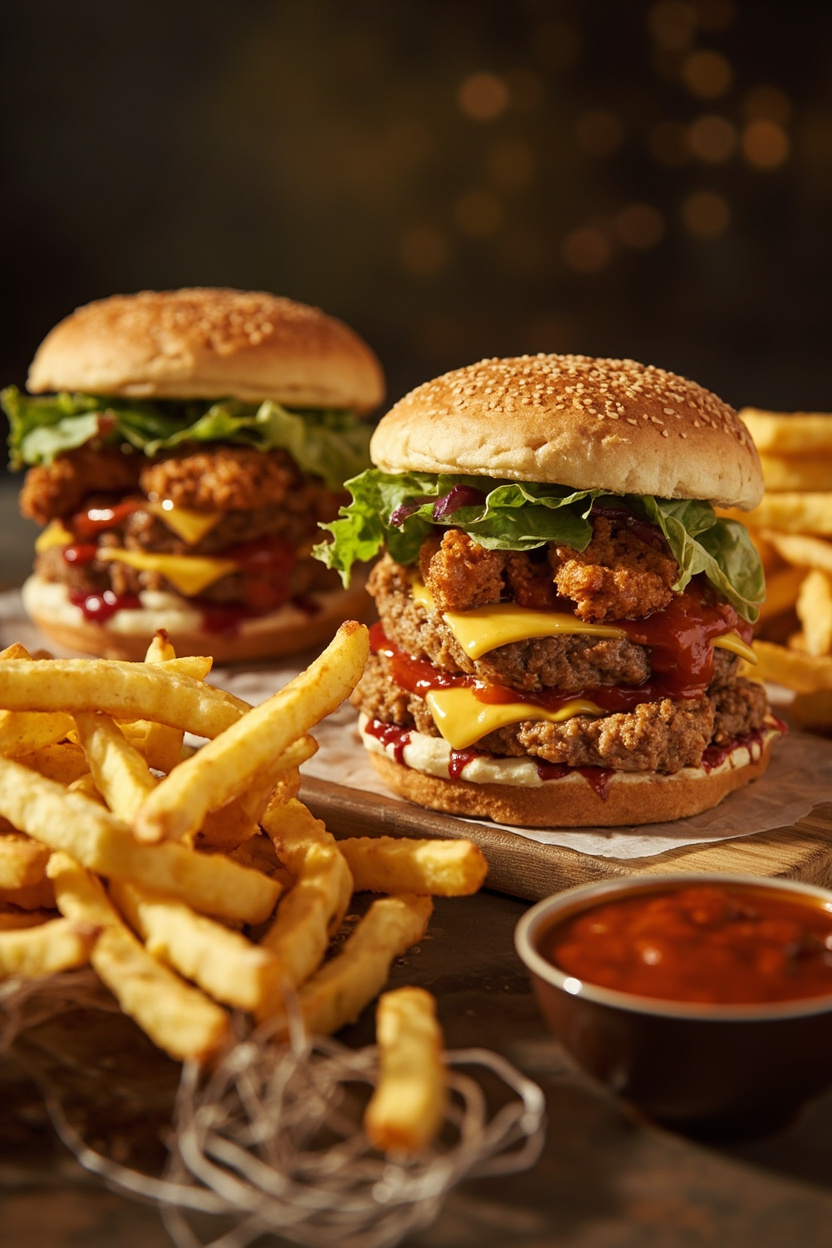
- Brine and prep: Smell the faint sweetness of the brine. Pat chicken dry; dampness prevents an even crust. Texture should feel tacky, not wet.
- Soak potatoes: When you rinse the potatoes thoroughly, the exterior starch lifts. The cold, quiet smell of ice water indicates readiness.
- Mix coatings: The seasoned flour should smell aromatic. Cornstarch adds a grainy powder that becomes glassy and crisp when fried.
- Dredge and press: Press flour firmly into the chicken so the crust clings. The crust will feel dense before frying and shatter into crisp shards when cooked.
- Par-fry fries: At the first fry, they should be pliable and pale. Drain and cool until they feel dry to the touch at the edges.
- Fry chicken at the correct temp: Oil should shimmer. You should hear a steady, energetic sizzle. Chicken browns to a deep golden and internal juices should run clear.
- Finish fries hot: The second fry yields clear sizzle and immediate browning. Texture becomes crackly outside and tender inside.
- Assemble and serve: Toasted buns add dry, nutty notes. Bite into the sandwich and note the crunch, the tender meat, and the bright acidity of pickles or sauce cutting through fat.
Crisp Secrets from the Fryer: Chef Tricks for Juicy Burgers and Crunchy Fries
Temperature Control
Keep oil steady. Use a thermometer and don’t crowd the pan. Crowding drops the temperature and yields soggy results. Adjust the heat between batches to maintain the target temps.
Timing and Rest
Rest fried chicken on a rack, not paper. Resting lets the crust set and juices redistribute. Short rest keeps the crust crisp while the interior finishes cooking from carryover heat.
Common Mistakes When Making Chicken Burger And Fries
Overmixing the meat
Don’t overwork the chicken if you’re grinding or forming patties. Overmixing tightens proteins, yielding a dense patty. Mix just until combined.
Wrong oil temperature
If the oil is too cool, you’ll get greasy food; too hot, and the crust burns before the interior cooks. Use a thermometer and aim for 175 C (350 F) for chicken and staged temps for fries.
Variations and Substitutions
- Swap thighs for 800 g (1.75 lb) ground chicken breast for leaner burgers; add 1 tbsp oil to keep them moist.
- Make oven-baked fries: toss in oil and bake at 220 C (425 F) until golden, flipping once.
- Use panko instead of flour for an extra airy crunch on the chicken crust.
- Turn it spicy: add 10 g (2 tsp) cayenne to the flour mix and sriracha mayo to the bun.
How to Store chicken burger and fries
- Room temp: Serve immediately; do not leave more than 2 hours due to food safety.
- Fridge: Store chicken and fries separately in airtight containers up to 3 days. Reheat fries in a hot oven or air fryer to restore crispness.
- Freezer: Freeze cooked chicken in vacuum bags up to 2 months; fries lose texture but can be refried from frozen for a passable result.
Nutrition Information for Chicken Burger And Fries
High in protein from chicken, moderate carbs from the bun and fries, and higher fat depending on cooking oil and cut choice.
Vegetables add micronutrients when included. Not automatically gluten-free or dairy-free unless substitutions are made.
Conclusion
Make this chicken burger and fries when you want a repeatable, restaurant-quality result at home. Follow the temperature rules, respect resting times, and use the double-fry technique. You get crisp, juicy, and flavorful every time.
Frequently Asked Questions
Store in airtight containers and eat within 3 days. Reheat chicken to 74 C (165 F) before serving.
Yes, par-cook fries and keep chicken warm on a rack; finish frying just before serving to preserve crispness.
Substitute gluten-free flour and buns, and check breadcrumbs. Cornstarch and rice flour work well for coating.
Soak, par-fry, cool, then finish-fry at a higher heat. Salt immediately after frying.
