
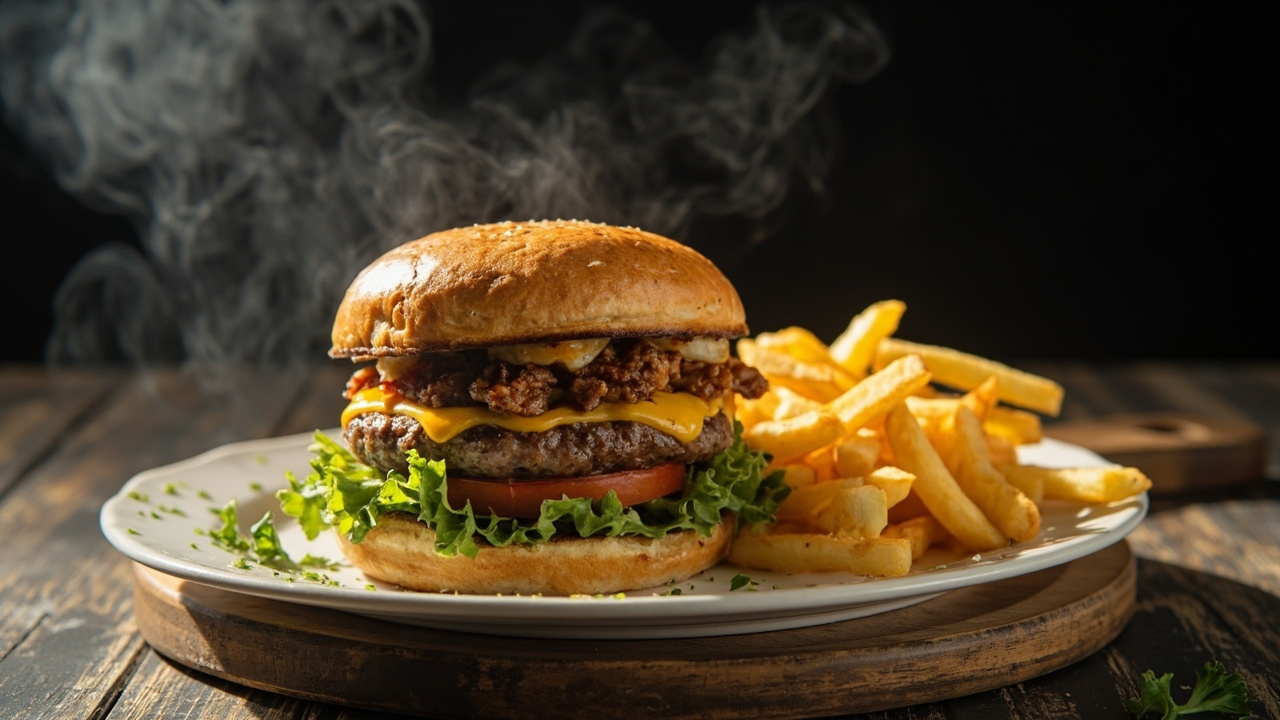
The sizzle of beef hitting a hot pan, the crackle of oil as potatoes crisp to a perfect golden edge – that sensory duet is why burger and fries belong in every cook’s repertoire.
Texture and flavor are the ticket: a juicy, well-seared homemade burger with a slightly charred crust paired with crisp, fluffy-on-the-inside French fries is a nostalgic, comforting American dinner that still rewards technique.
I recommend you treat each component with attention, seasoning, temperature, and timing – because small choices produce big results. You should expect contrasts, crunchy and tender, salty and sweet, and aim for balance so every bite sings.
Burger and Fries
Equipment
- Cast-iron skillet – for even searing and superior crust development
- Heavy-bottomed pot or deep fryer – to maintain stable oil temperature for fries
- Box grater or mandoline – to get uniform potato sticks if you prefer shoestrings
- Instant-read thermometer – to hit precise doneness without guesswork
Ingredients
- 800 g 1.75 lb ground beef, 80/20 blend
- 900 g 2 lb Russet potatoes
- 4 burger buns
- 4 slices cheddar cheese
- 60 ml 1/4 cup neutral oil
- 10 g 2 tsp kosher salt
- 5 g 1 tsp freshly ground black pepper
- 30 g 2 tbsp butter
- 30 ml 2 tbsp mayonnaise
- 15 ml 1 tbsp ketchup
Instructions
- Prepare fries by cutting potatoes into 10 mm (3/8 inch) sticks. Rinse in cold water until runoff is clear to reduce surface starch, then dry thoroughly on towels.
- Par-fry potatoes at 160 C (320 F) for 4-5 minutes until soft but pale. Drain and cool on a rack; this two-stage frying yields a crisp exterior when finished at higher heat.
- Form four patties of about 200 g (7 oz) each, gently shaping without overworking the meat. Season both sides with 5 g (1 tsp) salt and 2 g (1/2 tsp) pepper just before cooking to avoid drawing out moisture.
- Heat a cast-iron skillet over medium-high until smoking point approaches. Add a thin film of oil. Sear patties 3 minutes per side for medium-rare, pressing slightly once in the first 30 seconds to ensure contact, then add cheese and cover for 30 seconds to melt.
- Increase fryer oil to 190 C (375 F). Finish fries in hot oil for 2-3 minutes until deep golden and crisp. Drain on paper and immediately season with salt to stick to the hot surface.
- Toast buns in butter in the same skillet for 30-45 seconds until golden, which adds a nutty aroma and prevents sogginess from burger juices.
- Assemble: spread a tablespoon of sauce on each bun base, place the patty, add crisp lettuce or pickles if desired, and cap with the bun top. Serve fries alongside while both components are hot for optimal texture.
Notes
- Patty handling: Gently handle meat to keep texture tender and avoid dense burgers.
- Oil temp: Use an accurate thermometer; oil that is too cool produces greasy fries.
- Salt timing: Salt fries immediately after frying to maximize adhesion and flavor.
- Make-ahead: Par-fry and cool potatoes; finish just before serving for crispness.
The Flavor Cast for Your Burger & Fries
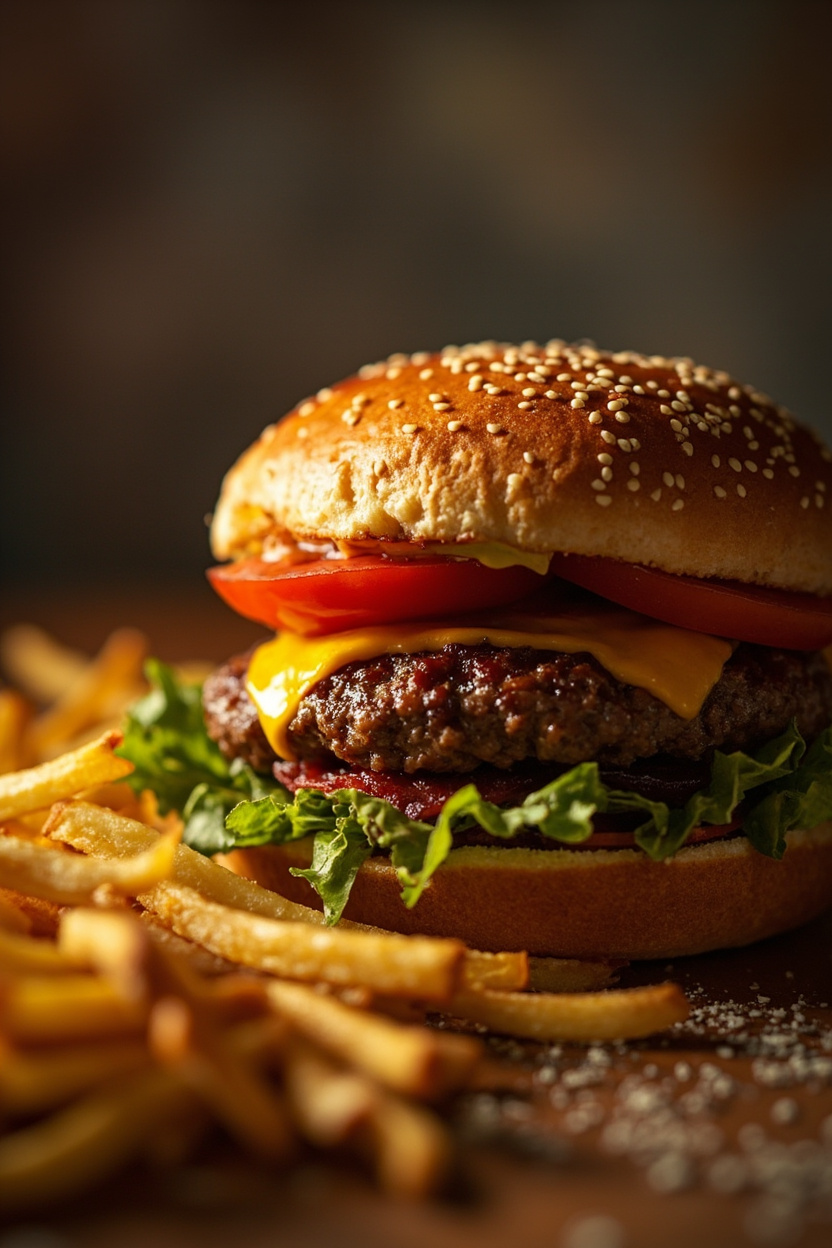
- 800 g (1.75 lb) ground beef: fat provides juiciness and supports the Maillard reaction for savory browning
- 900 g (2 lb) Russet potatoes: high starch content creates a crispy exterior and fluffy interior
- 10 g (2 tsp) kosher salt: ionic salt enhances protein denaturation and flavor perception
- 5 g (1 tsp) freshly ground black pepper: aromatic piperine adds heat and complements umami
- 60 ml (1/4 cup) neutral oil for frying: high smoke point prevents oxidation and off-flavors
- 30 g (2 tbsp) butter: milk solids add browning reaction and mouth-coating richness
- 4 burger buns: carbohydrate structure offers contrast and absorbs sauces without collapsing
- 30 ml (2 tbsp) mayonnaise + 15 ml (1 tbsp) ketchup: emulsified fat and acid balance the palate
Fire, Flip, Finish: Sculpting the Ultimate Burger & Fries
- Start with potatoes rinsed until the water runs clear. As you cut and rinse, note the starchy cloud in the water – that starch is what makes fries gummy if not removed. Dry thoroughly so oil splatter is minimized and fries crisp evenly.
- Par-fry at moderate heat to cook the center. The aroma will be neutral at this stage, and the surface pale. Cooling now is critical – it stops gelatinization and allows you to build a crunchy shell on the final fry.
- Form patties with a light touch. You should feel the meat come together without compressing it into a compact puck. Overworked beef makes dense burgers; gently formed patties retain a tender crumb and juicier mouthfeel.
- Preheat a cast-iron skillet until it smokes faintly. Add a drop of oil and place the patty. You want immediate, loud sizzle – that signals surface proteins searing. The resulting crust has deep caramelized notes and an almost nutty aroma.
- Sear without moving for the first side until a brown crust forms, about 3 minutes. Flip once and sear the second side. If you press too hard, you squeeze out juices; instead, use a gentle hand. Add cheese near the end so it melts while the patty rests and the juices redistribute.
- Raise fryer temperature to hot for the final crisp. As fries hit the oil, they will hiss aggressively; that sound turns to a steady bubbling, then quiets as moisture leaves the potato. Look for a deep golden hue and a hollow sound when tapped with a spoon.
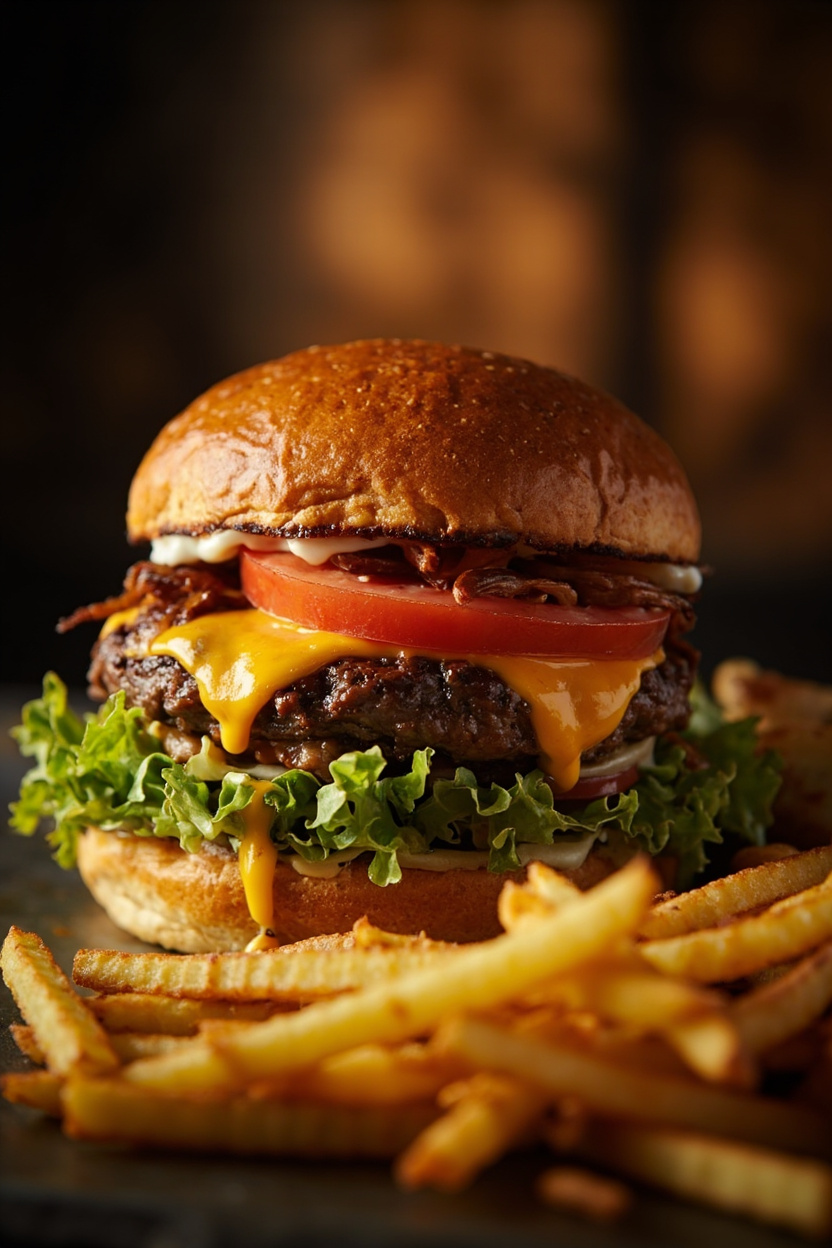
- Toast buns in butter until they color and smell nutty. The heat will crisp the interior surface so burger juices won’t make the bun soggy. Assemble while everything is hot so aromas and textures align – the first bite should deliver a crunch, followed by a juicy core and a buttery finish.
Common Mistakes When Making Burger And Fries
Overworking the Meat
Pressing, squeezing, or repeatedly shaping patties compacts proteins and creates a dense texture. Fix mix gently, shape with a light touch, and chill briefly to set the form.
Oil Temperature Too Low
Sweet spot matters: low oil temp yields greasy fries that never crisp. Fix – use a thermometer, par-fry at 160 C (320 F), then finish at 190 C (375 F).
Salting Too Early
Salting burger meat too far ahead can draw moisture out and dilute juiciness. Fix – season patties just before cooking; salt fries immediately after frying to adhere.
Skipping Rest Time
Serving patties straight off the heat loses juices rapidly. Fix – rest burgers 2 minutes; this modest pause improves juiciness and handling during assembly.
How to Store burger and fries?
- Room temperature: Serve within 30 minutes of cooking for optimal texture; do not leave hot food unrefrigerated beyond 2 hours.
- Fridge: Store patties and fries separately in airtight containers for up to 3 days. Reheat fries on a baking sheet at 220 C (425 F) for 6-8 minutes to regain crispness. Reheat patties briefly in a skillet over medium heat until warmed through.
- Freezer: Freeze cooked patties individually wrapped for up to 3 months. Fries freeze less successfully but can be blanched and frozen raw for up to 3 months; finish frying from frozen at 190 C (375 F) until crisp.
Nutritional Benefits of Burger And Fries
A balanced serving provides high-quality protein from beef and energy from potatoes. Vitamins include B12, iron, and potassium.
Make it lower-carb by swapping buns for lettuce wraps. This standard version is not gluten-free unless you choose gluten-free buns, and it contains dairy if you add cheese or butter.
Frequently Asked Questions
You can oven-bake fries at high heat on a single layer with a light oil coating, turning once. For the burger, use a hot cast-iron pan to sear and finish in a hot oven for even cooking. The texture will be slightly different but still satisfying.
I recommend an 80/20 ground beef ratio for the best balance of flavor and juiciness. You should avoid very lean blends if you want a moist, flavorful patty because fat carries flavor and helps form a proper crust.
Yes. Par-fry potatoes and cool on racks; finish frying just before serving. Patties can be seared and kept warm in a low oven, but avoid prolonged holding to prevent dry burgers. Assemble last-minute for the best texture.
Mix mayonnaise, ketchup, a dash of Worcestershire, and a squeeze of lemon for a quick burger sauce. I recommend adjusting acidity to taste. You should add chopped pickles or a touch of smoked paprika for depth.
