
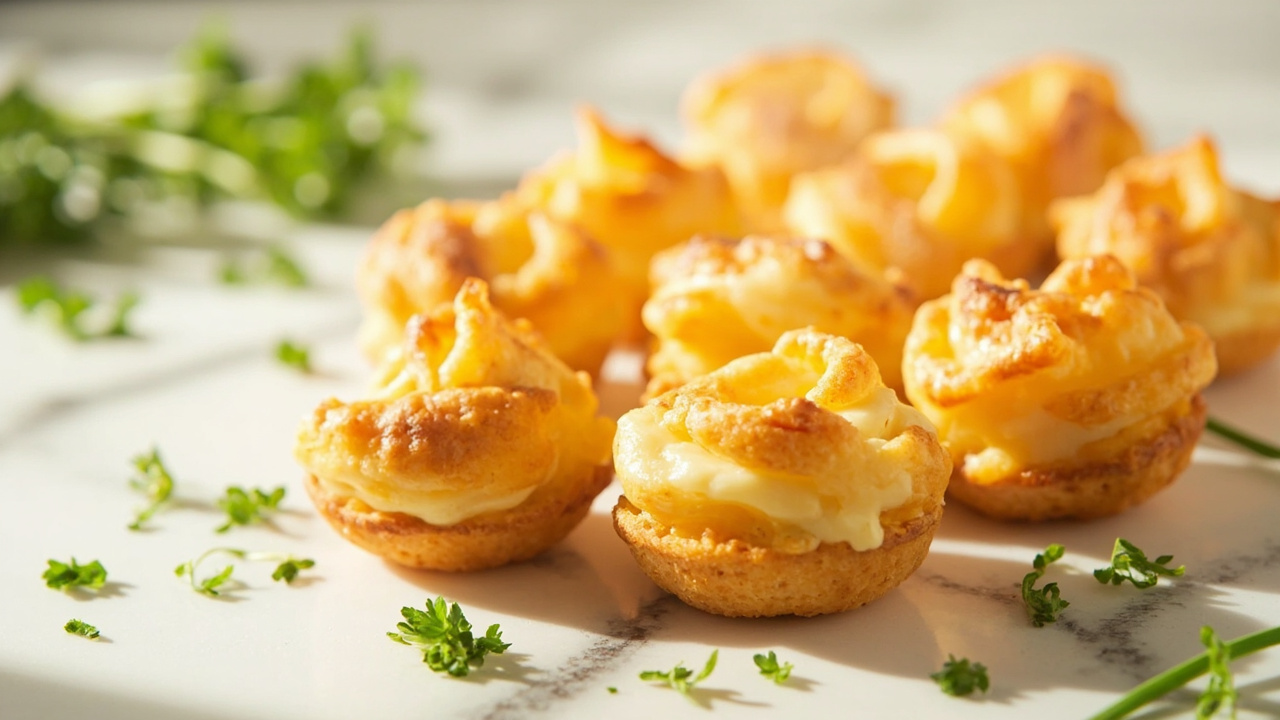
I found that transforming cold leftover mash into golden, pillowy snacks is one of the simplest joys in the kitchen.
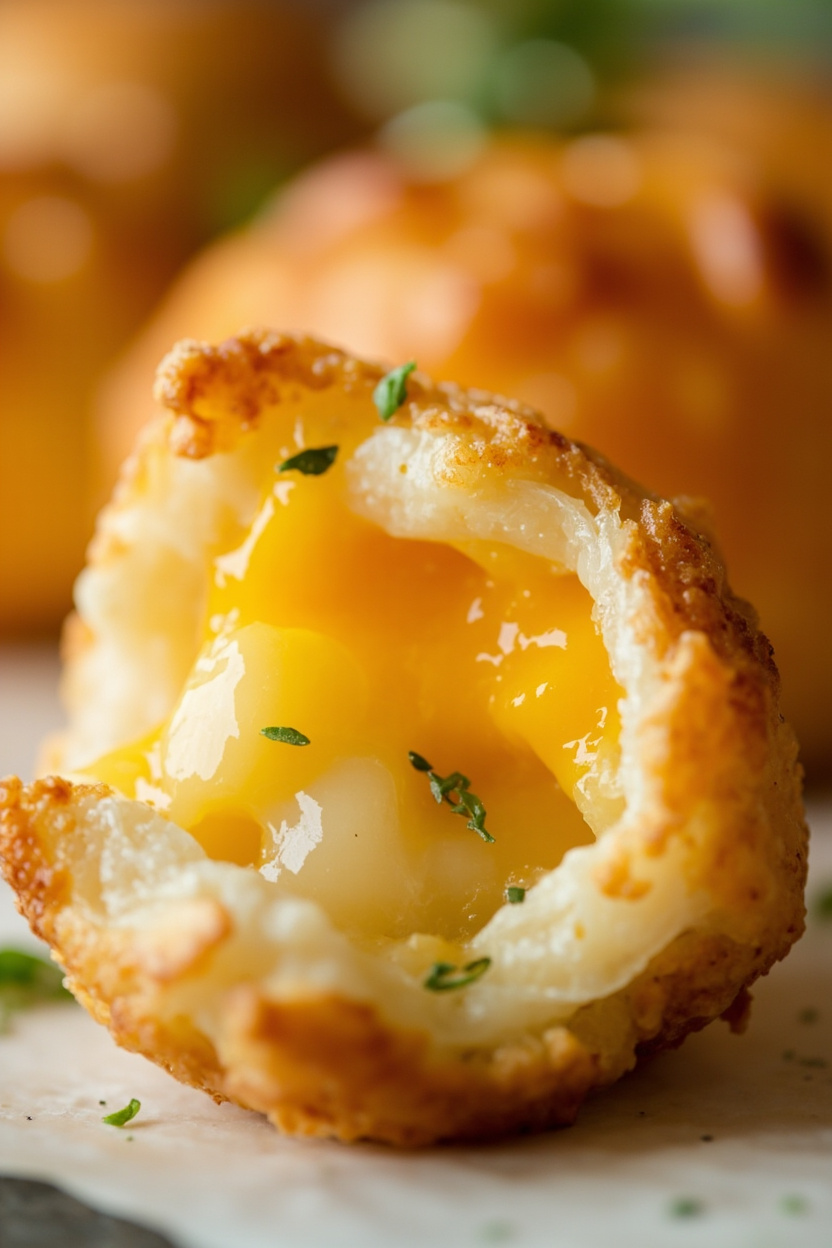
Cheesy mashed potato puffs deliver a contrast in texture you can taste immediately – a crisp, bronzed exterior that gives way to a steaming, fluffy interior threaded with molten cheese.
Notice how a little starch management and the right cheese choice make each bite both structural and indulgent.
As The Food Science Nerd, I get excited about the why behind each step, and you’ll appreciate how simple tweaks change texture and flavor predictably.

Cheesy Mashed Potato Puffs
Equipment
- Mixing bowl – for combining mash and binders
- Spoon or scoop – to portion uniform puffs
- Skillet or shallow fryer – for frying until golden
- Cooling rack with tray – drains excess oil
Ingredients
- 600 g 2 1/2 cups leftover mashed potatoes
- 100 g 1 cup shredded sharp cheddar
- 60 g 1/2 cup grated Parmesan
- 1 large egg 50 g beaten
- 50 g 1/2 cup all-purpose flour
- 120 g 1 cup panko breadcrumbs
- 2 g 1/2 tsp kosher salt
- Vegetable oil for frying
Instructions
- Preheat oil in a deep skillet to 175 C (350 F). The correct temperature ensures crisping without over-absorbing oil.
- In a bowl, combine mashed potatoes, cheddar, Parmesan, beaten egg, salt, and pepper. Mix gently to avoid overworking the starch, which causes gumminess.
- Portion 30 g (2 tbsp) scoops, flatten slightly and place 5 g (1 tsp) additional cheese in the center, then fold to enclose. You want a sealed seam to keep the molten interior contained.
- Roll each puff in flour, then egg wash, then panko breadcrumbs. Notice how the three-layer coating gives a dry, adhesive surface that crisps efficiently.
- Fry in batches for 3-4 minutes, turning occasionally, until deep golden brown and an internal temperature reaches about 65 C (150 F). Aromas should be nutty and toasty.
- Transfer to a cooling rack for 2 minutes to let the steam escape. This preserves crunch; steam trapped inside will soften the crust.
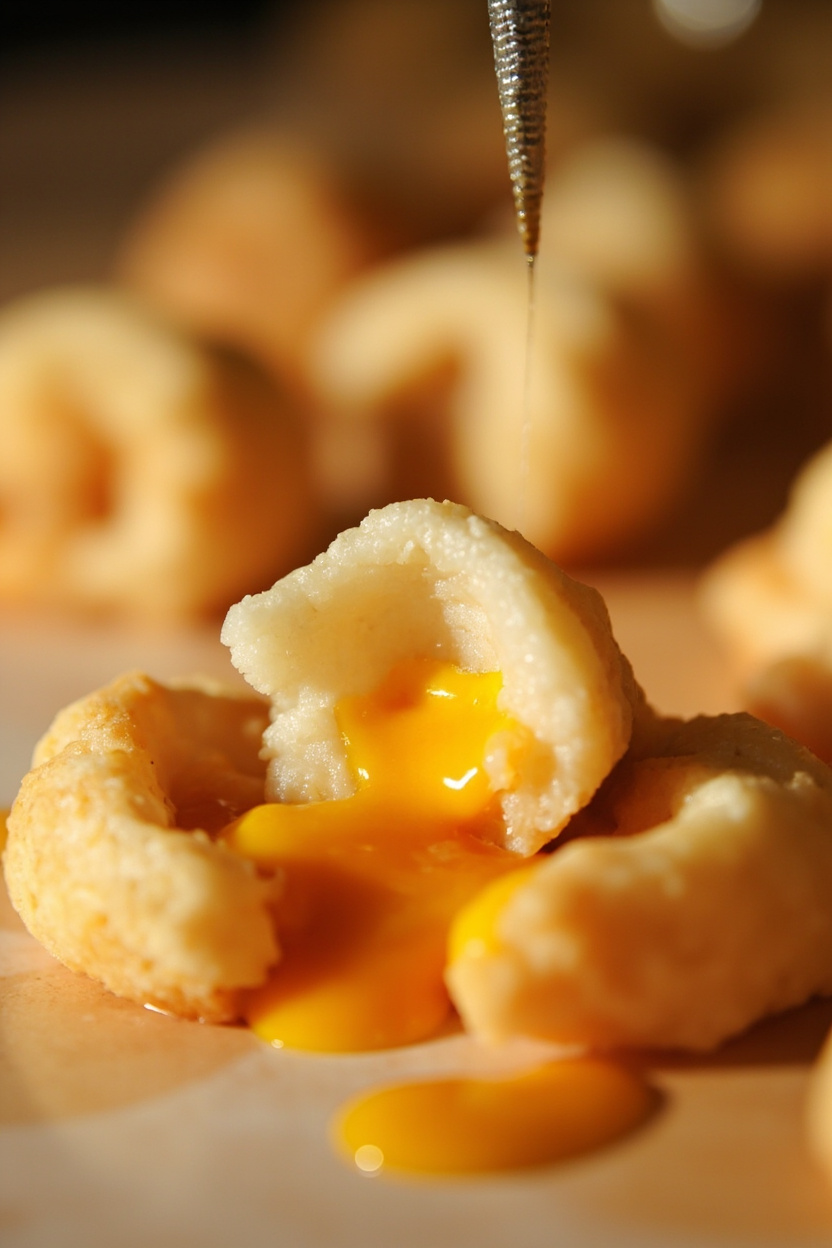
- Serve hot with a tangy dipping sauce. Notice the contrast – the exterior crackles while the center stretches with molten cheese.
The Magic of This Cheesy Mashed Potato Puffs Recipe
The structure comes from starch gelatinization and protein coagulation. When you heat mashed potatoes, the starch granules swell and form a gel that holds the shape once cooled.
Adding an egg supplies proteins that coagulate during frying, reinforcing that gel network so puffs keep their form.
Browning happens through the Maillard reaction. The combination of reducing sugars in potato and amino acids from cheese and egg produces complex savory and toasty flavors when hot oil raises surface temperature quickly.
Panko and a three-stage coating create textural contrast. Panko’s low-density flakes trap hot oil, crisping into a crunchy lattice without sealing in moisture, while the flour and egg bridge the mash to the breadcrumbs.
Cheese selection controls melt and flavor. Sharp cheddar delivers pronounced umami and controlled oil release, while softer mozzarella yields more stretch but less flavor complexity.
You can tailor the sensory profile by blending cheeses.
The Flavor-Builders Behind Irresistible Cheesy Mashed Potato Puffs
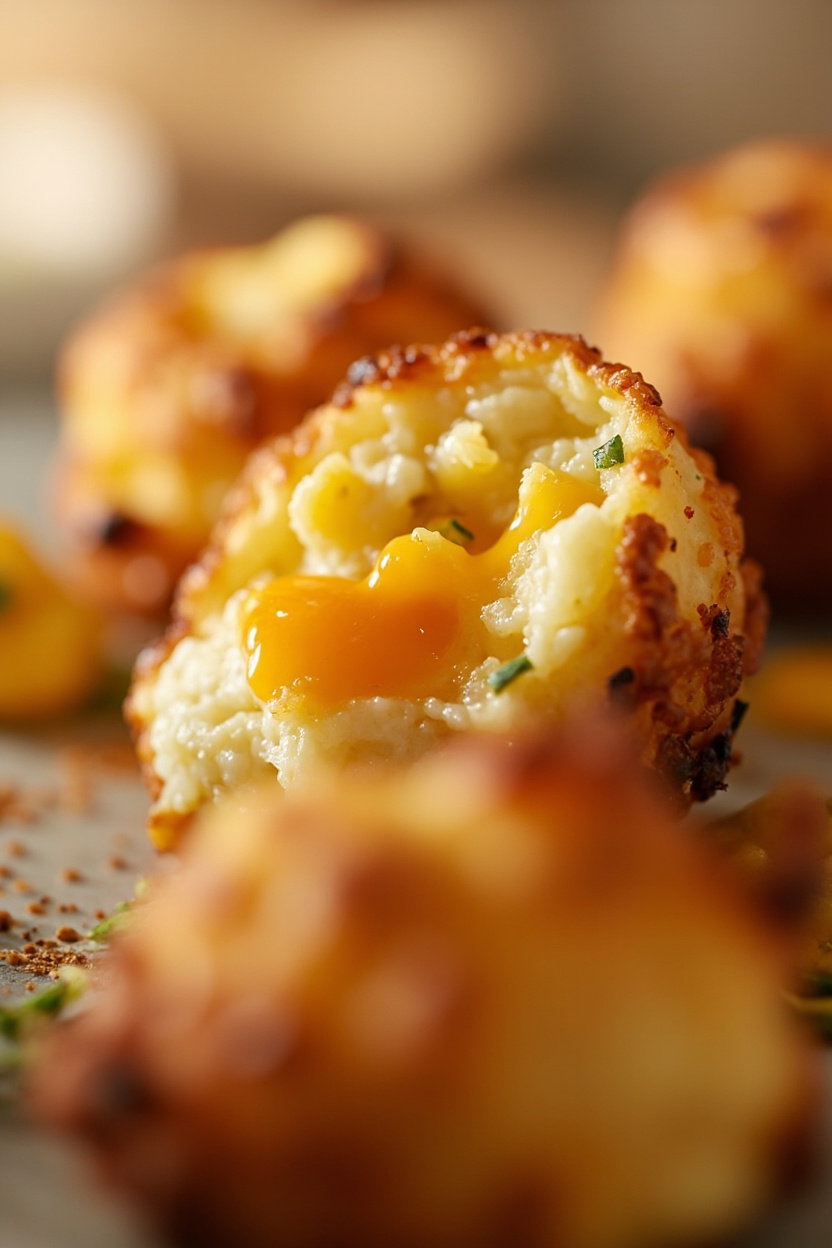
- 600 g (2 1/2 cups) mashed potatoes: starch gel provides internal structure and creaminess
- 100 g (1 cup) shredded sharp cheddar: fat and umami create molten, flavorful pockets
- 60 g (1/2 cup) grated Parmesan: adds salt and crystalline nutty flavor to balance
- 1 large egg (50 g): protein binder that sets when heated, improving cohesion
- 50 g (1/2 cup) all-purpose flour: absorbs moisture to prevent collapse during frying
- 120 g (1 cup) panko breadcrumbs: airy crumbs give a light, crunchy crust
- 2 g (1/2 tsp) kosher salt: elevates overall flavor perception
- Vegetable oil for frying: efficient heat transfer for rapid browning
Kitchen Tools You’ll Need
- Mixing bowl.
- Scoop or tablespoon for portioning.
- Shallow fryer or heavy skillet.
- Cooling rack and tray.
Shaping, Filling, and Frying: How to Nail Every Puff
- Chill the mash slightly so it firms. Cooler mash is easier to shape into uniform spheres without sticking to your hands.
- Portion with a scoop and flatten into a disc. When you place extra cheese in the center, you create an intentional molten core that stretches when bitten.
- Seal the seams by pressing edges firmly. A well-sealed seam prevents cheese leakage and uneven frying.
- Coat in flour, then egg, then panko. Each layer adds adhesion, moisture control, and surface roughness for even browning.
- Fry at 175 °C (350 °F) in batches. You should hear a lively sizzle and see bubbling around the puff; the color should reach deep golden in 3-4 minutes.
- Drain on a rack rather than paper to avoid sogginess. Allow 1-2 minutes for steam to escape; you’ll smell nutty, toasted notes as the crust completes its Maillard transformation.
- Serve immediately so the contrast between the crisp shell and gooey interior is at its peak.
Chef Hacks for Gorgeously Crispy, Gooey-Centered Puffs
Dry the Mash
If your leftover mashed potatoes are too wet, spread them on a tray and let them cool uncovered in the fridge for 15-30 minutes. Drier mash means less binding flour and a lighter interior.
Double-Check Oil Temperature
Use a thermometer to hold oil at 175 °C (350 °F). Too cool and puffs absorb oil and become greasy; too hot and they’ll brown outside but stay cold inside.
Chill Before Frying
Formed puffs, chilled for 20-30 minutes, set their shape, and reduce cheese leakage. I found that chilled puffs consistently give a better crust and more consistent internal doneness.
Troubleshooting Your Cheesy Mashed Potato Puffs
Soggy Exterior
If puffs absorb oil, the oil temperature was likely too low. Increase the heat slightly and fry fewer at once to maintain the temperature. Also, ensure panko is dry – stale or moisture-laden crumbs won’t crisp.
Filling Leaks Out
Leaking cheese means the seams weren’t sealed or the cheese was too close to the edge. Try chilling shaped puffs and sealing seams with a thin layer of flour paste before breading.
Gummy Interior
Overworked mash releases amylose and amylopectin differently, producing a gummy texture. Mix gently and avoid excessive starch agitation; use slightly drier mash and modest flour addition.
Variations and Substitutions
- Swap cheddar for mozzarella for ultra-stretchy cheesy mashed potato puffs, or blend half cheddar and half mozzarella for balance.
- Make baked mashed potato puffs by spraying with oil and baking at 220 °C (425 °F) for 15-18 minutes, flipping halfway.
- Add cooked bacon bits or scallions to the mash for smoky or fresh aromatics.
- Replace panko with crushed cornflakes for a different crunch profile and gluten-free option if flakes are certified.
Frequently Asked Questions
Yes. Leftover mashed potato recipes are ideal here; cooler, drier mash shapes better and holds fillings more reliably.
Fried delivers superior crispness due to quick, even heat transfer. Baked mashed potato puffs are a lighter alternative but need high heat and an oil spray to approach a similar crunch.
Refrigerate for up to 3 days. Reheat in a 200 °C (400°F) oven for 8-10 minutes to restore texture.
