
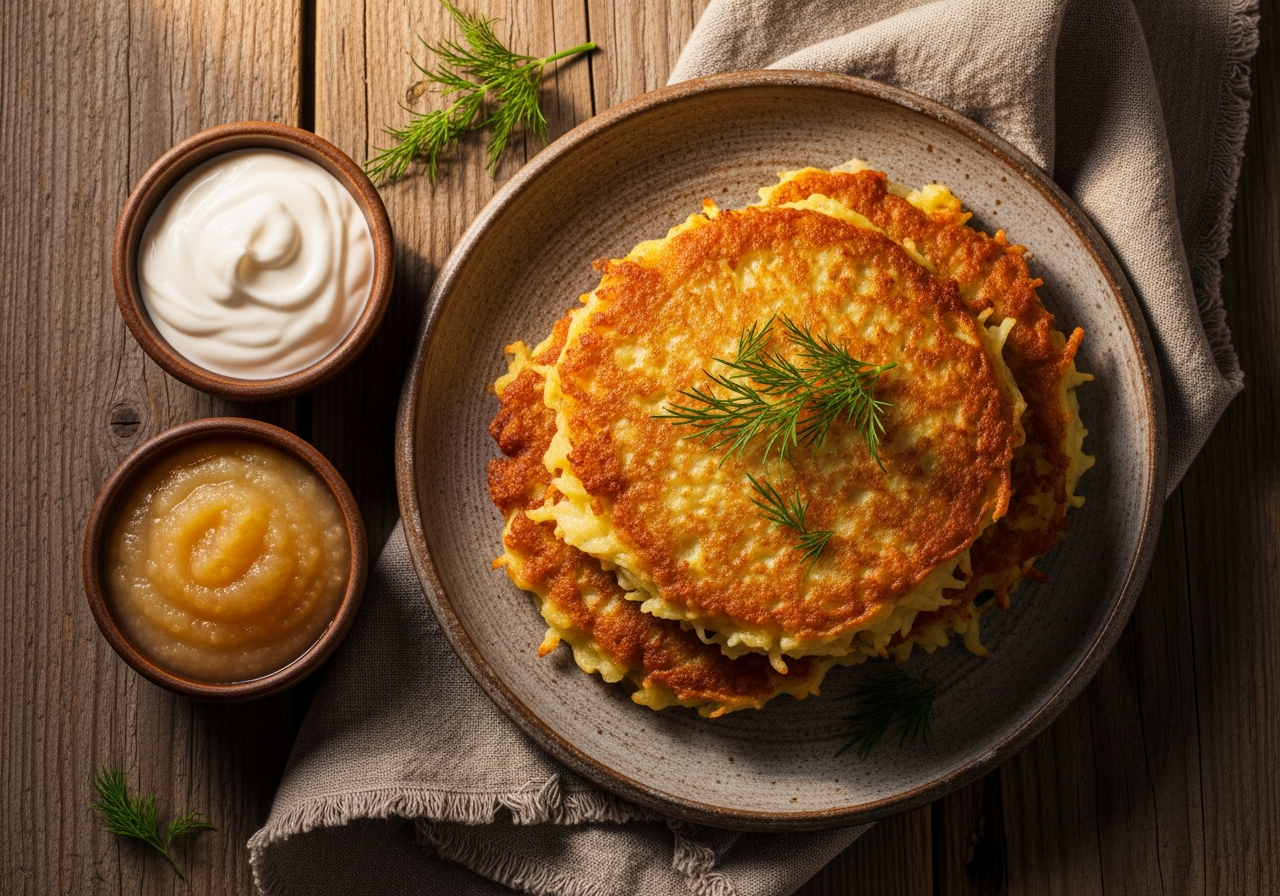
Polish potato pancakes shimmer at the edge of comfort and celebration, a crisp golden exterior giving way to a tender, savory interior.
They’re perfect with sour cream, applesauce, or a smoked fish garnish. If you want a recipe that reliably produces crunchy, deeply flavored pancakes every time, consider this your trusted, secret formula.
I’ll walk you through the exact balance of starch, egg, and fat that creates the ideal mouthfeel and that unmistakable golden crust.
Polish Potato Pancakes
Equipment
- Box grater or food processor – for finely grating potatoes and onion.
- Large mixing bowl – for combining batter and catching excess liquid.
- Heavy skillet or cast-iron pan – for even browning and crisp crust.
- Cooling rack and baking sheet – to keep cooked pancakes crisp before serving.
Ingredients
- 900 g 2 lb Russet potatoes
- 150 g 1 medium yellow onion
- 2 large eggs approx. 100 g
- 30 g 1/4 cup all-purpose flour
- 5 g 1 tsp fine sea salt
- 2 g 1/2 tsp black pepper
- 60 ml 1/4 cup neutral oil
Instructions
- Grate potatoes and onion using the fine side of a box grater or a food processor. Transfer to a large bowl and let sit for 2 minutes to allow liquid to release.
- Squeeze the grated mixture in small batches using a clean kitchen towel or fine mesh sieve until most liquid is removed. The remaining moisture should be minimal to ensure crisp pancakes.
- Return solids to bowl. Add beaten eggs, flour, salt, and pepper. Mix gently until just combined – the batter should be cohesive but not soupy.
- Warm a heavy skillet over medium-high heat and add a thin layer of oil. When oil shimmers and smells neutral, spoon 2-3 tablespoons of batter per pancake into the pan, flattening slightly with a spatula.
- Fry until deep golden and crisp on the first side, 3-4 minutes, then flip and cook another 3 minutes. You should hear a steady sizzle and see lace-like edges forming.
- Transfer cooked pancakes to a wire rack set over a baking sheet to stay crisp. Keep warm in a 90 C (200 F) oven if making in batches.
- Serve hot with sour cream or applesauce, garnish with chives or smoked fish if you like. The aroma will be savory, with a toasty, caramelized onion note and a tender center that yields when you bite.
Notes
- Soaking tip: Remove excess liquid by squeezing, not rinsing, which preserves starch for binding and crisping.
- Oil choice: Use high-smoke-point oils like sunflower or canola for steady browning without burning.
- Make-ahead: You can refrigerate batter for 30 minutes, but avoid long waits which darken potatoes.
Unlock the Flavor of These Polish Potato Pancakes
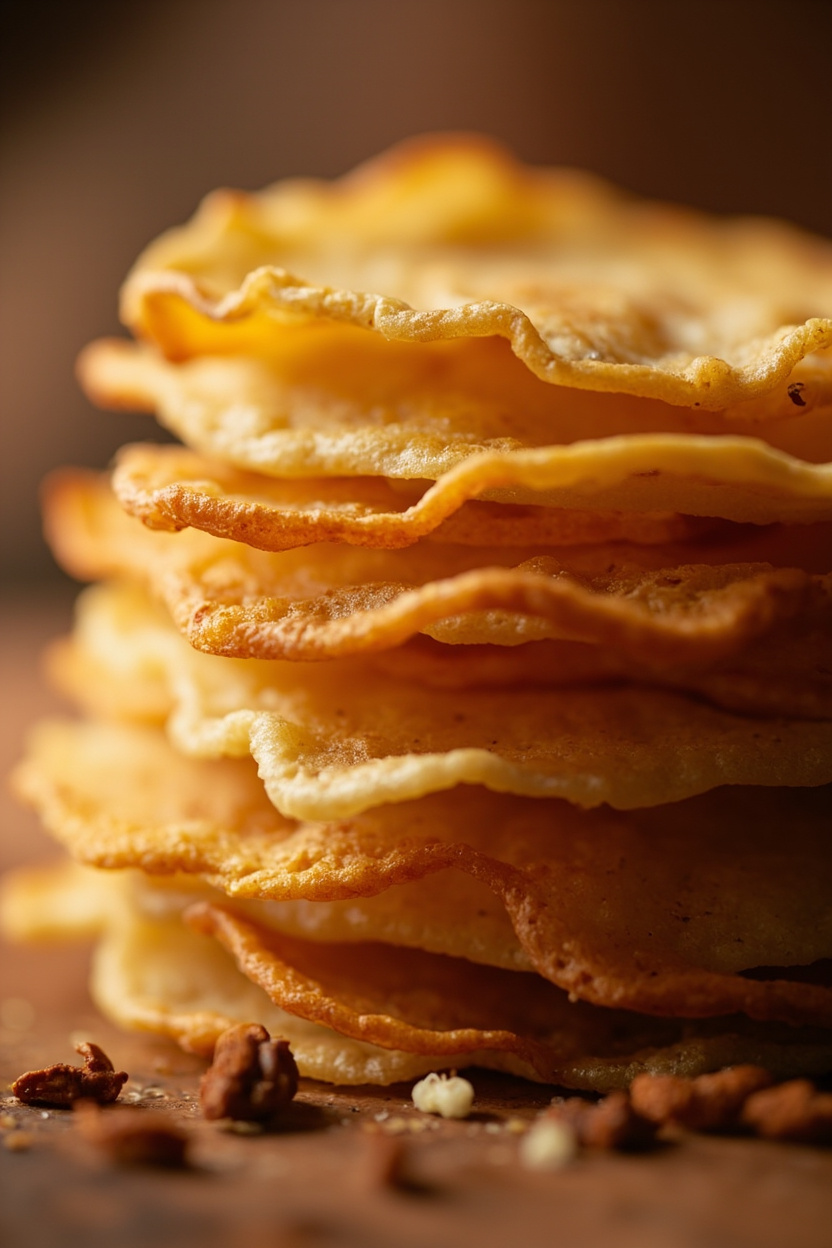
- Starch balance: Using starchy Russets provides a high starch-to-moisture ratio. That starch gelatinizes during cooking and crisps at the edges, giving that signature lace-like crust for placki ziemniaczane.
- Moisture control: Thoroughly squeezing grated potatoes removes free water that would steam the pancakes. Less steam equals more Maillard browning and a crunchy texture.
- Binder chemistry: Eggs and a modest amount of flour create cohesion without weighing the pancakes down. The proteins set around potato strands, holding an airy, tender interior.
- Fat and temperature: Cooking in a hot, stable oil in a heavy pan builds an even, deep brown surface while quickly sealing the inside. That contrast between crisp exterior and creamy core defines Polish potato latkes.
The Flavor-Building Cast of Polish Potato Pancakes
- 900 g (2 lb) Russet potatoes: high amylose starch content for crisping and structure.
- 150 g (1 medium) yellow onion: enzymatic sugars for sweet, caramelized flavor.
- 2 large eggs (approx. 100 g): proteins coagulate to bind grated solids.
- 30 g (1/4 cup) all-purpose flour: gluten-forming starches absorb residual moisture and stabilize shape.
- 5 g (1 tsp) fine sea salt: ionic salts enhance potato flavor and influence protein interactions.
- 2 g (1/2 tsp) black pepper: volatile terpenes add aromatic heat.
- 60 ml (1/4 cup) neutral oil for frying: lipid medium for Maillard reaction and crisp texture.
- Optional 60 g (1/4 cup) sour cream: lactic acidity brightens and balances fat.
Kitchen Tools You’ll Need
- Box grater or food processor.
- Large mixing bowl.
- Cast-iron skillet or heavy frying pan.
- Wire cooling rack and baking sheet.
From Grate to Golden: Turning Batter into Irresistible Pancakes
- Prep and grate: Peel potatoes and grate them finely, then grate the onion into the same bowl. The aroma will be slightly sharp and vegetal, a good sign you’re working with fresh produce.
- Separate liquid: Let the grated mix rest 2 minutes, then gather portions and squeeze tightly in a kitchen towel. The expelled liquid should be starchy and slightly cloudy; removing it prevents sogginess and allows edges to crisp.
- Combine ingredients: Return the solids to the bowl, add beaten eggs, flour, salt, and pepper. Stir until the batter holds together when pinched. The texture should be damp but not loose.
- Heat the pan: Warm a heavy skillet over medium-high heat and add oil. The oil should shimmer and form thin ripples when ready. You’ll smell a neutral, warm note before you add batter.
- Fry in batches: Drop 2-3 tablespoons per pancake into the hot oil, pressing lightly to form rounds. You should hear a constant sizzle and see small bubbles along the edges as they brown.
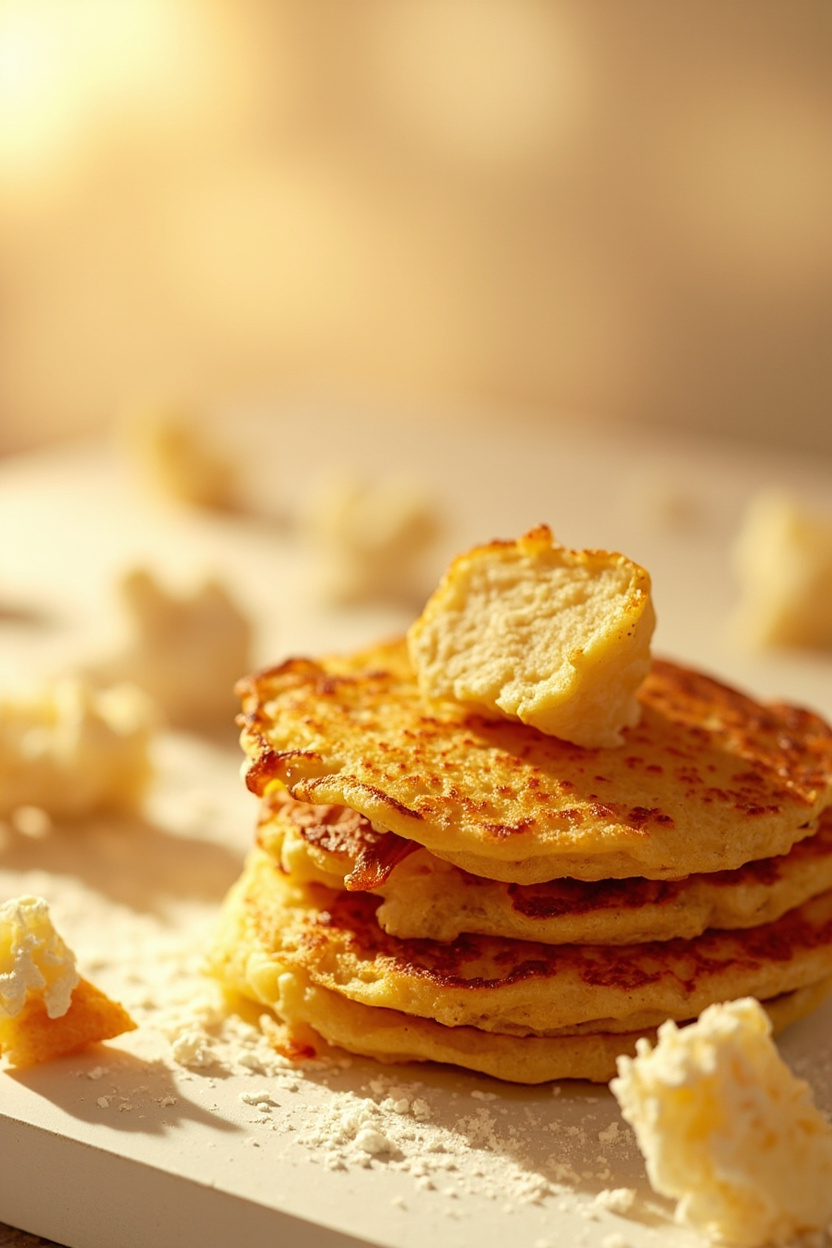
- Flip at deep color: After 3-4 minutes, the bottoms will be deep golden with caramelized bits; flip and cook another 2-3 minutes until the other side matches. The edges become lacy and crisp while the centers stay yielding.
- Drain and keep crisp: Transfer to a wire rack over a baking sheet to avoid steam. Serve immediately for the best textural contrast, accompanied by sour cream, applesauce, or dill and smoked fish.
Pro Moves for Light, Non-Soggy Pancakes
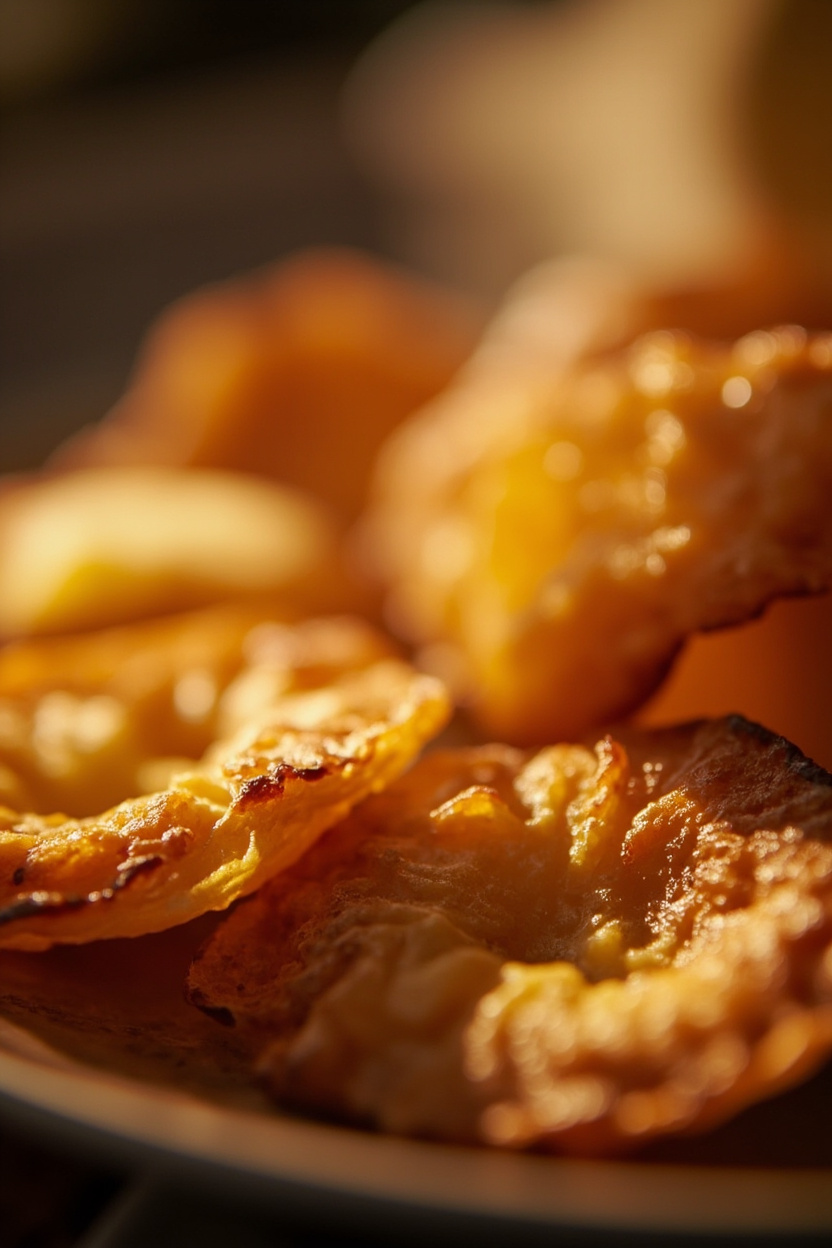
Control moisture aggressively
Squeezing grated potatoes is non-negotiable. Use a clean towel and press until only a faintly damp residue remains. Excess water turns frying into steaming and ruins the crisp crust that defines placki ziemniaczane.
Choose the right potato
Starchy varieties like Russets or Maris Piper fry up crispier than waxy potatoes. Their higher amylose content promotes stronger browning and a drier interior texture.
Maintain oil temperature
Keep the heat steady, not blasting. If the oil is too cool, the pancakes absorb fat and become greasy. If too hot, they burn outside before the inside cooks. Adjust between medium and medium-high and test with one pancake first.
Serve strategically
Use a wire rack instead of a paper towel to keep air circulating. Serve immediately or keep warm at 90 °C (200°F) to preserve crispness. Re-crisp in a hot oven if needed before serving.
How to Store Polish Potato Pancakes?
At room temperature, cooked pancakes are best eaten within 2 hours for peak texture.
Refrigerate in an airtight container for up to 3 days.
For longer storage, freeze in a single layer on a tray, then transfer to a bag for up to 2 months; reheat in a hot oven or skillet to restore crispiness.
Variations and Substitutions
- Add grated carrot or zucchini (squeeze liquid) for color and sweetness.
- Swap part of the flour for potato starch or chickpea flour for a crisper, gluten-free option.
- Fold in chopped dill and smoked salmon for a Scandinavian-style topping.
- Make mini pancakes and serve with horseradish cream for a party appetizer.
Nutrition Information
A serving offers moderate carbs, some protein from eggs, and potassium and vitamin C from potatoes. Not gluten-free as written; can be made gluten-free by swapping flour for potato starch.
Dairy-free if you skip sour cream. Not keto-friendly due to potato carbs.
Frequently Asked Questions
Place them on a wire rack instead of paper, and keep warm in a 90 °C (200°F) oven; reheat briefly in a hot skillet or oven before serving.
Yes, replace the all-purpose flour with 30 g potato starch or 30 g rice flour to maintain binding without gluten.
They’re very similar; both use grated potatoes and frying. Polish placki ziemniaczane often use finer grating and sometimes include onion, creating a slightly different texture and flavor profile.
You can grate and store potatoes briefly, but long waits cause browning. Mix batter and refrigerate up to 30 minutes; squeeze excess liquid again before frying.
