
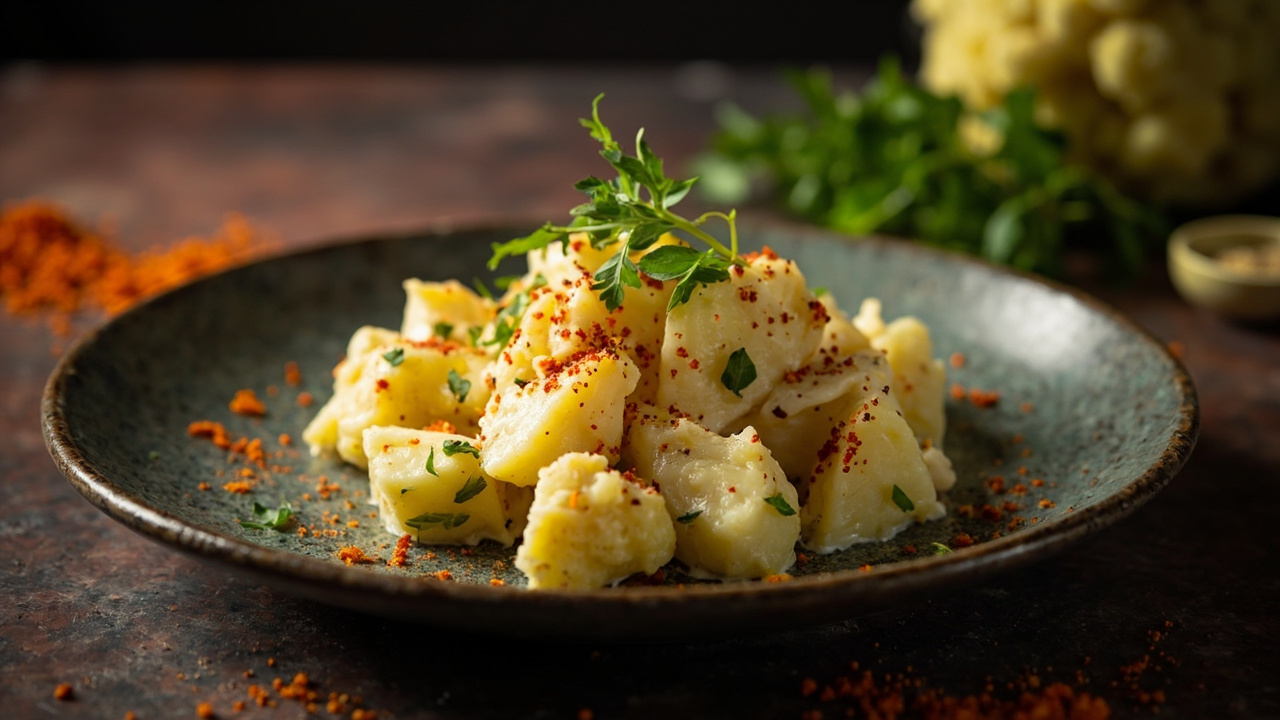
A bowl of cauliflower potato salad is the kind of thing you spoon into your mouth and immediately feel clever for making.
The mix of tender potato rounds and lightly roasted cauliflower florets gives you contrasting textures, pillowy starch, and a gentle bite, while a tangy, herby dressing ties everything together.
Bright, savory, and surprisingly light, this is a must-make for picnics, weeknight dinners, or when you want a healthy potato salad alternative that still feels indulgent.

Low-Carb Cauliflower Potato Salad
Equipment
- Large roasting pan – for even browning of cauliflower
- Medium saucepan – for simmering potatoes
- Mixing bowl – to toss dressing and ingredients
- Sharp knife – for precise chopping
Ingredients
- 600 g 1.3 lb Yukon Gold potatoes, scrubbed and cut into 2.5 cm / 1 inch chunks
- 400 g 14 oz cauliflower florets, about 1 medium head
- 60 ml 4 tbsp extra virgin olive oil
- 80 g 1/2 cup Greek yogurt
- 30 ml 2 tbsp Dijon mustard
- 30 ml 2 tbsp apple cider vinegar
- 2 tbsp 30 ml chopped fresh parsley
- 2 tbsp 30 ml chopped chives
- 1 tsp 5 g sea salt
- 1/2 tsp 2 g freshly ground black pepper
- 25 g 1/4 cup toasted pumpkin seeds
Instructions
- Preheat the oven to 220 C / 425 F. Toss cauliflower florets with 1 tbsp olive oil and a pinch of salt. Roast on a sheet pan until edges develop golden-brown flecks, about 15 minutes. You want a nutty aroma and slight crispness.
- While cauliflower roasts, place potato chunks in a saucepan and cover with cold water. Add 1 tsp salt and bring to a gentle simmer. Cook until potatoes are tender when pierced with a knife, about 10-12 minutes. Drain and let steam-dry for 2 minutes to remove excess moisture.
- Whisk together Greek yogurt, Dijon mustard, apple cider vinegar, remaining 2 tbsp olive oil, salt and pepper in a bowl until smooth. Taste for balance – the dressing should be tangy with a silky finish.
- Toss warm potatoes with half the dressing so they absorb flavor. The warmth helps the dressing penetrate the starch, giving a creamy mouthfeel without excess mayo.
- Add roasted cauliflower to the potatoes and gently fold to combine. The contrast between soft potato and slightly crisp cauliflower is key to the texture profile of your cauliflower potato mix.
- Fold in chopped parsley and chives, reserving a little for garnish. Scatter toasted pumpkin seeds on top for crunch and browned, nutty notes.
- Chill for at least 30 minutes to let flavors meld, or serve slightly warm. The aromatics will smell herbaceous and the dressing will coat each bite evenly.
Notes
- Make-ahead: Salad benefits from an hour in the fridge so flavors marry; hold seeds until serving.
- Potato choice: Yukon Golds offer creaminess and thin skins, resisting disintegration.
- Roast higher: High heat gives cauliflower Maillard notes without drying it out.
Why This Cauliflower Potato Salad Recipe Works?
- Contrast of textures: Roasted cauliflower adds caramelized edges and slight chew that counterpoints the pillowy, starchy potatoes, creating a satisfying mouthfeel you notice with every bite.
- Balanced dressing chemistry: A mustard-yogurt vinaigrette provides acid, fat, and emulsifiers that cling to both cauliflower and potato, so the flavors distribute evenly rather than pooling.
- Starch management: Cooking potatoes gently from cold water and letting them steam-dry prevents them from becoming waterlogged and gummy, so each chunk holds shape and soaks up dressing.
- Flavor layering: Toasted seeds and fresh herbs introduce bitter, nutty, and bright notes that lift the dish beyond simple creaminess into a well-rounded side.
The Flavor Cast for Your Cauliflower–Potato Salad
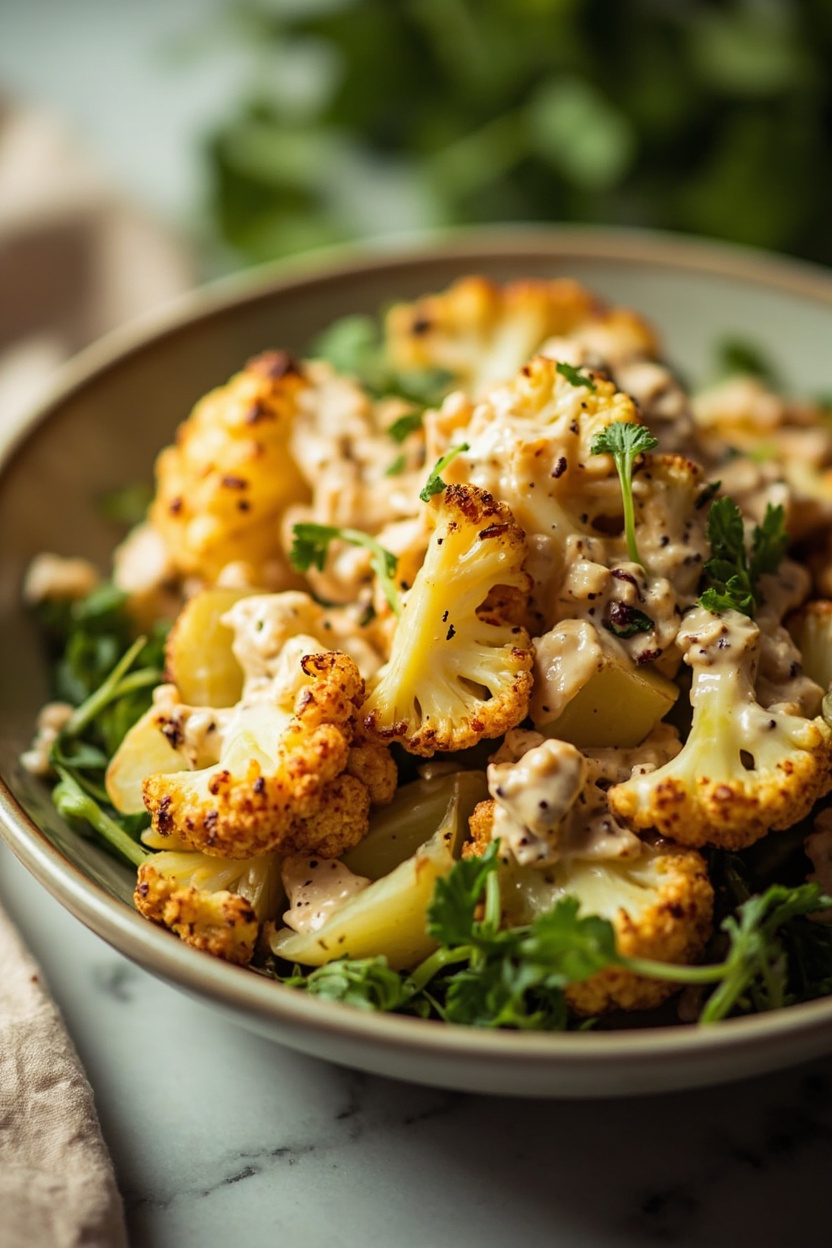
- 600 g / 1.3 lb Yukon Gold potatoes: waxy starch content yields creamy texture without turning mealy.
- 400 g / 14 oz cauliflower florets: contains glucosinolates, which add subtle sulfurous sweetness when roasted.
- 60 ml / 4 tbsp extra virgin olive oil: monounsaturated fats carry aromatic compounds and create silkiness.
- 80 g / 1/2 cup Greek yogurt: casein proteins add body and tang while keeping it lighter than mayo.
- 30 ml / 2 tbsp Dijon mustard: lecithin-like compounds help emulsify the dressing for a cohesive coating.
- 30 ml / 2 tbsp apple cider vinegar: acetic acid brightens starch and balances fat.
- 2 tbsp / 30 ml parsley, chopped: chlorophyll-rich herb that refreshes the palate.
- 2 tbsp / 30 ml chives, chopped: mild allium oils add gentle pungency.
- 1 tsp / 5 g sea salt: enhances perceived sweetness and suppresses bitterness.
- 1/2 tsp / 2 g black pepper: piperine adds background heat and aroma.
- 25 g / 1/4 cup toasted pumpkin seeds: Maillard-browned oils provide crunch and umami.
Kitchen Tools You’ll Need
- Roasting pan or sheet pan.
- Medium saucepan with lid.
- Mixing bowls (one small for dressing).
- Sharp chef’s knife and cutting board.
Turning Roots and Rounds into Salad Gold
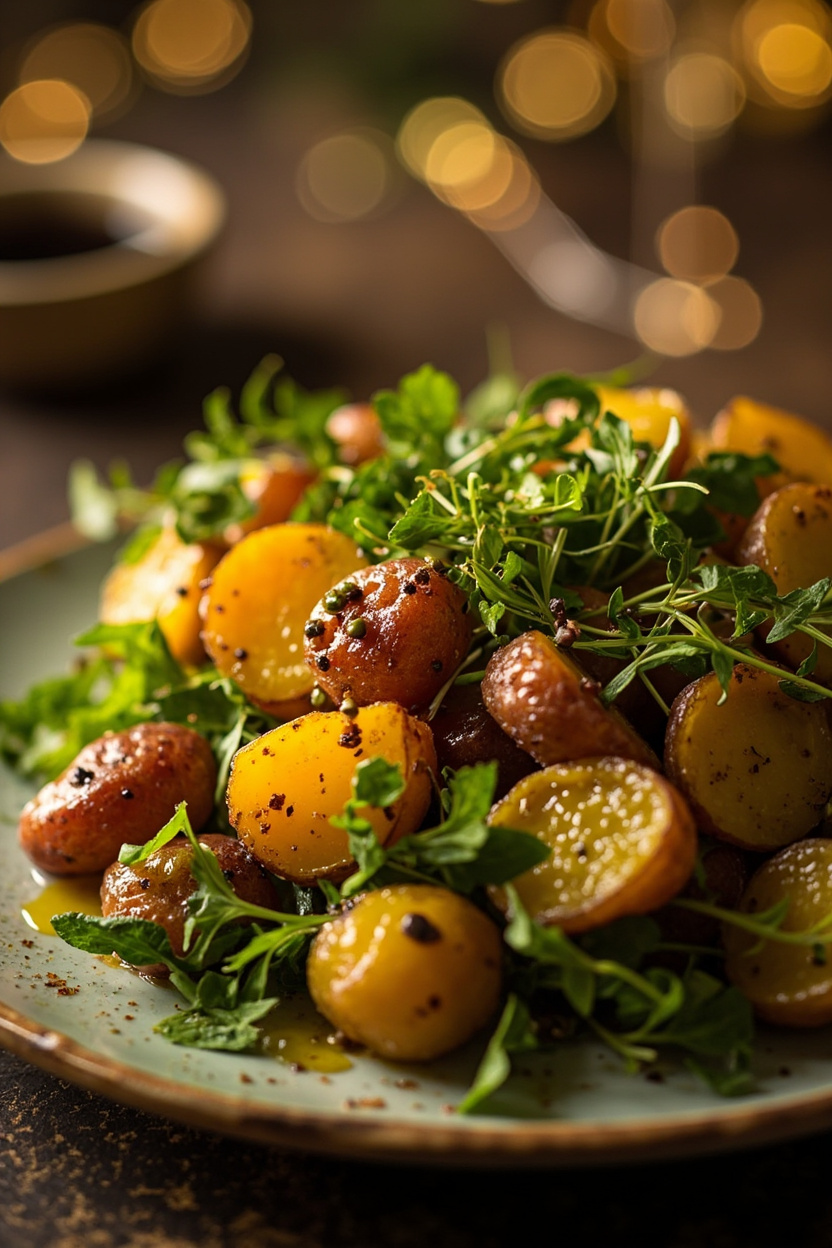
- Set the oven to 220 °C / 425°F. Line a sheet pan and toss cauliflower florets with 1 tablespoon of olive oil and a pinch of salt. Spread them so air circulates; you’ll hear gentle sizzling when they hit the hot metal.
- Roast for 12-15 minutes until the edges brown and you detect a nutty, roasted aroma. Flip halfway for even browning; the florets should be tender but retain a slight bite.
- Place potato chunks in a saucepan and cover with cold water. Add 1 teaspoon of salt and bring to a simmer. Watch closely so the boil is gentle – a vigorous boil will break them apart.
- Simmer 10-12 minutes until a knife slips through with slight resistance. Drain and return to the pot off the heat for 2 minutes so the steam evaporates, and the surface becomes ready to absorb dressing.
- Whisk Greek yogurt, Dijon mustard, apple cider vinegar, remaining olive oil, salt, and pepper until glossy. Taste for tang and adjust – the dressing should be lively but creamy.
- Toss warm potatoes with half the dressing so they soak up flavor. Add roasted cauliflower and gently fold to avoid breaking the potato shapes; you want distinct pieces in each spoonful.
- Add parsley and chives, then finish with toasted pumpkin seeds for crunch. Serve slightly warm or chilled; aromas will be herbaceous, and the texture pleasantly layered.
Chef’s Little-Known Tricks for Flawless Texture and Zing
Temperature Timing
Letting potatoes cool slightly before dressing prevents the yogurt from thinning excessively. Warm potatoes absorb flavor best, but avoid piping-hot contact that makes a watery dressing.
This balance gives you a creamy cling without dilution.
Roast for Complexity
High-heat roasting of cauliflower builds Maillard flavors that mimic the caramel notes in roasted potatoes.
A light char adds savory depth that makes the salad feel indulgent even when it’s a healthy potato salad alternative.
Herb and Seed Play
Fresh herbs lift each bite, while toasted seeds add textural contrast and umami. Hold some herbs back for garnish so the first appearance on the plate reads bright and inviting.
How to Store Cauliflower Potato Salad?
- Room temperature: Don’t leave out for more than 2 hours due to dairy in the dressing.
- Fridge: Store in an airtight container up to 3 days; flavors meld and improve the next day.
- Freezing: Not recommended – texture and yogurt suffer when frozen.
Variations and Substitutions
- Swap Greek yogurt for mayonnaise for a richer, creamier version.
- Make it low-carb potato salad by replacing all potatoes with extra cauliflower for a lighter bowl.
- Add smoked paprika and crispy bacon for a smoky, savory twist.
- Stir in capers and lemon zest for a briny, citrus brightness.
Nutrition Information
This salad is moderate in calories, offers protein from Greek yogurt, fiber, and vitamin C from cauliflower, and potassium from potatoes.
It can be made gluten-free and, if you swap yogurt for full-fat mayo, keto-friendly; the base recipe is dairy-containing.
Frequently Asked Questions
If you replace some or all potatoes with cauliflower, yes – swapping reduces net carbs while keeping the salad feel, making a practical low-carb potato salad option.
Yes, make it up to one day ahead and chill. Hold seeds and fresh herbs until serving to preserve crunch and color.
Keep it chilled in an insulated cooler and avoid leaving it in the sun for more than two hours due to the yogurt-based dressing.
Substitute plain dairy-free yogurt or a light mayonnaise alternative; flavor and texture remain excellent while making it dairy-free.
