
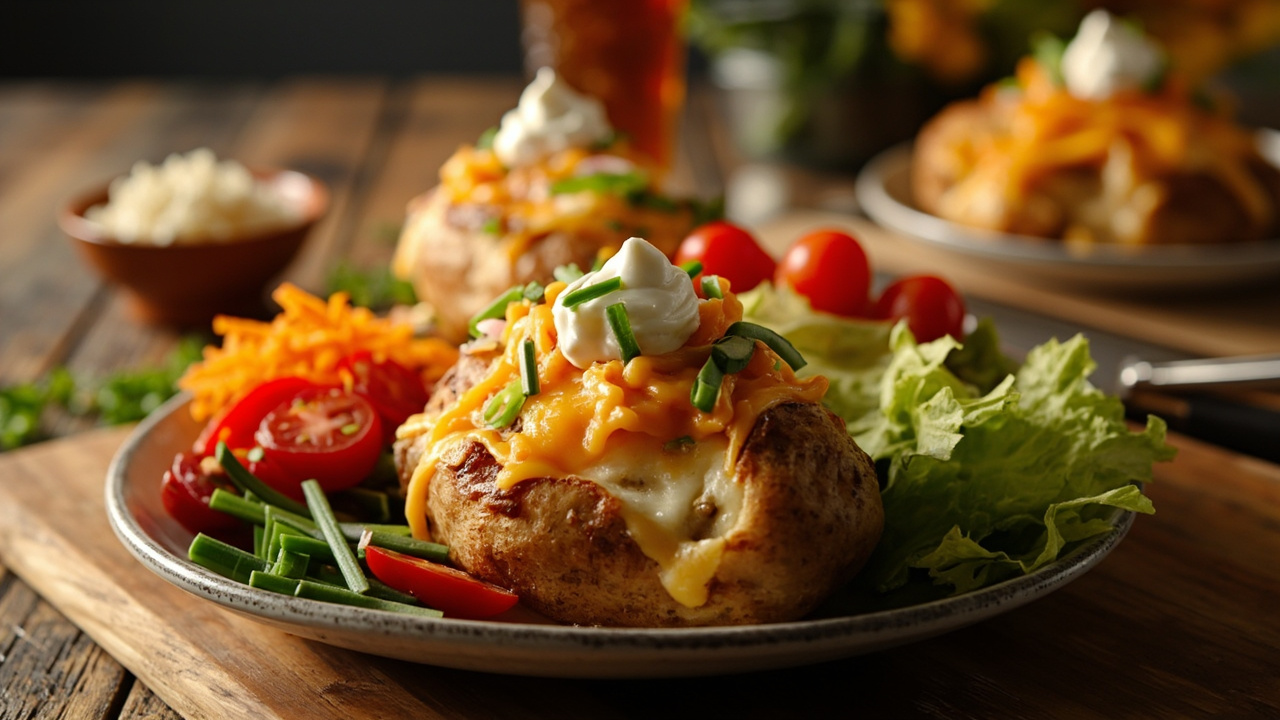
There’s something utterly irresistible about a warm, crisp-skinned potato split open to reveal a steaming, pillowy interior, and baked potato bar toppings turn that simple pleasure into a festive, custom feast.
Crisp skin, fluffy flesh, and a contrast of creamy, tangy, crunchy, and savory toppings make each bite a little celebration.

Baked Potato Bar Toppings
Equipment
- Baking sheet – for even oven browning
- Sharp knife – to split potatoes cleanly
- Spoons and small bowls – for organized toppings
- Slow cooker or oven-safe dish – to keep warm toppings like chili
Ingredients
- 900 g 2 lb Russet potatoes
- 30 g 2 tbsp olive oil
- 8 g 1 tbsp coarse salt
- 120 g 1/2 cup sour cream
- 120 g 1 cup shredded cheddar
- 100 g 3.5 oz chopped chives
- 150 g 5 oz cooked bacon pieces
- 200 g 1 cup steamed broccoli florets
- 200 g 1 cup chili
Instructions
- Preheat oven to 220C (425F). Scrub potatoes, pat dry, and pierce skin a few times with a fork to allow steam to escape.
- Toss potatoes with olive oil and coarse salt, coating evenly. Place on a baking sheet spaced apart for optimal airflow.
- Bake for 45-60 minutes depending on size, until skin is crisp and a skewer slides into the center with little resistance.
- While potatoes bake, warm your chili or toppings. Keep cheese shredded and toppings chopped for quick assembly.
- When potatoes are done, transfer to a plate. Make a lengthwise slit and push ends to fluff interior, releasing steam and creating a creamy texture.
- Spoon in butter or sour cream first to integrate into the flesh, then layer protein like chili or bacon for savory weight.
- Add shredded cheese to melt into the hot potato, followed by fresh items like chives or steamed broccoli for brightness and texture contrast.
- Finish with crunchy elements such as fried onions or toasted seeds for a satisfying bite and aroma that signals depth of flavor.
Notes
- Potato choice: Russets yield the fluffiest interior but Yukon Golds are creamier and slightly waxy.
- Keep warm: Use a slow cooker on low to hold hot toppings like chili for parties.
- Crisp skin hack: Bake directly on the oven rack or use a preheated baking stone for extra crispness.
Why You Need to Try This Baked Potato Bar Toppings
- Textural contrast: Crisp skins from high-heat roasting produce a crunchy exterior that offsets the silky, aerated interior created by starchy varieties like Russets. The result is an ideal vehicle for varied textures.
- Layering flavors: Starting with a fat-rich base, such as butter or sour cream, helps trap heat and dissolve melted cheese, while acidic elements like chives or pickles cut the richness for balance.
- Customization and timing: A potato bar allows hot and cold toppings to be staged separately, preserving temperature and texture – warm chili stays luscious while crunchy garnishes remain crisp.
- Crowd-pleasing chemistry: Proteins, dairy, and umami-rich toppings interact to produce satisfying savory notes and mouthfeel that feel indulgent without fuss.
Build-Your-Own Potato Bliss: Must-Have Toppings & Flavor Boosters
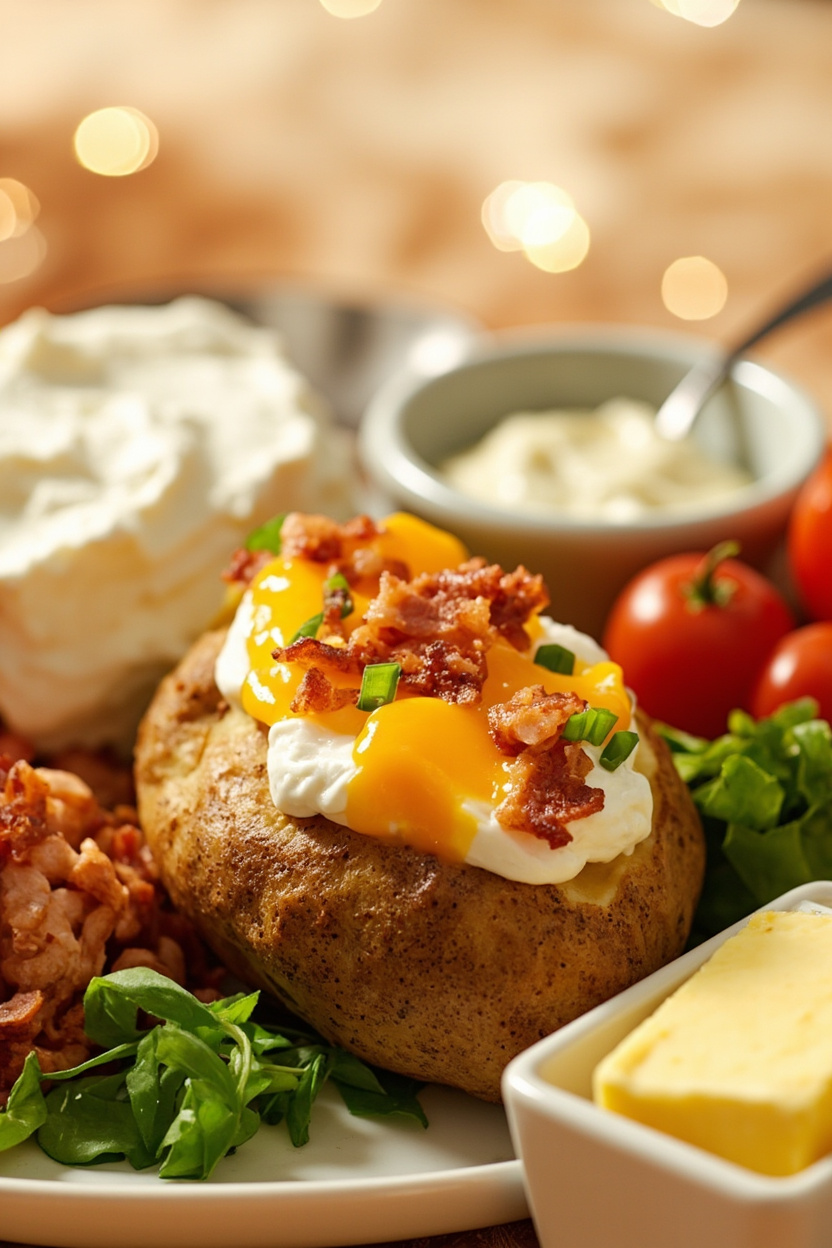
- 900 g (2 lb) Russet potatoes: High starch content creates a fluffy crumb ideal for absorbing toppings.
- 30 g (2 tbsp) unsalted butter: saturated fats melt into the flesh, enriching mouthfeel.
- 120 g (1/2 cup) sour cream: lactic acidity brightens and adds a silky emulsion.
- 120 g (1 cup) sharp cheddar, shredded: casein proteins and fat add savory intensity when melted.
- 150 g (5 oz) cooked bacon, chopped: Maillard reaction yields smoky umami and crisp texture.
- 100 g (3.5 oz) chives, chopped: sulfur compounds give fresh onion-like aromatics.
- 200 g (1 cup) steamed broccoli: fibrous crunch and vitamin C, plus color contrast.
- 200 g (1 cup) homemade chili: slow-simmered collagen and spices add body and depth.
- 50 g (1/3 cup) crispy fried onions: dehydrated crunch boosts texture and roasted flavors.
Kitchen Tools You’ll Need
- Baking sheet.
- Sharp chef’s knife.
- Mixing bowls and spoons.
- Slow cooker or insulated server.
Layering Magic: How to Assemble Toppings That Sing?
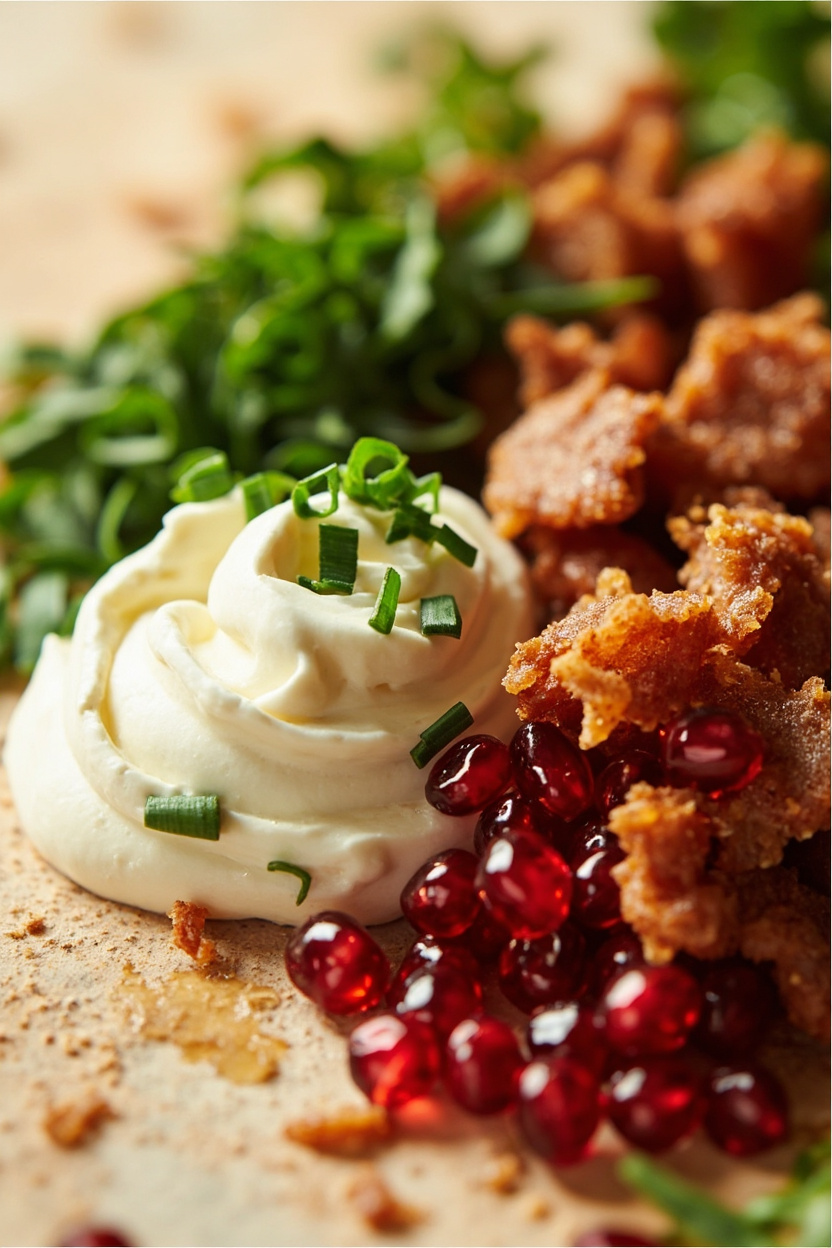
- Prepare and roast. Preheat oven to 220 °C (425°F). Rub potatoes with oil and coarse salt, then roast until the skins are blistered and a skewer slides in easily, about 45-60 minutes. The aroma should be earthy and toasty, signaling caramelized sugars in the skin.
- Fluff the interior. Slice a lengthwise opening and press the ends to aerate the flesh. You’ll see steam rise, and the interior will look light and velvety, ready to accept toppings without becoming soggy.
- Start with a warm base. Add butter or sour cream first, so it melts into pockets of fluffy potato, creating a luscious, creamy foundation that balances denser toppings.
- Add protein next. Spoon on chili, pulled pork, or bacon so the heat warms the surrounding layers. The hot topping melds with dairy to create a cohesive mouthfeel and deepen savory notes.
- Layer the cheese. Sprinkle shredded cheddar while the potato is hot so it melts and binds the elements together. Melted cheese provides a glue-like texture and rich, savory flavor.
- Brighten with fresh elements. Scatter chives, green onions, or a squeeze of lemon for brightness that cuts through richness and refreshes the palate.
- Finish with texture. Add crunchy bits like fried onions, toasted seeds, or crisp bacon to provide contrast and an audible crunch that makes each bite interesting.
- Serve with intentional timing. Keep hot toppings in a slow cooker and cold garnishes chilled. Offer spoons and small bowls so guests can layer thoughtfully for balanced bites.
Pro Secrets for Fluffier, Crispier, No-Soggy Spuds
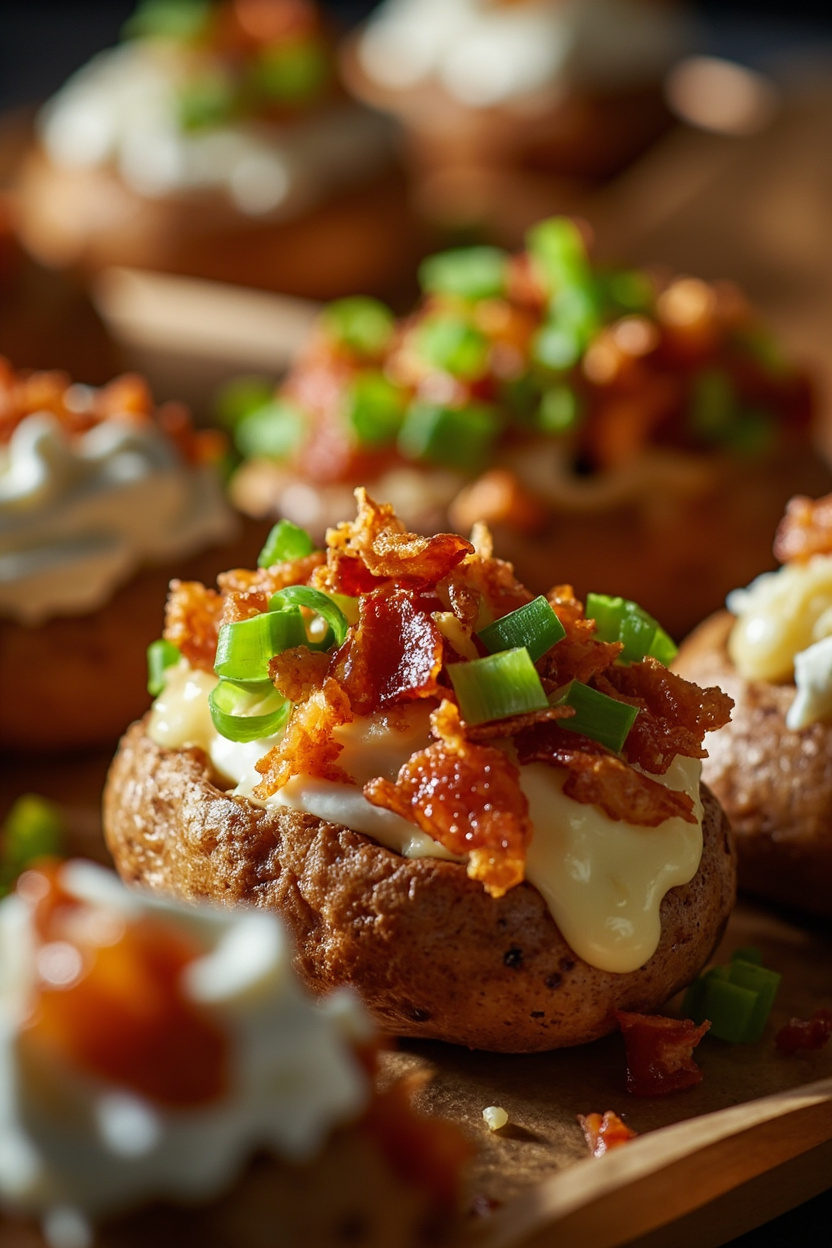
Choose the right potato
Use high-starch potatoes such as Russets for the fluffiest interior. Their cell structure breaks down during baking, producing a light, airy crumb that soaks up butter and sauces instead of turning gluey.
Salt and oil the skin
Coating the skin in oil and coarse salt before roasting encourages the Maillard reaction, drying the surface and building flavor. Don’t wrap in foil unless you want softer skin.
Stage toppings by temperature
Keep hot toppings in a slow cooker and chilled items on ice. This maintains textural contrast and prevents cold ingredients from wilting or heating unevenly when guests assemble their plates.
Pre-prep for speed
Chop, shred, and portion toppings into small bowls ahead of time. Label bowls for dietary needs and replenish often to keep the bar looking inviting.
How to Store Baked Potato Bar Toppings?
- Room temperature: Avoid leaving perishable toppings at room temperature for more than 2 hours.
- Fridge: Store individual toppings in airtight containers for 3-4 days.
- Freezer: Cooked chili or bacon can be frozen for up to 3 months; thaw overnight in the fridge before reheating.
Variations and Substitutions
- Vegetarian: Swap bacon and chili for roasted mushrooms and smoked tempeh for a meaty texture without meat.
- Mediterranean: Offer feta, olives, roasted red peppers, and tzatziki for bright, briny notes.
- Keto-friendly: Use cauliflower mash as a base or load with high-fat toppings like sour cream, cheese, and avocado.
- Breakfast bar: Serve with scrambled eggs, sausage crumbles, and hollandaise for brunch-style loaded potatoes.
Nutrition Information
A loaded potato provides complex carbs, protein from dairy and meat, and fiber and vitamins when topped with vegetables. Individual builds vary, but a moderate portion can be around 280 kcal.
Gluten-free by default; dairy-free if you swap cheese and sour cream for plant-based options.
Frequently Asked Questions
Aim for 8-12 toppings across categories – bases, proteins, cheeses, veggies, and crunchy finishes – so guests can mix and match without decision fatigue.
Yes, many toppings like chili, bacon, roasted veg, and shredded cheese can be prepped a day ahead and reheated or chilled as needed.
Definitely. Label gluten-free, dairy-free, and nut-free toppings, and include protein options like grilled chicken and plant-based chili so everyone can build safely.
