
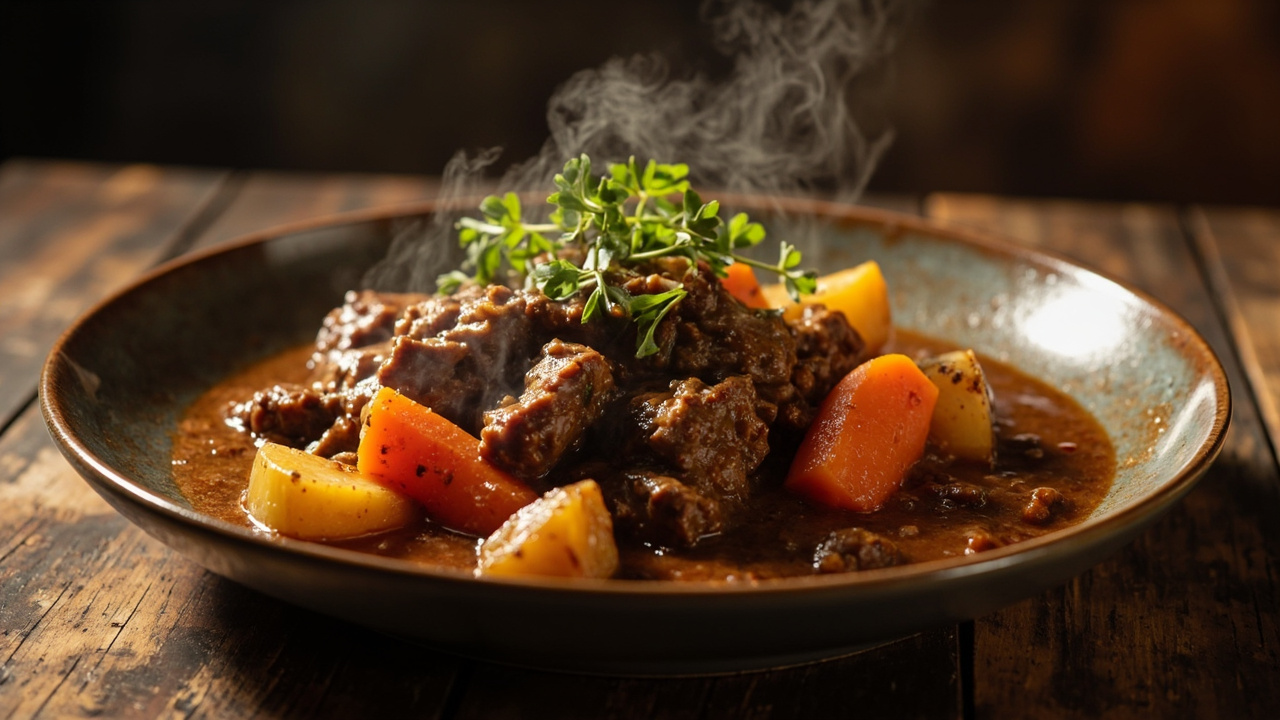
There’s a reason a simmering pot of beef stew with potatoes feels like a warm, edible hug. Soft, fork-tender potatoes cradle richly browned chunks of beef in a glossy, herb-scented broth that coats the palate with savory, umami depth.
The texture contrast, between the velvety sauce, yielding meat, and slightly rustic potatoes makes each spoonful compelling.
You should make this because it’s simple to execute, forgiving of technique, and rewards patience with layered flavor.
What Makes This Beef Stew With Potatoes Special?
- Browning chemistry: Searing the beef creates Maillard reactions that produce complex savory molecules, giving the stew a deep, roasted backbone.
- Collagen conversion: Slow, gentle simmering breaks down connective tissue into gelatin, enriching the broth so it feels silky and coats the spoon.
- Potato choice and timing: Waxy potatoes, such as Yukon Gold, hold their shape and release just enough starch to slightly thicken the sauce without becoming mushy.
- Layered aromatics and acid: Onion, tomato paste, and a splash of red wine add sweetness, umami, and acidity to balance fat and keep flavors bright.
The Flavor Players in This Hearty Beef-and-Potato Stew
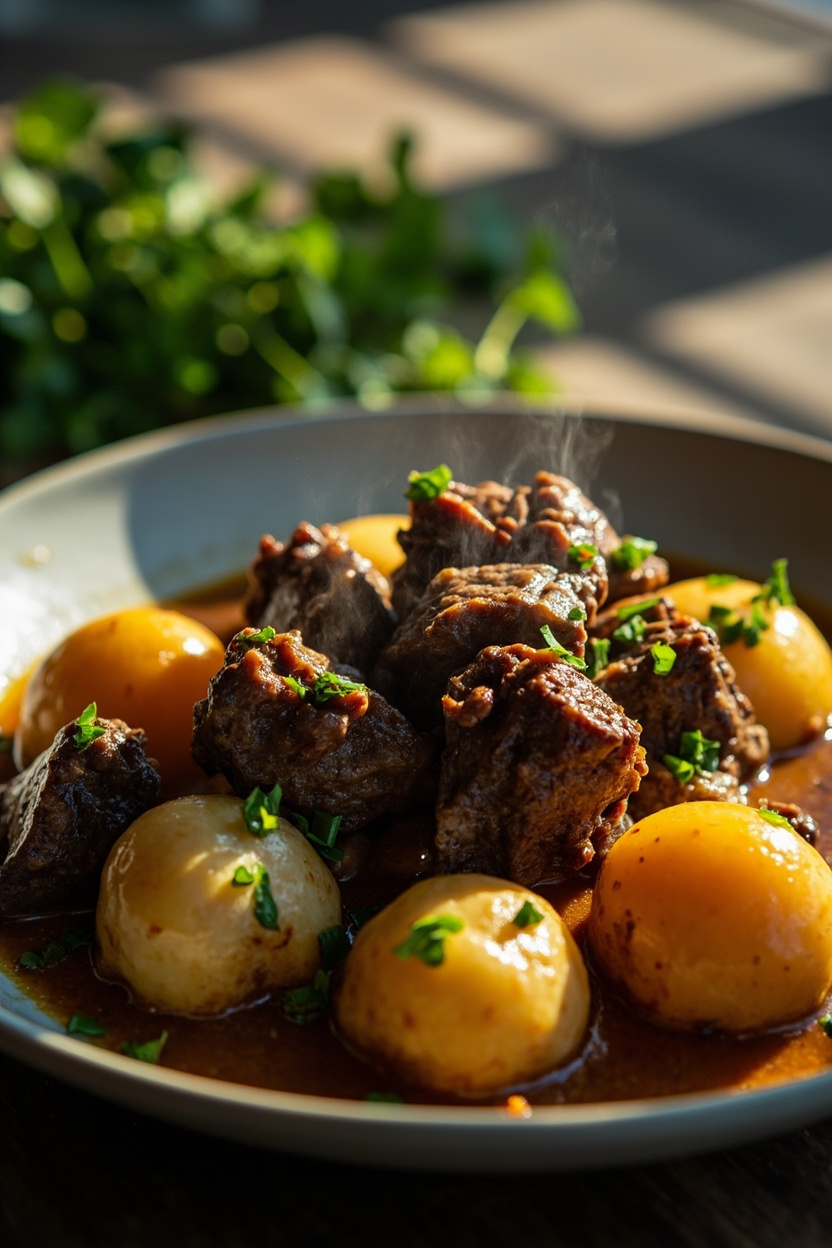
- 1 kg beef chuck: high collagen content, which hydrolyzes into gelatin for body and mouthfeel.
- 600 g Yukon Gold potatoes: waxy starch structure resists disintegration while softening.
- 2 carrots (approx 160 g): natural sugars add balance and caramelized flavor compounds.
- 1 large onion (approx 150 g): sulfur compounds that mellow into sweet, savory notes when cooked.
- 2 tbsp tomato paste (30 g): concentrated glutamates and acidity to enhance umami.
- 500 ml beef stock: aqueous medium carrying minerals and flavor-soluble compounds.
- 150 ml dry red wine: acids and tannins that lift richness and bind flavors.
- 2 bay leaves + 2 sprigs thyme: volatile essential oils that perfume the stew.
- 2 tbsp plain flour (16 g): starch-protein interaction thickens and helps brown the meat.
- Salt and freshly ground black pepper: ionic seasoning that amplifies taste.
Kitchen Tools You’ll Need
- Heavy-bottomed Dutch oven or deep saucepan.
- Sharp chef’s knife and sturdy cutting board.
- Wooden spoon or spatula.
- Measuring cups and a kitchen scale.
How to Build Deep, Silky Stew Layers?
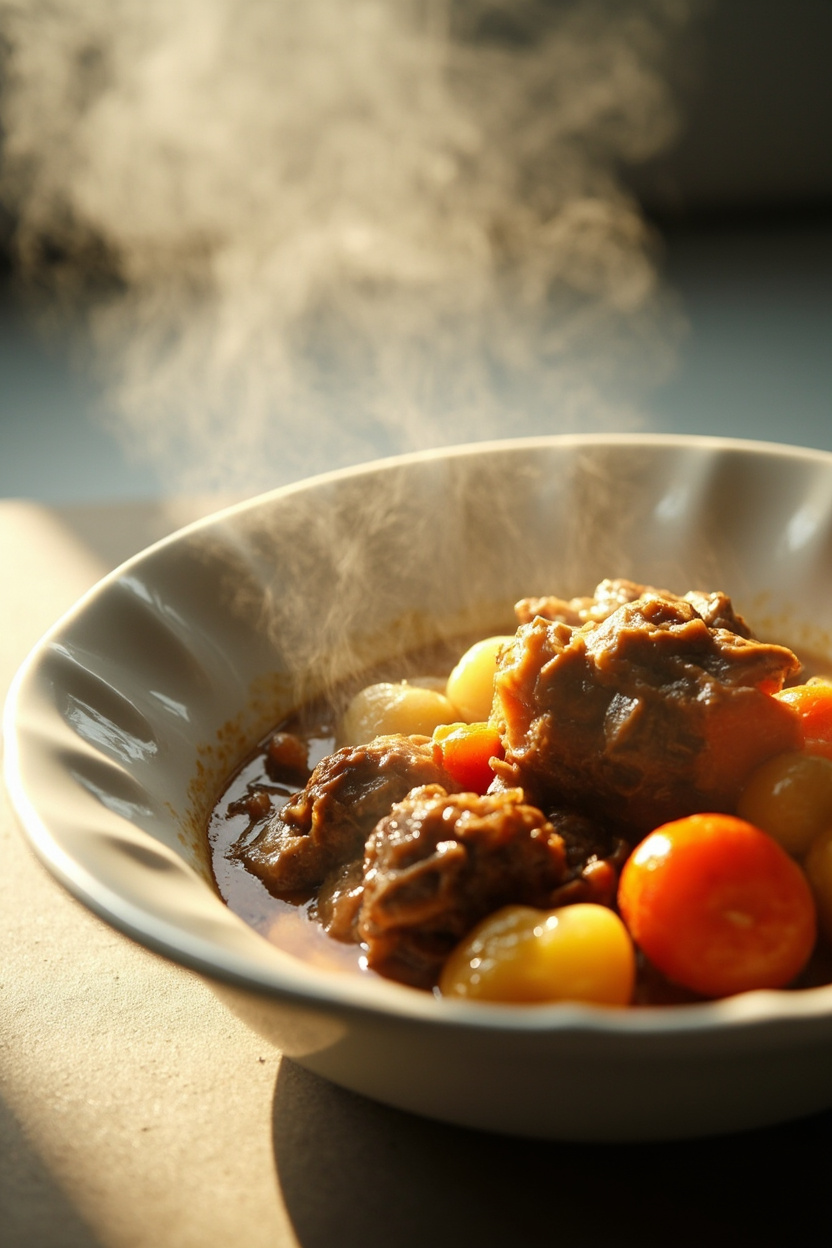
- Prepare beef and potatoes: Pat the beef cubes dry with paper towels to promote browning. Cut potatoes into even halves so they cook uniformly.
- Dredge and sear: Toss the beef lightly in flour, shake off excess, and heat oil in the Dutch oven until shimmering. Add beef in batches so pieces sear rather than steam. You want a dark, nutty crust and a caramel aroma.
- Sweat the aromatics: Remove browned beef, add a touch more oil, and lower the heat. Sauté onions until translucent and fragrant, about 6 minutes. Add carrots and continue until they soften and smell sweet.
- Add tomato paste and deglaze: Stir in tomato paste and cook for a minute to concentrate its flavor. Pour in red wine to deglaze, scraping the browned bits from the pot until the liquid smells bright and slightly acidic.
- Build the simmer: Return beef to the pot, add stock, bay leaves, and thyme. Bring to a gentle simmer, not a hard boil. The surface should show tender bubbles and a savory perfume.
- Slow-cook for tenderness: Partially cover and simmer on low for 90 to 120 minutes. The meat should feel tender when pierced; the broth will thicken slightly as collagen turns to gelatin.
- Add potatoes and finish: Add potatoes and simmer another 25 to 35 minutes until they’re creamy yet intact. Taste and season with salt and pepper. Remove bay and thyme stems, and finish with a spritz of acid or a little chopped parsley for freshness.
- Rest and serve: Let the stew sit off the heat for 10 minutes; flavors settle and the sauce gains body. Serve hot with crusty bread or a simple green salad.
Stovetop Secrets: Tricks Chefs Use for Perfect Texture
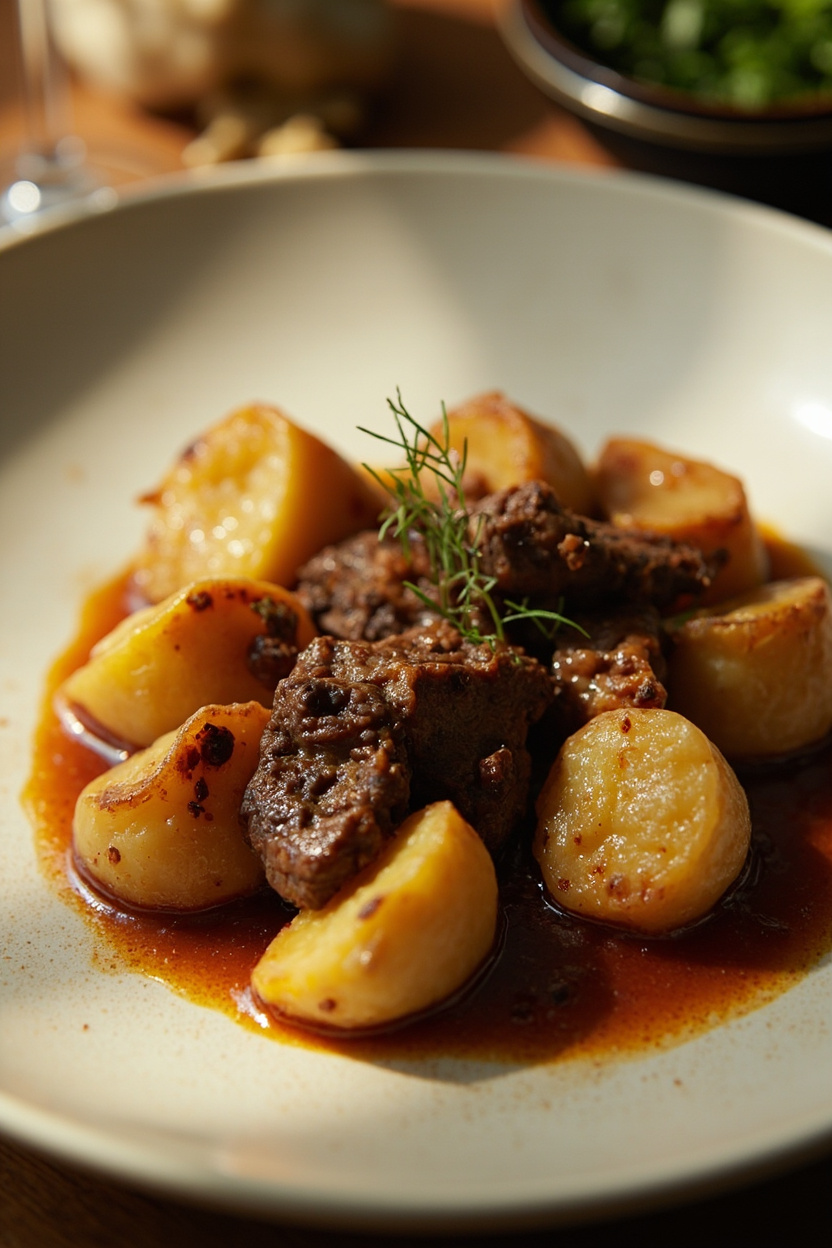
1. Choose the right cut
Pick beef chuck or brisket for their balance of fat and connective tissue. These cuts turn tender and silky with slow cooking, giving your beef stew with potatoes a luxurious texture without falling apart.
2. Brown in batches
Avoid overcrowding the pan when searing. Crowding releases moisture and prevents browning. The fond left on the pot is flavor gold, so deglaze it with wine or stock to pull those flavors into the base.
3. Timing the potatoes
Add potatoes late in the cooking so they hold their shape. If you want them creamier, cut them smaller and add them earlier. For a thicker finish, gently mash a few pieces against the pot to release starch.
How to store beef stew with potatoes?
- Room temperature: Don’t leave stew out for more than 2 hours to avoid bacterial growth.
- Fridge: Cool quickly and refrigerate in an airtight container for up to 4 days.
- Freezer: Freeze in portions for up to 3 months; thaw overnight in the fridge before reheating gently.
Variations and Substitutions
- Swap red wine for extra stock plus 1 tbsp balsamic vinegar for alcohol-free depth.
- Use sweet potatoes for a sweeter flavor and a different nutrient profile.
- Add mushrooms for an earthy, umami boost and meat-like texture.
- Finish with a spoonful of Dijon mustard for a tangy lift and extra complexity.
Nutrition Information
This beef stew with potatoes is high in protein, supplies iron and B vitamins from the beef, and offers potassium and vitamin C from potatoes and carrots.
Not inherently gluten-free unless you swap the flour; dairy-free as written. Not strictly keto due to potato carbohydrates.
Frequently Asked Questions
Active prep is about 20 minutes; simmering takes 90 to 120 minutes for tender beef, plus 25 minutes for potatoes, so plan for around 2.5 hours total.
Yes. Sear the beef first, then transfer it to the slow cooker with aromatics and liquids. Cook on low for 6 to 8 hours, adding potatoes in the last 60 to 90 minutes.
Cool fully, portion into airtight containers and freeze up to 3 months. Thaw in the fridge before reheating gently on the stove.
Simmer uncovered to reduce, or mash a few potato pieces into the broth to naturally thicken with starch; alternatively, use a cornstarch slurry.
