
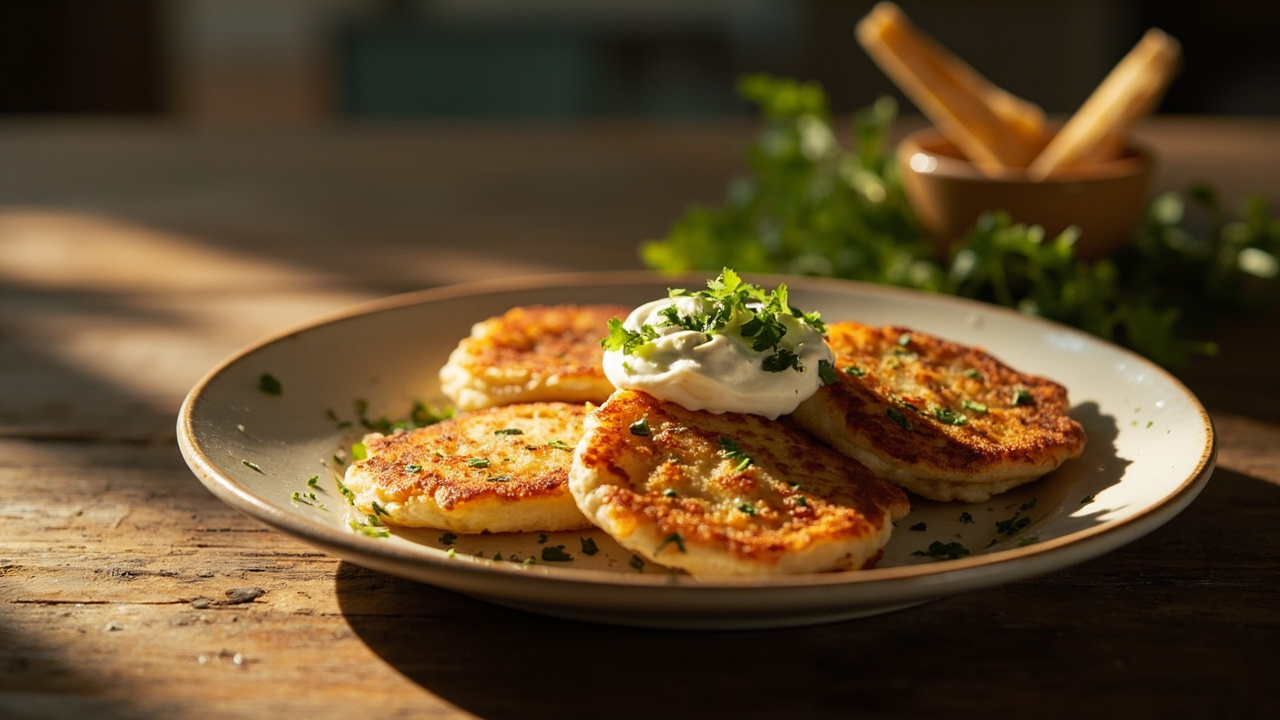
There is something utterly irresistible about potato latkes: a thin, crackling exterior that gives way to a tender, almost creamy interior, a whisper of sweet onion, and a warm, nutty aroma of frying oil.
These potato latkes are a must-make when you crave comfort with a bit of ceremonial flair.
They offer a contrast of textures and a balance of savory and subtly sweet flavors that turn humble ingredients into something celebratory and deeply satisfying.

Potato Latkes
Ingredients
- 600 g starchy potatoes peeled
- 150 g yellow onion grated
- 2 large eggs beaten
- 60 g plain flour or 30 g matzo meal
- 10 g fine salt
- Black pepper to taste
- Vegetable oil for frying 500 ml
Instructions
- Grate potatoes and onion, then squeeze out as much liquid as possible in a clean towel.
- Mix potatoes with eggs, flour, salt, and pepper until just combined.
- Heat oil in a wide skillet to medium-high; a pinch of batter should sizzle immediately on contact.
- Fry heaping tablespoons of mixture, flatten gently; cook until deep golden and crackling, about 3-4 minutes per side.
- Drain on a wire rack over a tray, sprinkle with extra salt while hot, then serve immediately.
The Magic of This Potato Latke Recipe
The balance of starch and moisture is crucial. Using starchy potatoes concentrates the dry solids, which crisp beautifully when fried while keeping the center tender. That contrast is the hallmark of great potato latkes.
Squeezing out liquid after grating is a small technique with a big impact. Removing excess water concentrates flavor and prevents the latkes from steaming in the pan, so they brown evenly and become crackly.
Eggs and flour act as gentle binders. They coagulate and form a network that holds the shredded potato together without weighing it down, so you get light, cohesive pancakes rather than dense cakes.
Hot oil and quick frying lock in texture and create the Maillard flavor notes we crave. The right frying temperature produces deep caramelization without absorbing excess oil.
The Little-Known Staples That Make Latkes Sing
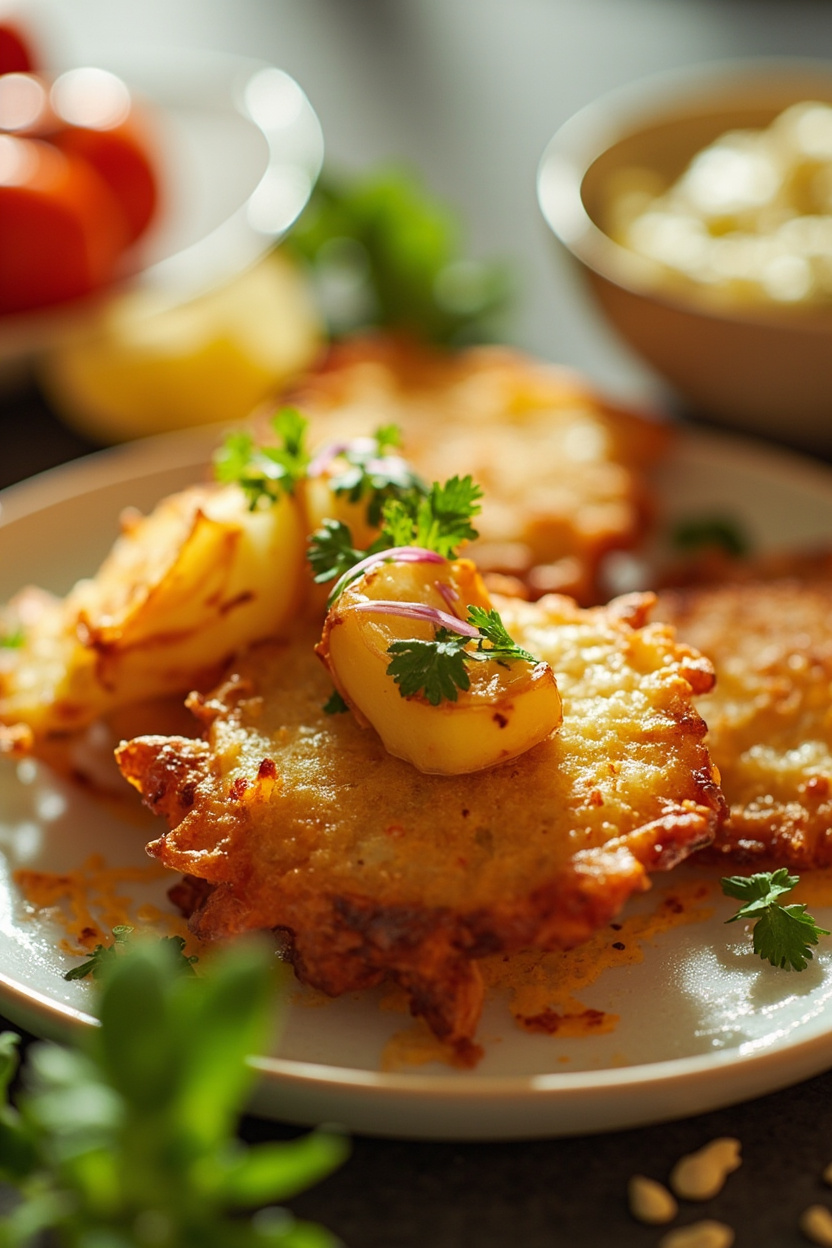
- 600 g (1.3 lb) starchy potatoes: concentrates dry matter for crisping, higher amylose yields a drier fry.
- 150 g (1 medium) yellow onion: contains sugars and sulfur compounds that caramelize and boost savory aroma.
- 2 large eggs: albumin proteins coagulate on heating, binding shreds into a cohesive fritter.
- 60 g (1/2 cup) plain flour or 30 g (1/3 cup) matzo meal: provides starch granules that gelatinize and help structure.
- 10 g (2 tsp) fine salt: ionizes flavor molecules and tightens cell walls slightly, reducing water retention.
- Black pepper, to taste – volatile terpenes add bright, spicy top notes to the fried profile.
- Vegetable oil for frying, 500 ml (about 2 cups) – a high smoke-point neutral oil enables even browning without off-flavors.
Kitchen Tools You’ll Need
- Box grater or food processor with grating disc.
- Clean kitchen towel or cheesecloth for squeezing.
- Wide heavy skillet or cast-iron pan.
- Wire rack and tray for draining.
Grate, Squeeze, Fry – The Ritual for Golden, Crackling Latkes
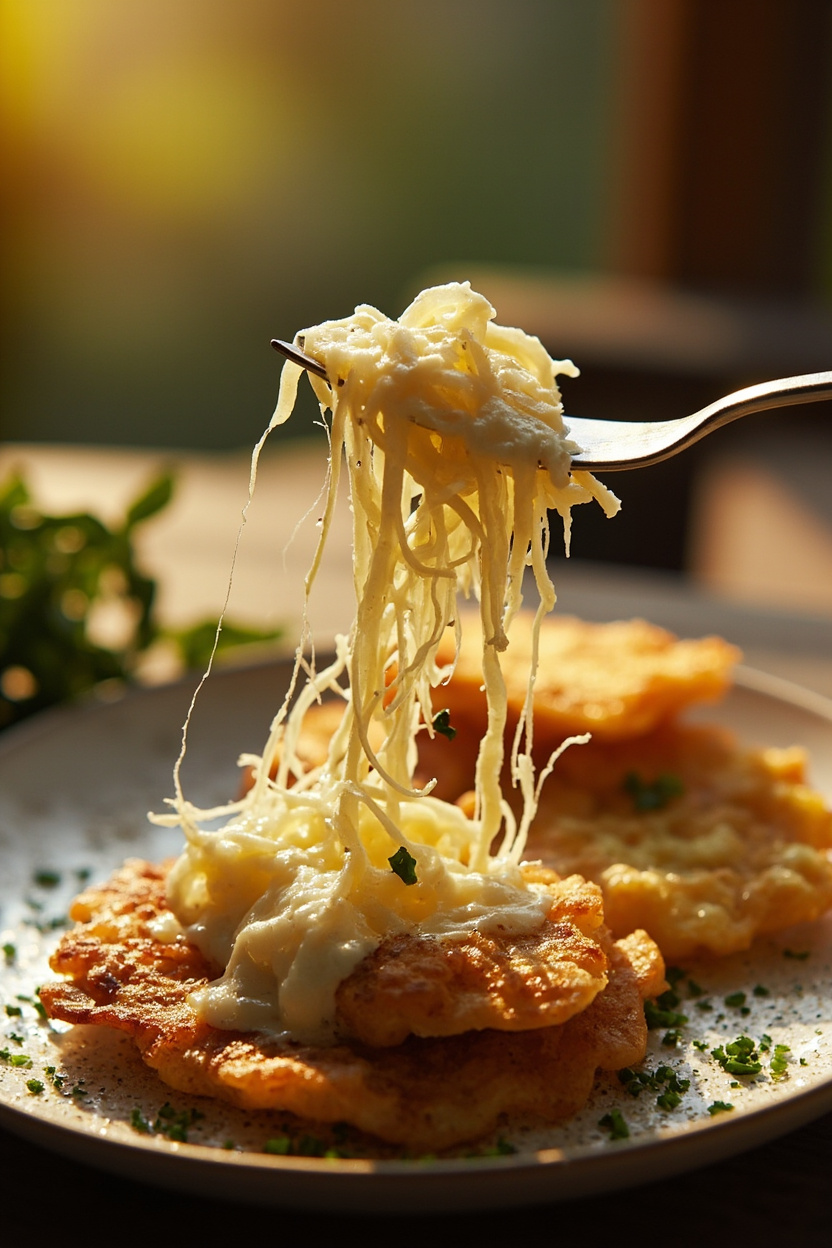
- Prepare potatoes and onion. Grate them coarsely so you retain a bit of texture. As you grate, you’ll notice a raw potato scent and faint sweetness from the onion; that’s flavor in the making.
- Collect and write. Gather the shredded mixture in a towel and squeeze firmly over a bowl. The released liquid looks cloudy from dissolved starch; set it aside and let the solids fall back into the towel. The tactile press is worth it; you’ll feel the difference as the mass tightens.
- Combine ingredients. Transfer the dry shreds to a bowl. Add beaten eggs, flour or matzo meal, salt, and pepper. Fold gently until just combined. The batter should be moist but not soupy; it will hold a mound on a spoon when ready.
- Heat oil and test. Warm a generous layer of oil until a small pinch of batter sizzles immediately. The noise is key – a brisk sizzle promises crisping rather than soaking.
- Fry in batches. Spoon heaping tablespoons into the hot oil and press lightly to form discs. The edges should brown first and begin to curl. Flip when the undersides are deeply golden, then cook the other side; the aroma will become toasted and nutty.
- Drain and season. Lift latkes onto a wire rack set over a tray so air can circulate. Sprinkle sea salt while they’re hot to enhance crunch. Serving immediately preserves that fleeting crackle.
Crisp Secrets from Chefs: Tricks to Keep Latkes Lively
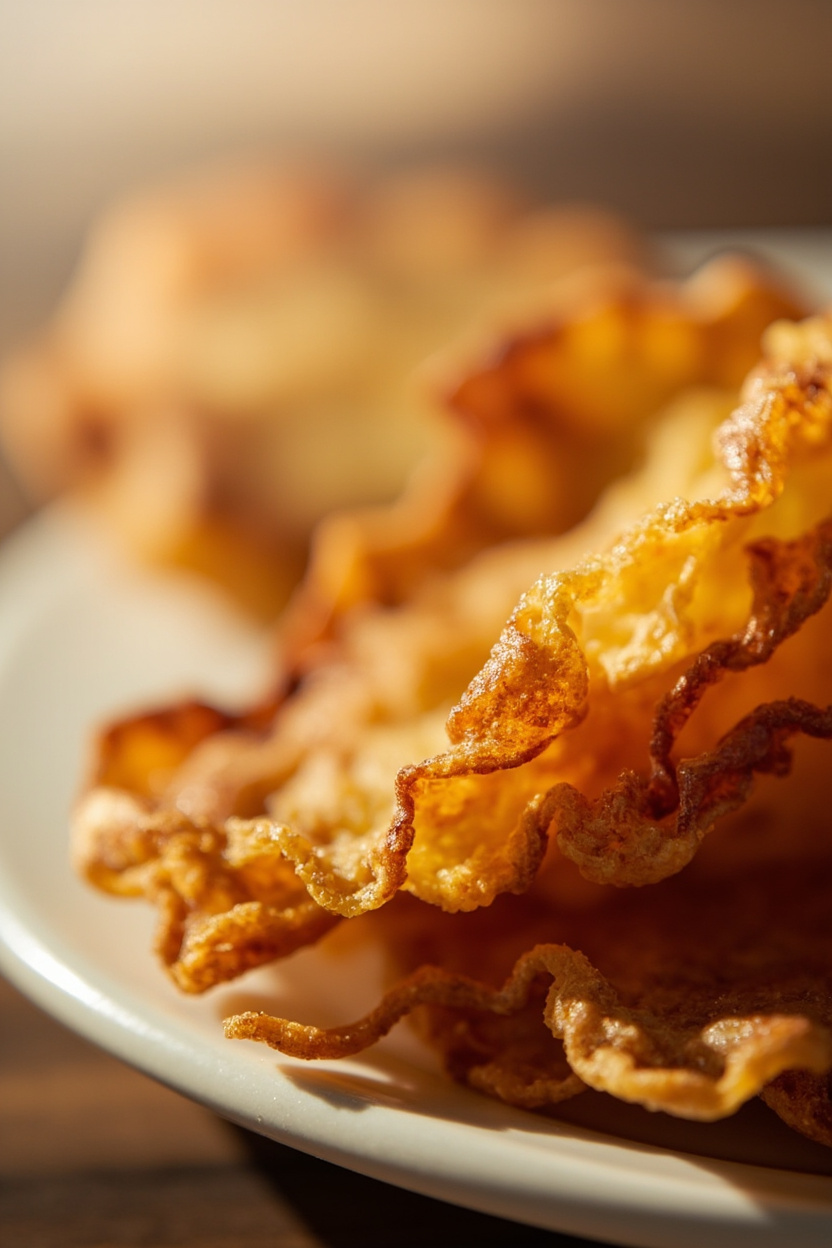
Squeeze Like You Mean It
If you don’t remove the excess liquid, your latkes will steam and collapse. Use a tightly woven towel and press until little more than dampness remains.
I sometimes press the towels under a heavy pan for one minute to ensure maximum dryness.
Temperature Is Your Friend
Keep the oil at medium-high. If it’s too cool, latkes will absorb oil and feel greasy. If it’s too hot, the exterior burns before the interior cooks. Adjust the heat between batches; a quick test piece tells you everything.
Don’t Crowd the Pan
Overcrowding drops the oil temperature and prevents even browning. Fry in small batches so each latke has room to brown and crisp uniformly. Use a slotted spatula to minimize moisture transfer.
Finish on a Wire Rack
Avoid paper towels for final draining; they trap steam and soften the underside. A wire rack keeps air flowing so potato latkes stay snap-crisp until serving.
How to Store Potato Latkes?
- Room temperature: Keep covered for up to 2 hours, best enjoyed fresh.
- Fridge: Cool completely, then store in an airtight container with paper between layers for up to 3 days.
- Freezer: Flash-freeze on a tray, then transfer to a bag for up to 1 month; reheat in a hot oven or air fryer to restore crispness.
Variations and Substitutions
- Add grated carrot or parsnip for sweet, colorful variations that add moisture and natural sugars.
- Swap half the potato for sweet potato for an earthier, slightly sweeter latke.
- Use potato latkes as a base for smoked salmon and crème fraîche for a brunch-worthy appetizer.
- Make gluten-free latkes using potato starch in place of flour for a lighter, crisp, and gluten-free result.
Nutrition Information
A typical serving is moderate in calories and provides vitamin C, potassium, and some protein from eggs. Not low-carb due to potatoes and flour.
These potato latkes are dairy-free if served with applesauce, not crème fraîche. They are not gluten-free unless you swap flour for a gluten-free alternative.
Frequently Asked Questions
You can prepare the mixture and refrigerate it for a few hours, but fry it just before serving to keep them crisp.
Reheat in a preheated oven at 200 °C / 400°F or an air fryer for a few minutes until hot and crisp again.
Yes, they’re often served with applesauce and sour cream or crème fraîche, which adds a sweet or tangy contrast to the fried texture.
You can pulse potatoes in a food processor with a grating disc for speed, which gives consistent shreds and saves time.
