
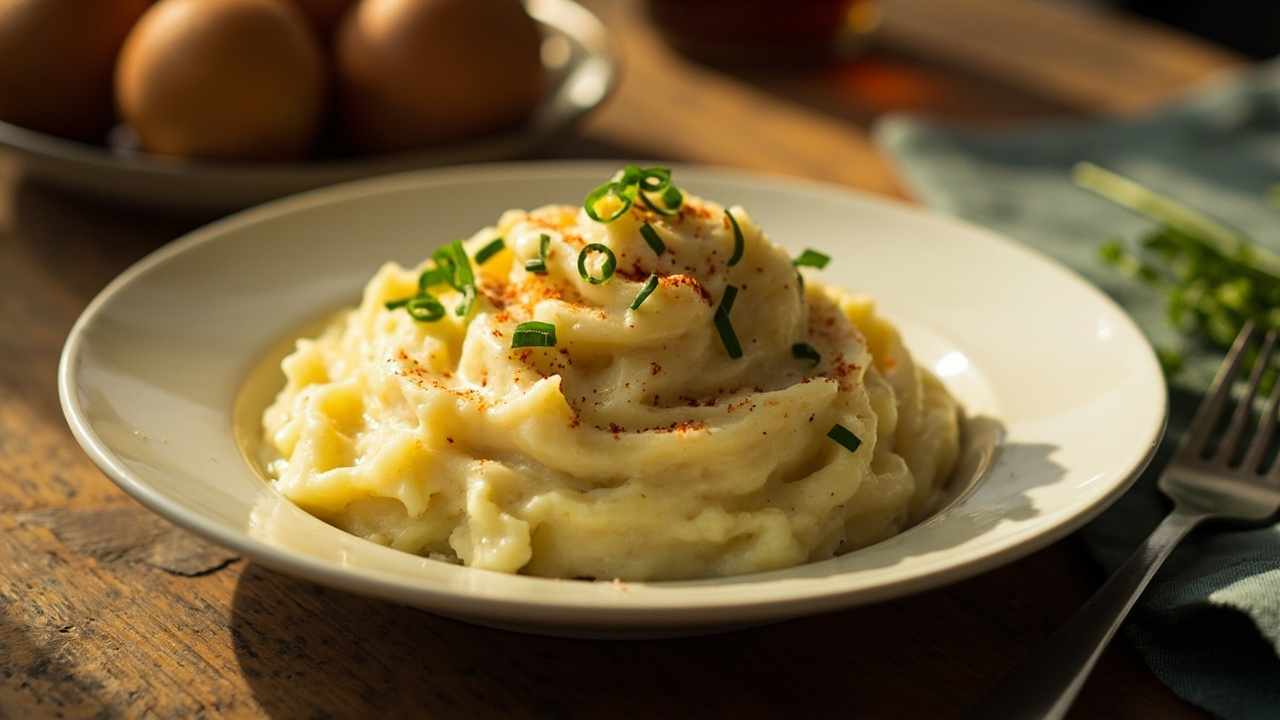
There’s something luxuriously simple about buttermilk mashed potatoes – they’re pillowy, tangy, and impossibly creamy all at once.
The buttermilk adds a bright, lactic tang that cuts through rich butter, while a proper mash gives a silk-like texture that clings to gravy.
Make them for a holiday, a weeknight, or whenever you want comfort with a gourmet twist; once you try this version, you’ll keep coming back.

Buttermilk Mashed Potatoes
Ingredients
- 900 g Yukon Gold or Russet potatoes
- 120 ml buttermilk
- 60 g unsalted butter
- 120 ml whole milk
- 10 g kosher salt
- Black pepper to taste
Instructions
- Peel and chop potatoes into even chunks, rinse to remove excess starch.
- Cover with cold water, add salt, simmer until tender about 15-20 minutes.
- Drain, return to warm pot to dry, then rice or mash until fluffy.
- Warm butter, milk, and buttermilk; add in thirds until desired texture.
- Season with salt and pepper, top with butter, serve immediately.
Why These Buttermilk Mashed Potatoes Taste So Good?
- Acid balance: The tang from buttermilk brightens the inherent sweetness of the potato, cutting through fat so each bite feels lighter and more flavorful.
- Starch control: Using starchy potatoes and drying them after cooking concentrates flavor and prevents a gluey, gummy mash.
- Warm emulsification: Adding warmed butter and buttermilk helps the fats emulsify with potato starches, producing a silkier mouthfeel and glossy finish.
- Texture technique: Mashing with a ricer or fine masher creates uniform, air-filled granules that trap steam and keep the mash fluffy rather than dense.
Milk & Magic: The Little Things That Make These Potatoes Sing
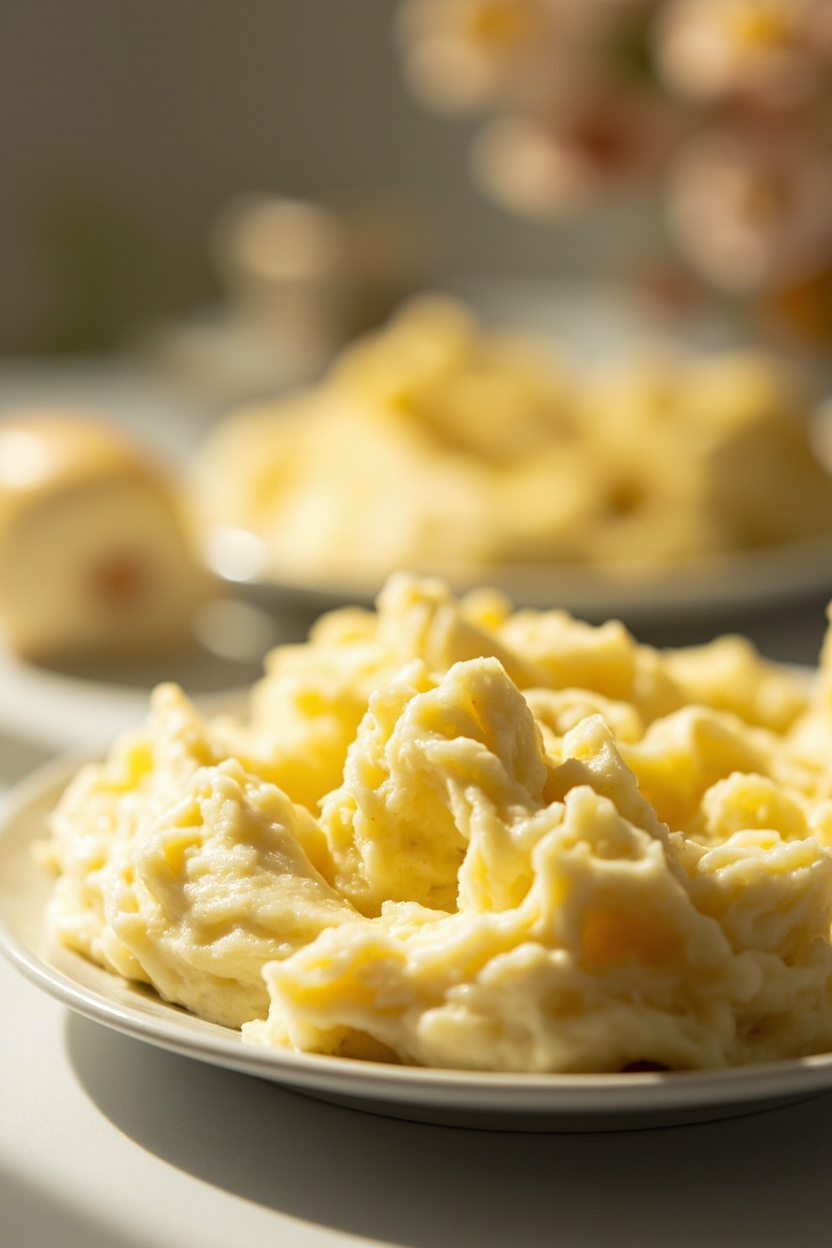
- 900g Yukon Gold or Russet potatoes: ideal starch content for fluffiness and creamy mouthfeel
- 120ml buttermilk: lactic acidity brightens flavor and slightly tenderizes potato proteins
- 60g unsalted butter: fat enhances aroma and coats starch for a silky texture
- 120ml whole milk: lactose and milk fat add body and mellow the tang
- 10g kosher salt: ions enhance sweet and savory flavor compounds
- Freshly ground black pepper: volatile oils add a sharp, aromatic finish
Kitchen Tools You’ll Need
- Large heavy-bottomed pot.
- Potato ricer or fine masher.
- Small saucepan for warming dairy.
- Heatproof spatula.
Velvet Mash Workshop: Hands-On Buttermilk Potato Rituals
- Prepare and rinse – Peel potatoes and cut into 2-3 cm chunks so they cook evenly. Rinsing removes surface starch, which prevents gluey results. You should smell a clean, faint potato aroma as you work.
- Cold-water start and simmer – Place potatoes in cold water, bring to a gentle simmer over medium heat, and add a pinch of salt. A rolling boil will agitate the pieces and can make them crumbly; a gentle simmer yields tender, cohesive chunks.
- Check doneness – Test with a fork; potatoes should yield easily without falling apart. Drain them in a colander and return to the warm pot to evaporate excess moisture for 1-2 minutes. The dry potato scent will be more concentrated.
- Warm the dairy – In a small saucepan, combine butter, whole milk, and buttermilk and warm until steaming but not boiling. Warming helps the butter melt fully and prevents temperature shock that would cool the potatoes and make the mash dense.
- Rice or mash – Pass potatoes through a ricer into a warm bowl for the lightest texture, or use a fine masher if you prefer a bit more body. You’ll notice delicate, snow-like strands or fluffy lumps forming.
- Incorporate the liquids – Add the warmed butter-butttermilk mixture in thirds, folding gently with a spatula until the texture is creamy and cohesive. Stop when the mash spreads slowly and holds peaks, not runny.
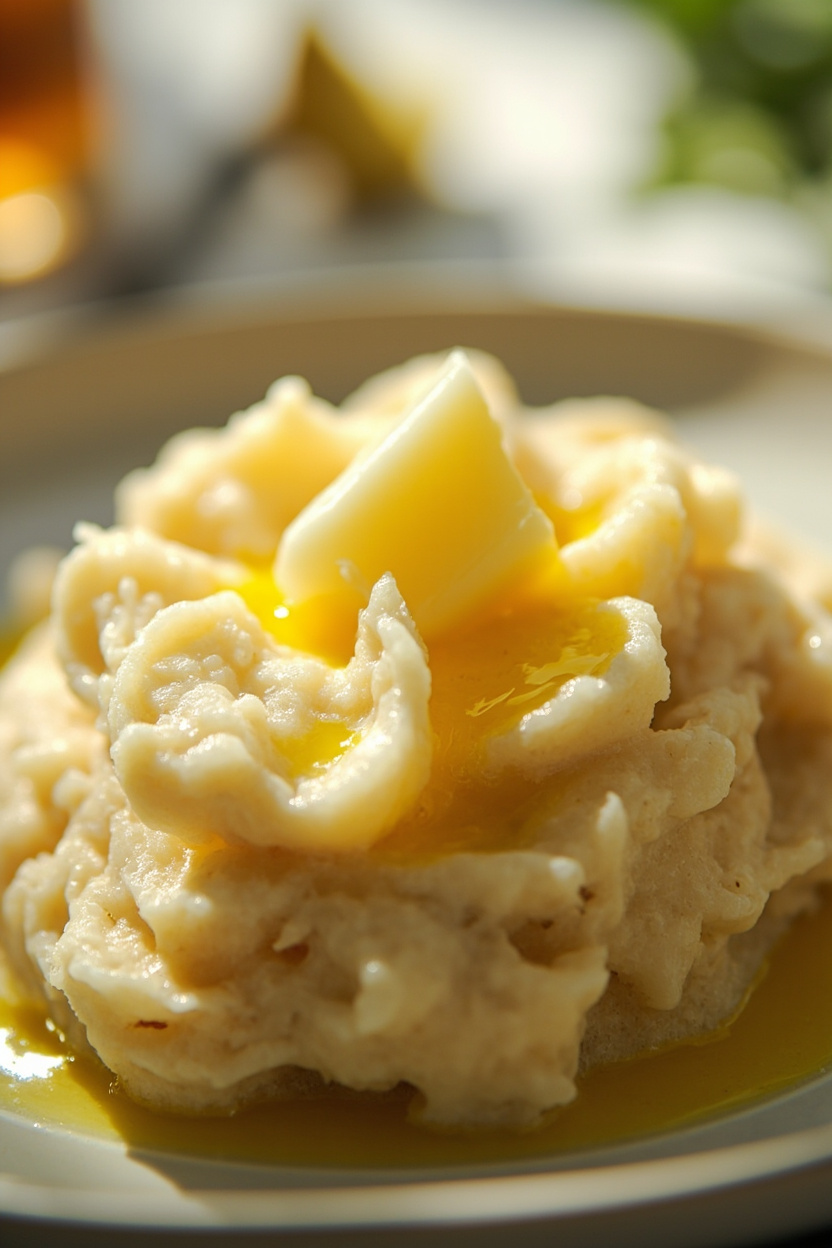
- Season and finish – Taste and adjust salt and pepper. Serve immediately with a knob of butter melting into the warm surface, releasing an enticing buttery aroma.
Kitchen Confessions: Secrets for Fluffy, Tangy Perfection
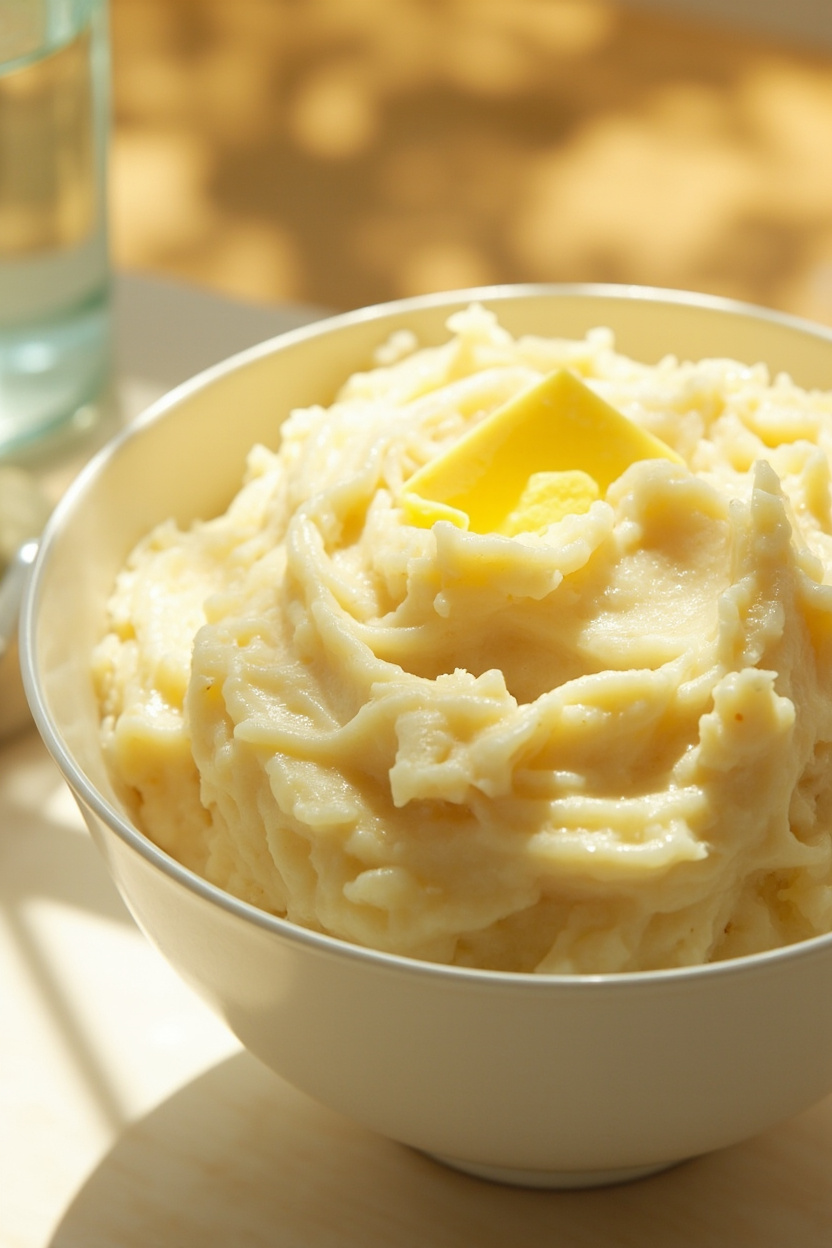
Choose the right potato
Use Yukon Gold for a naturally creamy texture or Russet for extra fluff. Yukon Gold has waxier cells that yield a silkier mouthfeel, while Russet’s higher starch content gives lift. I often blend both for balance.
Warm the buttermilk and butter
Cold dairy shocks the potatoes and can tighten starches, making the mash dense. Warming the buttermilk and butter brings out the butter’s aroma and helps the liquids incorporate smoothly.
Mind your tool
A ricer or food mill gives the most refined, airy texture. An electric mixer can overwork potatoes and turn them gluey. If you must use a mixer, pulse gently and stop while still slightly chunky.
Salt incrementally
Season in stages – a little salt in the cooking water, then adjust after adding dairy. Salt balances sweetness and lifts the buttermilk’s tang without overpowering it.
How to Store Buttermilk Mashed Potatoes?
- Room temperature: Serve within two hours of cooking for the best texture and safety.
- Fridge: Cool quickly, transfer to an airtight container, and keep up to 4 days.
- Freezer: Portion into containers, freeze up to 3 months; thaw overnight in the fridge and reheat gently with extra buttermilk.
Variations and Substitutions
- Roasted garlic buttermilk mashed potatoes: Roast a head of garlic and mash cloves into the potatoes for sweet, caramelized depth.
- Chive and crème fraîche: Fold in chopped chives and a splash of crème fraîche for herbal brightness and tang.
- Dairy-free swap: Use cultured coconut yogurt for tang and vegan butter for fat; texture will be slightly lighter.
- Herb butter swirl: Stir in browned herb butter at the end for nutty, aromatic notes.
Nutrition Information
High in potassium and a modest source of protein from milk, buttermilk mashed potatoes also provide calcium and vitamin B6.
Not dairy-free or keto-friendly as written; naturally gluten-free if no thickeners are added.
Frequently Asked Questions
Using buttermilk reduces overall fat compared with heavy cream while adding calcium and tang, so you get a lighter feel without sacrificing creaminess.
Yes, make up to two days ahead and reheat gently with extra warmed buttermilk to restore texture before serving.
Yukon Gold gives a creamy, buttery texture; Russets make a fluffier mash. A blend offers the best of both.
You can, but the mash will be less rich. Compensate with a touch more butter for mouthfeel if desired.
