
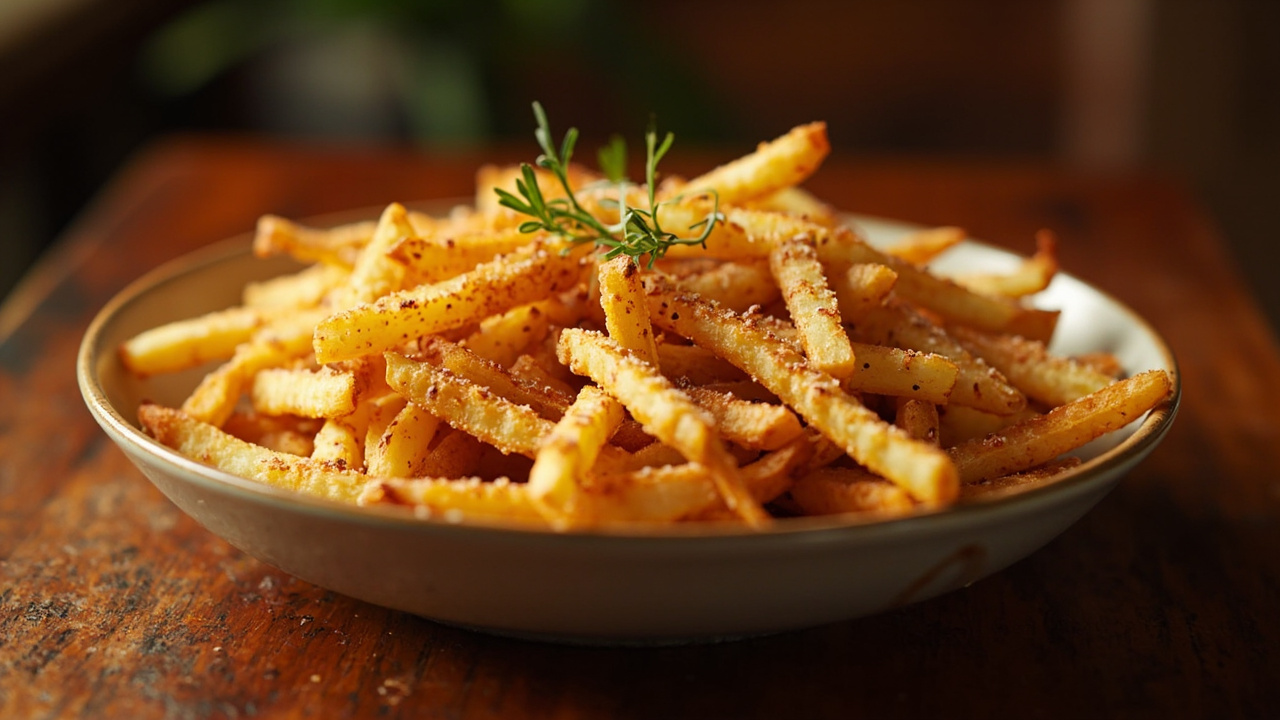
There’s a simple joy in a perfect fry, and Old Bay fries lift that joy into something a little wicked.
Think crackling, bronzed edges that give way to a tender, pillowy interior, all dusted with the bright, citrusy heat of Old Bay seasoning.
These fries balance salty, herbal, and peppery notes with a faint sweetness that teases the palate.
Make them once, and you’ll see why they become the side you crave most, whether you’re serving seafood, sandwiches, or just a late-night snack.
Why This Old Bay Fries Recipe Works?
- Crisp Exterior, Tender Interior: Soaking and optional parboiling remove excess starch and set the surface structure, which helps the fries form a crisp crust while the center stays fluffy.
- Seasoning Time and Oil Interaction: Tossing fries in oil before baking creates an even coating that helps Old Bay adhere, allowing volatile aromatics like celery seed and paprika to bloom in the oven.
- Heat Management: High oven temperature promotes Maillard reaction, producing a deep golden color and savory complexity without drying the interior.
- Optional Cornstarch Boost: A light dusting of cornstarch creates a micro-crust through rapid gelatinization, giving you that restaurant-style crunch.
The Flavor Lineup That Makes Fries Sing
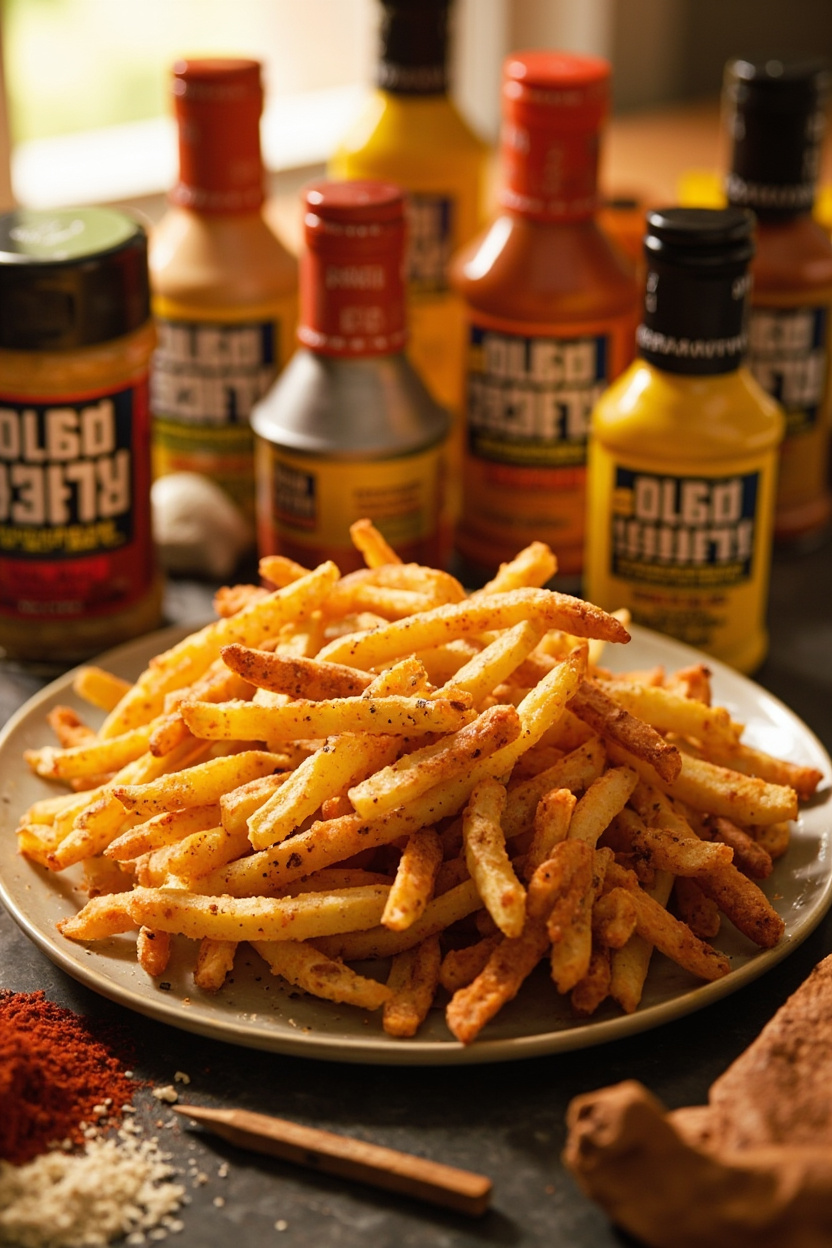
- 600 g russet or Maris Piper potatoes: high starch content promotes a fluffy interior after cooking, while low moisture aids crisping.
- 45 ml (3 tbsp) vegetable oil or sunflower oil: neutral oil with a high smoke point aids even heat transfer and crust formation.
- 10 g (2 tsp) Old Bay seasoning: blend of celery salt, paprika, and black pepper provides aromatic terpenes and umami-enhancing spices.
- 5 g (1 tsp) fine sea salt: essential for flavor balance; ions in salt extract moisture from the surface, improving texture.
- 15 g (1 tbsp) cornstarch, optional: pure starch that crisps as it dehydrates in high heat, lending a brittle exterior.
Kitchen Tools You’ll Need
- Baking sheet, rimmed.
- Sharp knife and cutting board.
- Large bowl for soaking and tossing.
- Kitchen towel or paper towels for drying.
How to Build Perfectly Spiced Old Bay Fries?
- Cut and soak: Cut potatoes into even 1 cm sticks. Place in cold water and refrigerate for 20 to 30 minutes. You’ll notice the water cloud with starch; that’s what you want to remove for a crisp finish.
- Parboil for structure: Bring a pot of salted water to a simmer and add the drained fries for 4 minutes. They should be tender at the edges but firm through the center. Drain and transfer to a towel to dry. The steam drying step concentrates starch on the surface, aiding browning.
- Preheat and season: Heat the oven to 220C/425F and place the baking sheet inside to warm. In a bowl, toss fries with oil, Old Bay seasoning, cornstarch if using, and 1 tsp fine salt. The oil will shimmer, and spices will smell brighter as they’re warmed.
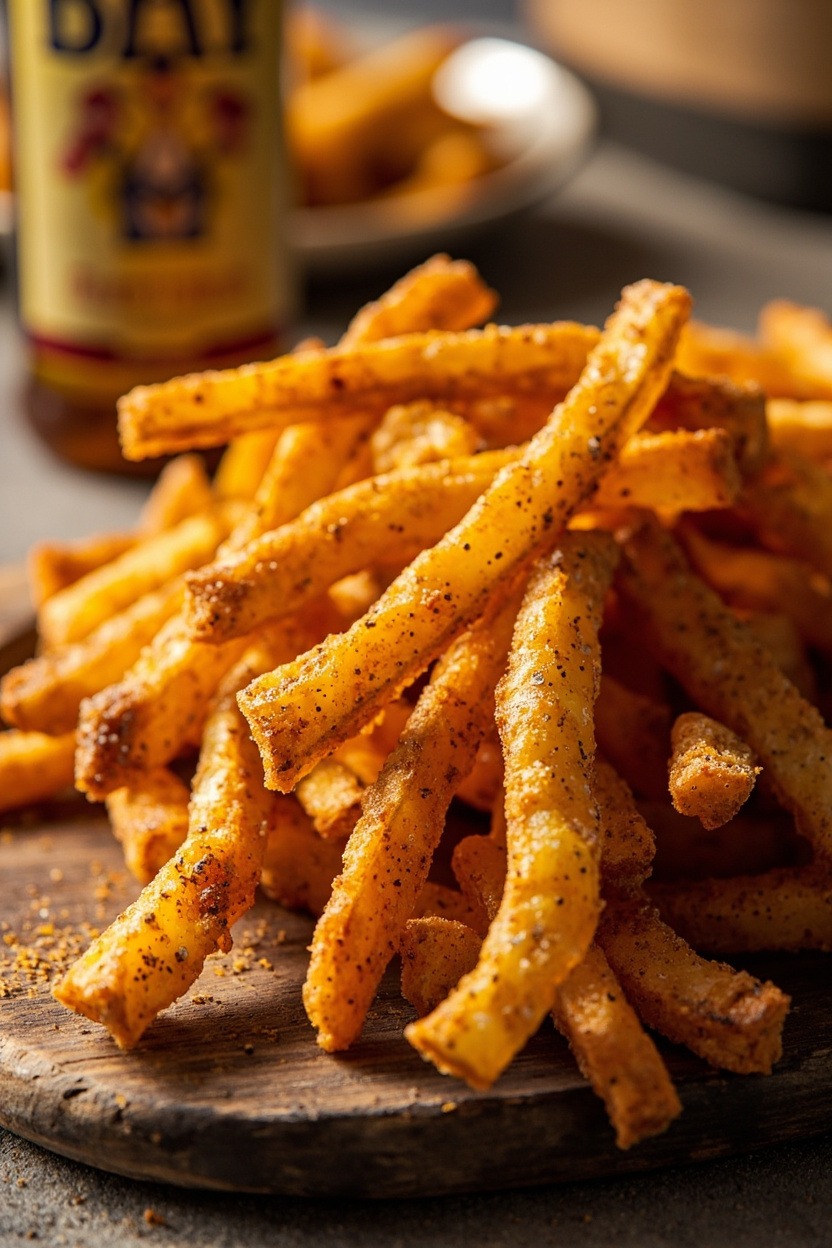
- Spread and bake: Shake off excess coating and spread fries in a single layer on the hot sheet. Slide them into the oven. You’ll hear the beginning of sizzle; that’s moisture leaving the surface. Bake 15 minutes, flip to expose different faces, then bake another 15 to 20 minutes until deep golden.
- Finish and serve: Once out of the oven, hit with a final sprinkle of Old Bay and flaky sea salt. You’ll smell citrusy, peppery top notes with a warm paprika base. Serve immediately so the exterior remains crisp and the interior remains tender.
Chef’s Little Hacks for Ridiculously Crispy Old Bay Fries
Cut Uniformly
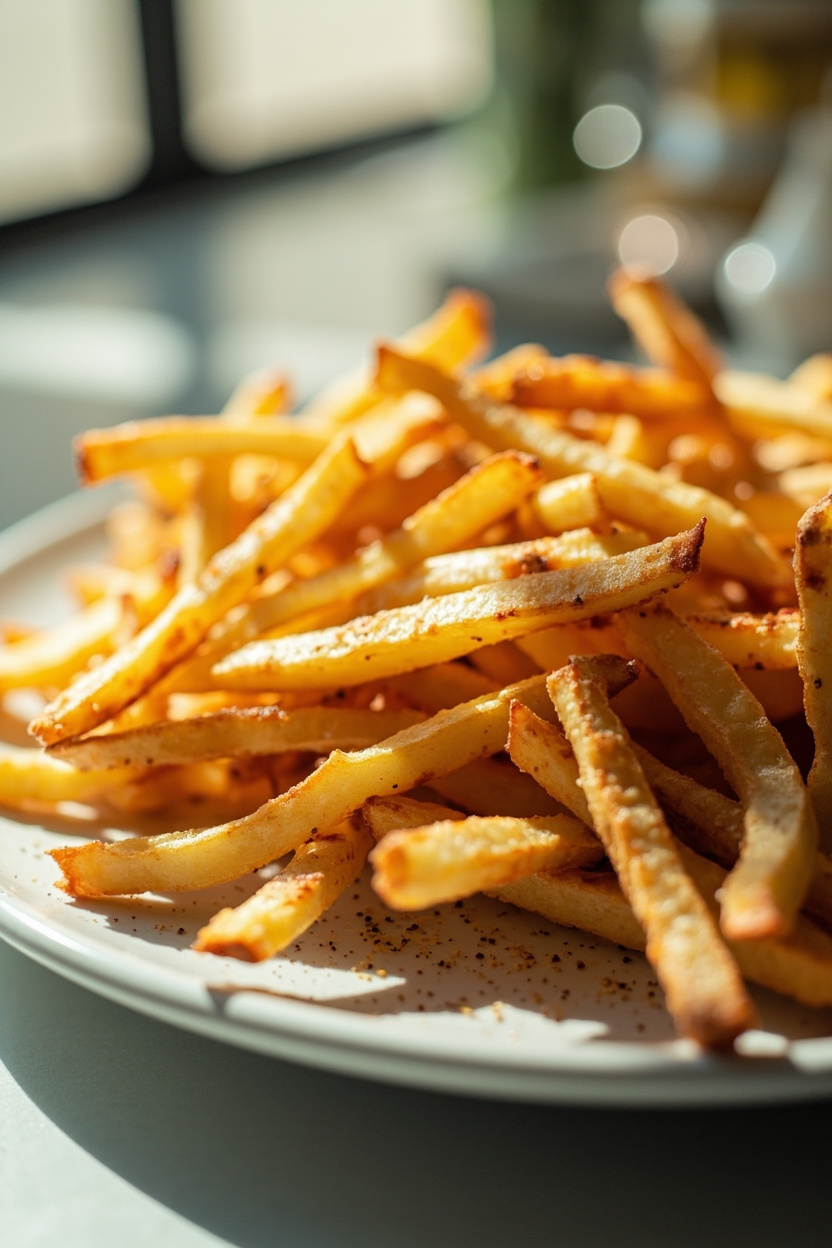
Cut fries to the same thickness so they cook evenly. If one fry is thicker, it will lag in doneness and force you to overcook the rest. Use a ruler or a mandoline set to a fry-friendly spacing for consistency.
Dry Thoroughly
Pat the fries completely dry after soaking and parboiling. Any surface moisture creates steam, which prevents crisping. A towel-press method works best – lay fries in a single layer on a clean towel, fold over, and press gently.
Use a Hot Sheet
Preheating the baking sheet gives the fries an immediate burst of heat on contact, jump-starting the Maillard reaction.
The result is faster browning and less time in the oven, which preserves interior tenderness.
Season at Two Points
Season with Old Bay before baking to infuse flavor, then finish with a light dusting afterward to revive volatile aromatics and provide a bright top note.
This double-hit also helps the seasoning cling without sogginess.
How to Store and Freeze?
Room temperature: Eat within 30 minutes for the best texture.
Fridge: Store cooled fries in an airtight container up to 3 days; reheat in a hot oven or air fryer to restore crispness.
Freezing: Flash-freeze on a tray, then store in a freezer bag up to 3 months; bake from frozen at 220C/425F until hot and crisp.
Seasonal Variations & Pro Swaps
Old Bay fries shine in summer when seafood and fresh salads are plentiful. The seasoning’s citrus and pepper notes pair brilliantly with grilled shrimp, crab cakes, and corn on the cob, making them a summer staple.
Try smoked paprika and lemon zest for a brighter summer version. Swap Old Bay for za’atar and add toasted sesame seeds for a Middle Eastern twist.
Make them loaded-style with melted cheddar, scallions, and a squeeze of lemon for a game-day treat. For winter comfort, toss fries with garlic powder and grated Parmesan and serve with a warm aioli.
Frequently Asked Questions
Yes, but sweet potatoes have more moisture and sugar; lower the oven temperature slightly and watch carefully to avoid burning.
Start with 2 tsp for 600 g potatoes; you can always add more after baking, since the seasoning intensifies when heated.
