
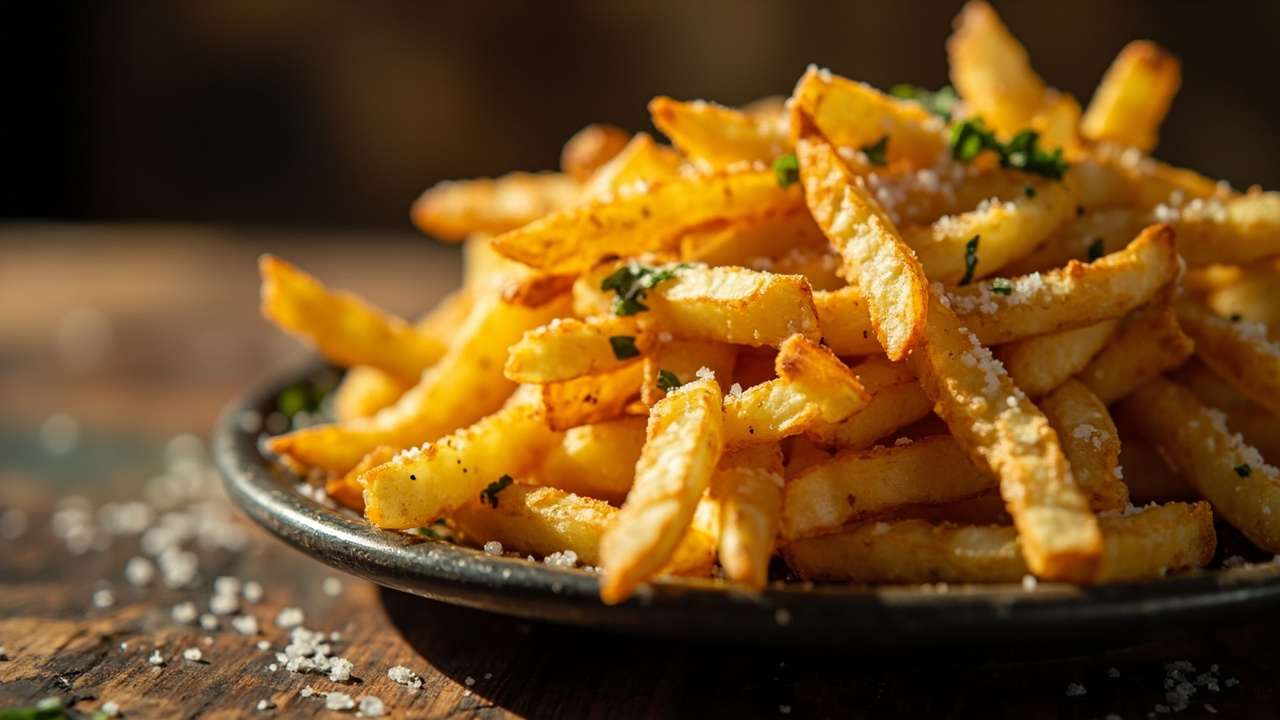
There is a small, thrilling moment when a batch of French fries comes out of the oil, and you hear that precise crackle, which is the hallmark of the perfect French fries recipe.
Crispy exterior, tender fluffy interior, a whisper of salt, and a golden color that promises deep potato flavor.
These are not the limp fries of memory but the kind you would serve to impress without fuss.
I’m sharing a refined, slightly secret method that leans on science and a bit of patience.
The recipe balances starch, moisture, temperature, and a two-stage frying rhythm to produce consistent results.
If you like fries that are crunchy, light, and impossibly addictive, this is the one you make again and again.
Why This Perfect French Fries Recipe Works?
The double-fry technique separates the cooking into two focused stages. The first lower-temperature blanch cooks the potato interior and gelatinizes starch, creating a soft core.
The second high-temperature fry sears and dehydrates the exterior quickly, forming a crisp, golden crust.
Soaking and rinsing remove surface starch, which otherwise pastes and prevents crisping.
Drying potatoes thoroughly limits oil splatter and helps the crust form evenly.
Using a high-starch potato like Russet optimizes internal structure. The cell walls break down just enough to become fluffy while remaining supported by the crust.
A neutral oil with a high smoke point ensures stable temperature and clean flavor.
An optional light coating of cornstarch gives an extra Maillard boost, creating a more uniform golden color and micro-crisp texture without masking potato flavor.
The Little-Known Essentials for Flawless Fries
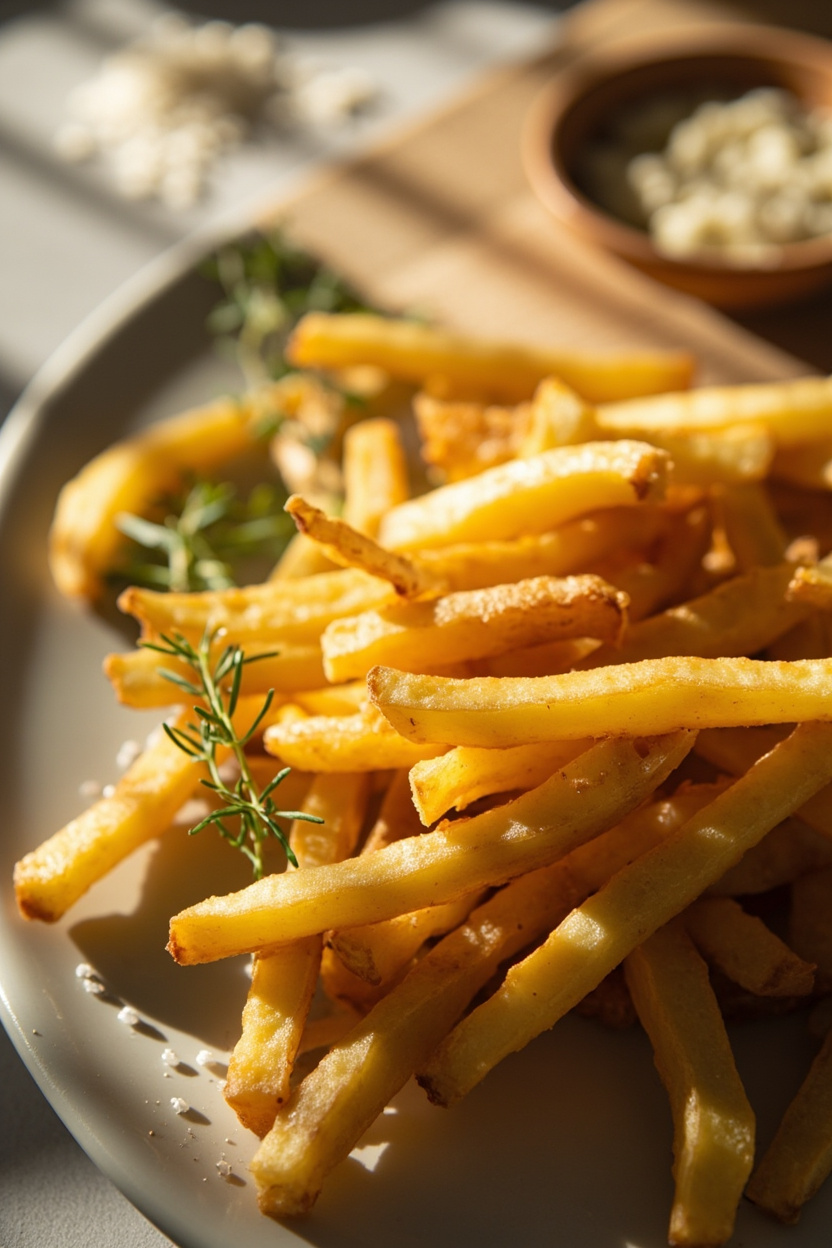
- 900 g (2 lb) Russet potatoes: high starch promotes a fluffy, dry interior and superior crisping.
- 2 L (about 8 cups) cold water: cold soak prevents enzymatic browning and extracts surface starch for better crust.
- 30 g (2 tbsp) coarse sea salt: crystals season quickly and aid surface moisture draw, improving texture.
- 500 ml (2 cups) neutral oil, peanut or vegetable: high smoke point allows consistent frying temperature and clean frying chemistry.
- 10 g (1 tbsp) corn starch, optional: a thin starch film promotes rapid surface dehydration and enhanced Maillard reaction.
Kitchen Tools You’ll Need
- Heavy-bottomed pot or deep fryer with thermometer.
- Sharp chef’s knife and cutting board.
- Large bowl and clean towels for drying.
- Wire rack and baking sheet for resting.
From Soak to Sizzle: The Rhythm That Makes Fries Legendary
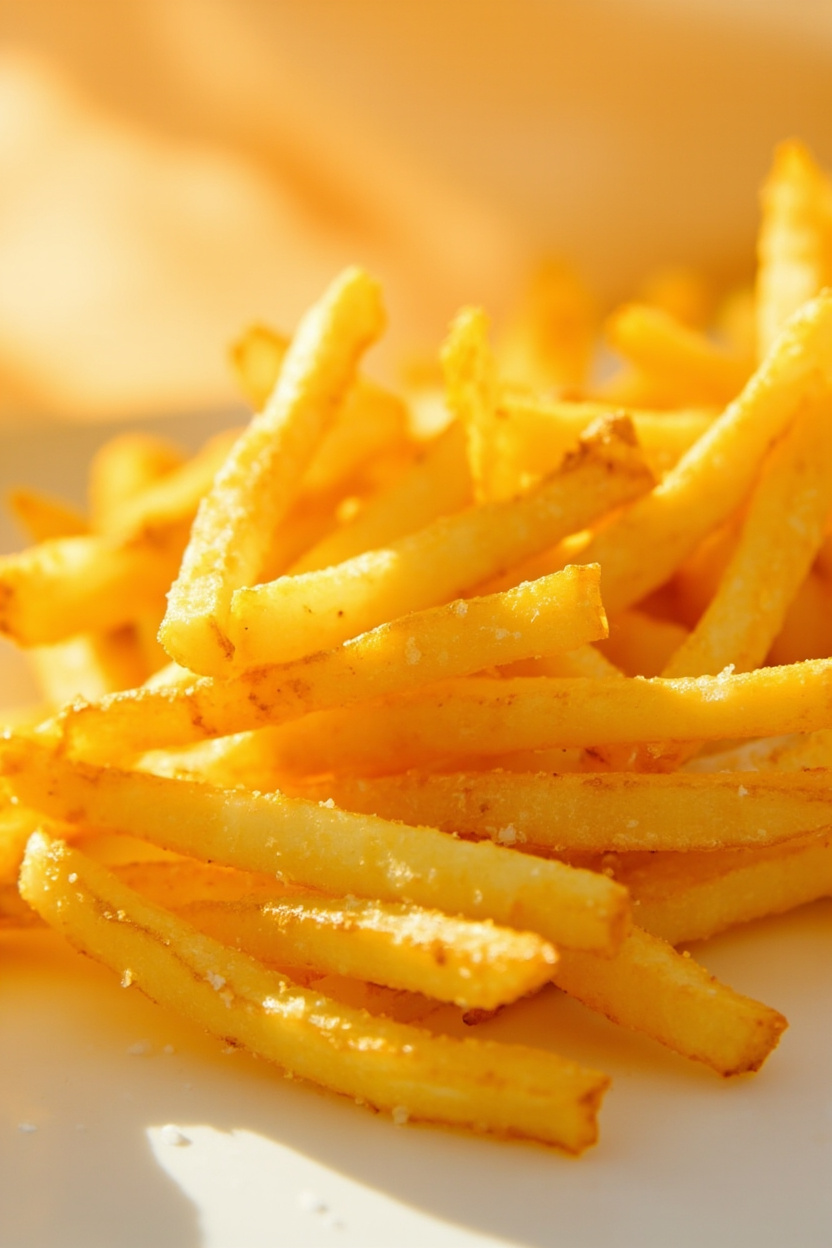
1. Peel and cut the potatoes into uniform 10 mm sticks. Uniformity is crucial for even heat transfer, so each fry finishes at the same moment.
2. Place cut fries in a large bowl of cold water, changing water until clear, then soak 30 to 60 minutes. The water will smell faintly earthy as starch washes away; that is normal and beneficial.
3. Drain and pat each piece completely dry. Run your hands over the fries; they should feel dry and slightly tacky. Any surface moisture spoils crisping.
4. Optional: Toss lightly with corn starch for a dusting. The texture becomes almost wafer-like on the surface after frying, thin and delicate.
5. Heat oil to 150 °C (300°F). Fry in small batches for 4 to 5 minutes until pale and tender. You will hear a steady soft hiss and see a faint steam cloud as internal moisture evaporates.
6. Drain on a wire rack and let cool for at least 10 minutes. Cooling firms the surface and prevents the oil temperature from dropping during the final fry.
7. Bring oil to 190 °C (375°F) and fry batches again for 2 to 4 minutes until deep golden. The scent becomes rich and toasty, and the sizzle sharpens as moisture leaves rapidly.
8. Lift fries out, give them a quick toss with coarse sea salt while hot to maximize adhesion, then rest a minute on the rack before serving.
Pro Secrets for Irresistibly Crunchy Fries
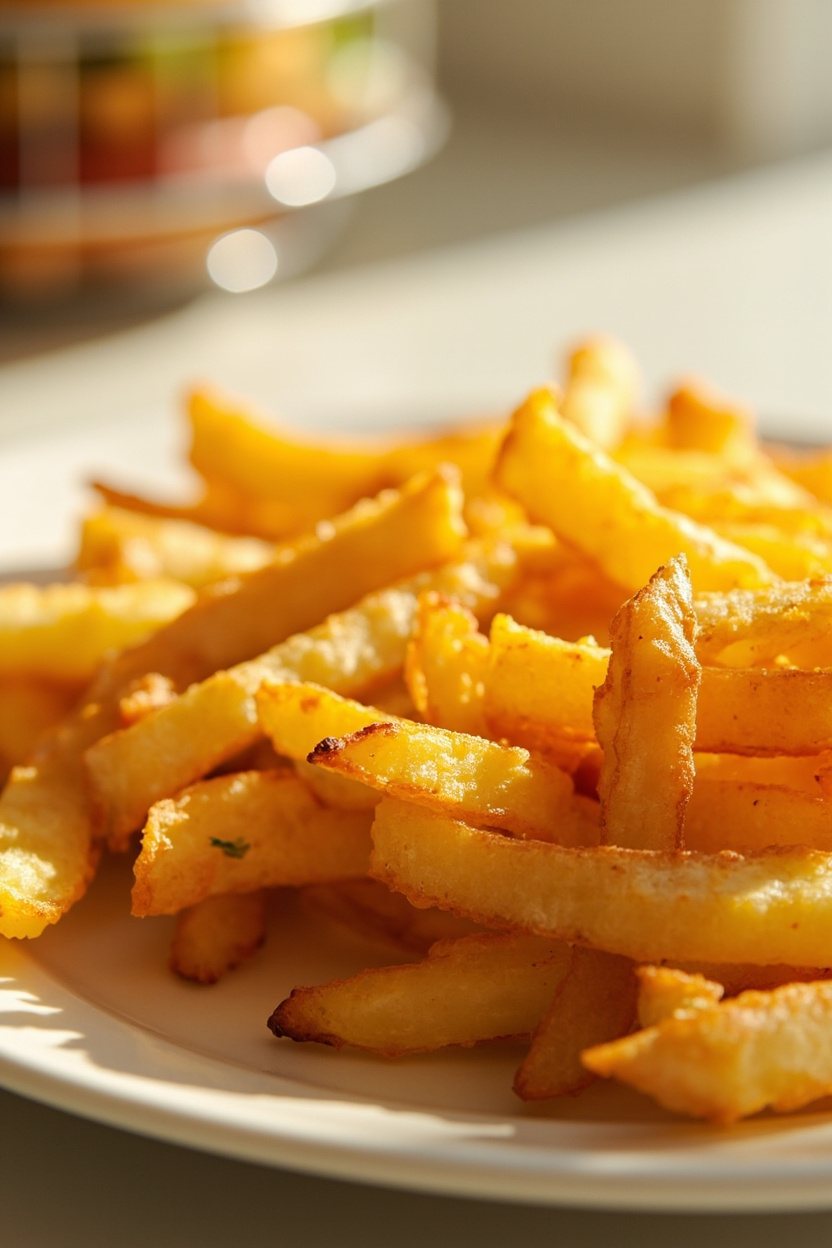
1. Batch Wisely
Overcrowding the fryer drops oil temperature and creates steam, which softens fries.
Fry in small portions so the oil recovers quickly and each piece gets the same treatment. You will notice more consistent color and crunch.
2. Use a Thermometer
Maintaining two distinct temperatures is non-negotiable. A reliable thermometer keeps the first fry gentle and the second fast. Your nose will tell you when oil is too hot, but the thermometer gives reproducible results.
3. Rest Between Fries
Allow time between the two fries so the surface firms and internal steam pressure equilibrates. This resting step reduces oil absorption and improves the final texture noticeably.
4. Salt at the Right Moment
Salt clings best to hot fries during the final minute. Salting too early draws moisture out and can make fries limp. Toss immediately after the final fry for proper adhesion and flavor.
How to Store and Freeze?
- Room temperature: Serve fresh for peak crunch. Fries lose crispness within 20 minutes at room temperature.
- Fridge: Store cooled fries in an airtight container up to 3 days. Reheat in a hot oven or air fryer to restore texture.
- Freezing: Freeze blanched or twice-fried fries in a single layer, then bag. Re-fry from frozen at 190 °C (375°F) until golden for restaurant-quality results.
Seasonal Variations & Pro Swaps
The Seasonal Edge
Late autumn and winter offer the starchiest potatoes with drier flesh, making fries flakier and crispier.
Cooler harvests yield better cell structure for frying, so this recipe shines in cooler months.
Variations
Try smoked paprika and garlic powder for a smoky picnic twist. Swap rosemary and lemon zest for a fragrant summer side.
Coat fries lightly with parmesan and cracked black pepper for a rich, savory finish. For holiday flair, toss with truffle salt and a drizzle of truffle oil after frying.
These small swaps let the same technique bend to seasonal produce and flavor moods without changing the essential science that makes these fries perfect.
Frequently Asked Questions
Yes, but they have less starch, so the interior will be creamier and the exterior slightly less crisp compared to Russets.
The first fry cooks the interior, the second crisps the exterior via rapid dehydration and Maillard reaction for the best texture contrast.
You can oven-roast for a healthier option, but you will miss the exact deep crunch that hot oil achieves.
Dry thoroughly, avoid overcrowding, maintain oil temp, and rest between fries to reduce steam and oil absorption.
